7 AAP MPs Join BJP: Nitin Nabin Says Modi's Trust Rising
Synopsis
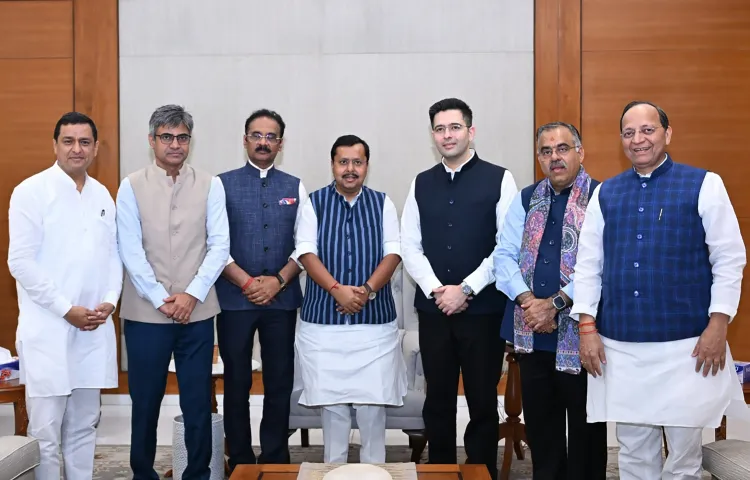
In a stunning political shift, Raghav Chadha and 6 other AAP Rajya Sabha MPs — including Swati Maliwal and Harbhajan Singh — announced their merger with BJP on April 25. BJP leaders say it reflects growing trust in PM Modi, while AAP faces its deepest internal crisis since its founding in 2012.
Key Takeaways
Seven AAP Rajya Sabha MPs — including Raghav Chadha, Swati Maliwal, and Harbhajan Singh — announced their merger with the BJP on April 25, 2025 .
The defecting group represents a two-thirds majority of AAP's Rajya Sabha parliamentary party , potentially shielding them from disqualification under the anti-defection law .
BJP President Nitin Nabin said the exodus reflects growing public trust in PM Narendra Modi and deep dissatisfaction within AAP over corruption allegations.
Raghav Chadha was reportedly removed as AAP's Deputy Leader in the Rajya Sabha prior to the defection, signalling a breakdown in his relationship with the party leadership.
Kerala BJP President Rajeev Chandrasekhar accused AAP of competing with Congress in corruption and abandoning its founding ideals of political reform.
The development is a major blow to AAP , coming after its poor performance in the 2024 Lok Sabha elections and Arvind Kejriwal's arrest in the Delhi liquor policy case .
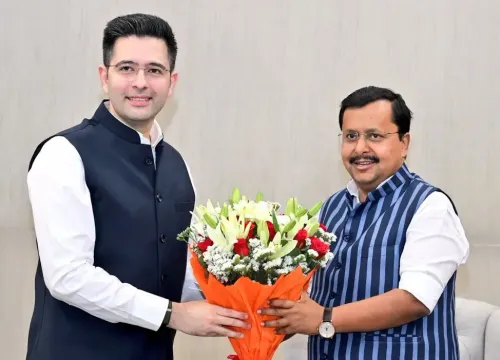
New Delhi, April 25: In a major political earthquake, Rajya Sabha MP Raghav Chadha and six other Aam Aadmi Party (AAP) lawmakers formally announced their resignation from the party and merger with the Bharatiya Janata Party (BJP) on Friday, April 25. BJP President Nitin Nabin swiftly reacted, stating the mass exodus reflects an unmistakable surge in public confidence in Prime Minister Narendra Modi across India.
BJP Leaders React: 'Trust in Modi Growing Nationwide'
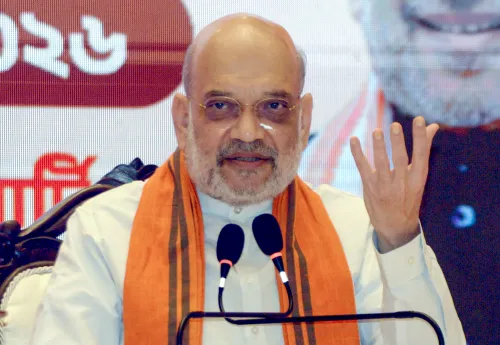
Nitin Nabin, speaking exclusively to IANS from Baranagar, said the defection is a direct consequence of deep-rooted discontent within the AAP over corruption allegations against its top leadership. "When Arvind Kejriwal is being widely associated with corruption, it creates significant dissatisfaction within the AAP. As a result, some MPs have chosen to leave. This indicates that across the country, people's trust in Prime Minister Narendra Modi is increasing," he stated.
Kerala BJP President Rajeev Chandrasekhar took a sharper tone, accusing the AAP of betraying its founding principles. He recalled his early association with the party around 2009–2010, noting that it was built on promises of integrity and political reform. "It is now competing with the Congress Party in corruption and positioning itself as a 'B team' of Congress," he said pointedly.
Rajasthan Deputy Chief Minister Diya Kumari also weighed in, describing the development as a mirror of the shifting political landscape. "Whether public representatives or ordinary citizens, everyone is watching these developments closely," she remarked.
Who Left AAP and Who Are the Defectors
The seven lawmakers who announced their departure from AAP and alignment with the BJP include some of the party's most prominent Rajya Sabha faces. Alongside Raghav Chadha — one of India's youngest parliamentarians — the group comprises Swati Maliwal, Harbhajan Singh, Sandeep Pathak, Ashok Mittal, Rajinder Gupta, and Vikram Sahni.
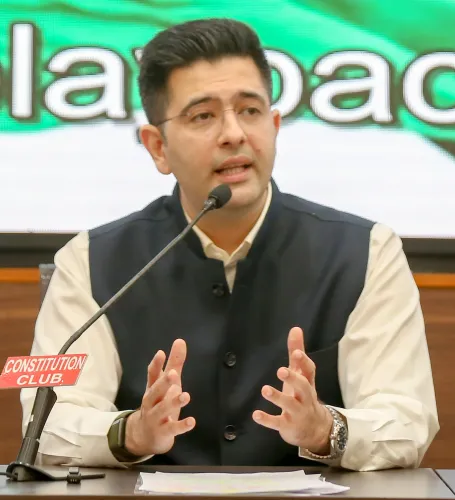
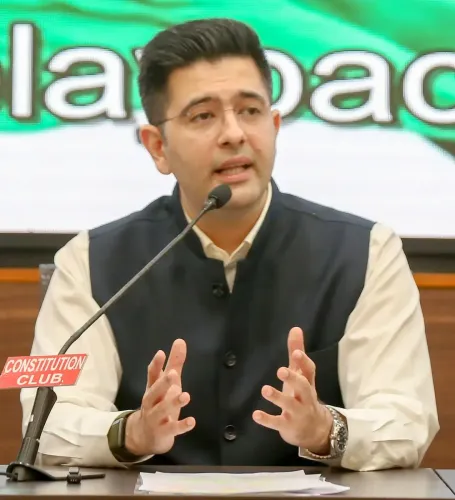
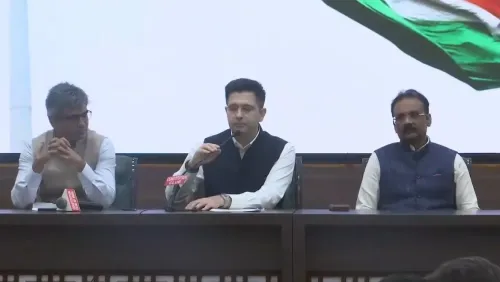
At a press conference held alongside MP Sandeep Pathak, Chadha confirmed that a two-thirds faction of AAP's Rajya Sabha parliamentary party has decided to formally merge with the BJP. He stated the group plans to invoke relevant provisions of the Constitution to execute the merger in the coming days.
Anti-Defection Law: Can They Avoid Disqualification
The legal dimension of this merger is critical. Under the Tenth Schedule of the Indian Constitution — commonly known as the anti-defection law — individual legislators who voluntarily give up party membership face disqualification. However, a merger is permitted if at least two-thirds of the legislative party joins another party.
Since the defecting group claims to represent two-thirds of AAP's Rajya Sabha MPs, they may legally qualify for a merger exemption, shielding them from disqualification proceedings. Constitutional experts, however, note that the Chairman of the Rajya Sabha will be the final arbiter on whether the merger satisfies the legal threshold.
Background: Why Chadha and Others Fell Out With AAP
The break has been building for months. Raghav Chadha was reportedly stripped of his position as Deputy Leader of AAP in the Rajya Sabha for allegedly failing to actively raise issues against the Union government — a charge that insiders say reflects a broader internal power struggle within the party.
Swati Maliwal had already been publicly at odds with the AAP leadership following a widely reported altercation at Chief Minister Arvind Kejriwal's residence in 2024, which triggered a national controversy. Her move to the BJP had been anticipated for several months by political observers.
Notably, AAP has been under sustained political and legal pressure since Arvind Kejriwal's arrest in connection with the Delhi liquor policy case in March 2024. The party's electoral performance in the 2024 Lok Sabha elections was also a significant blow, with AAP winning only 3 seats out of 13 it contested — a dramatic fall from its earlier dominance.
Political Impact: What This Means for AAP and Indian Politics
The loss of seven Rajya Sabha MPs is not merely a numerical setback for AAP — it is a symbolic collapse of the party's national ambitions. Founded in 2012 on an anti-corruption platform, the AAP had expanded aggressively into states like Punjab, Gujarat, and Goa. The current implosion signals a party struggling to hold its core identity together.
For the BJP, absorbing these lawmakers strengthens its position in the Rajya Sabha ahead of potential legislative battles. It also delivers a powerful optics victory — the party that AAP was founded to oppose is now absorbing its senior leadership.
Political analysts argue this development could accelerate a realignment within the INDIA bloc, of which AAP is a member, as partner parties may now question the alliance's coherence. With Delhi Assembly elections having already dealt a blow to AAP earlier in 2025, the party faces an existential question about its future trajectory and whether Arvind Kejriwal can rebuild its credibility.
As the formal merger process unfolds in the Rajya Sabha over the coming days, all eyes will be on the Chairman's ruling on the anti-defection petition — a decision that could set a precedent for future political realignments in India's upper house.
Point of View
Its role as a coalition partner becomes a liability, not an asset. For BJP, this is a masterstroke of political absorption — neutralising opponents by co-opting them, a strategy that has defined its expansion across India over the past decade.
NationPress
19 Sept 2026
Frequently Asked Questions
Which AAP MPs joined BJP in April 2025?
Seven AAP Rajya Sabha MPs — Raghav Chadha, Swati Maliwal, Harbhajan Singh, Sandeep Pathak, Ashok Mittal, Rajinder Gupta, and Vikram Sahni — announced their merger with BJP on April 25, 2025. They represent a two-thirds majority of AAP's Rajya Sabha parliamentary party.
Will AAP MPs face disqualification under the anti-defection law for joining BJP?
Under the Tenth Schedule of the Indian Constitution, a merger is legally valid if at least two-thirds of the legislative party joins another party, exempting members from disqualification. Since the defecting group claims to represent two-thirds of AAP's Rajya Sabha MPs, they may avoid disqualification — but the final decision rests with the Rajya Sabha Chairman.
Why did Raghav Chadha leave AAP and join BJP?
Raghav Chadha was reportedly removed from his position as AAP's Deputy Leader in the Rajya Sabha for not actively opposing the Union government. The broader reasons cited include growing dissatisfaction over corruption allegations against AAP's leadership, particularly related to the Delhi liquor policy case.
What did BJP leaders say about 7 AAP MPs joining BJP?
BJP President Nitin Nabin said the development reflects increasing public trust in PM Narendra Modi and internal dissatisfaction in AAP over corruption. Kerala BJP President Rajeev Chandrasekhar accused AAP of betraying its founding principles and acting as a 'B team' of Congress.
How does this AAP split affect Indian politics in 2025?
The loss of seven Rajya Sabha MPs significantly weakens AAP's national standing and strengthens BJP's position in the upper house. It also raises serious questions about the cohesion of the INDIA opposition bloc, of which AAP is a member, ahead of future state and national elections.