Are Almost 7 Million Australians at Risk from Wildfires?
Synopsis
A new report highlights the alarming fact that nearly 7 million Australians live in high-risk areas for wildfires. With increasing threats from climate change, urgent action is needed to enhance firefighting capabilities and address climate pollution. This situation calls for immediate attention to safeguard lives and properties in vulnerable regions.
Key Takeaways
Almost 7 million Australians are at risk of wildfires.
Population in high-risk areas has surged by 65.5% since 2001.
Up to 90% of homes in these zones lack modern fire-resilient standards.
Climate pollution is worsening fire weather conditions .
Urgent action is needed to enhance firefighting capabilities .
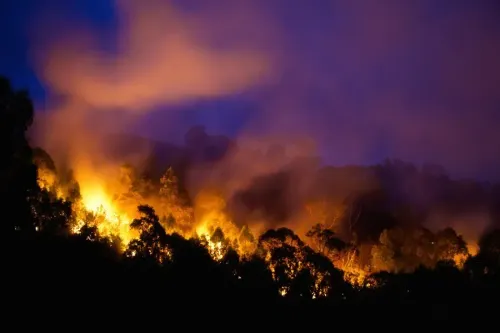
Sydney, January 6 (NationPress) A staggering nearly 7 million Australians reside in regions surrounding major cities that are particularly vulnerable to lethal wildfires, according to a recent report.
This report, released on Tuesday by the NGOs Climate Council and Emergency Leaders for Climate Action (ELCA), cautioned that Australia faces an escalating threat of an urban fire catastrophe akin to the January 2025 wildfires in Los Angeles (LA).
The findings highlighted that the urban fringes around significant cities including Sydney, Melbourne, Perth, Adelaide, Hobart, and Canberra exhibit traits that contributed to the devastation witnessed during the LA fires.
The report indicated that the population in the outer suburbs of major cities has surged by 65.5 percent since 2001, totaling over 6.9 million people. Alarmingly, up to 90 percent of residences in high-risk fire zones were constructed prior to the adoption of contemporary bushfire-resistant standards, as reported by Xinhua.
Previous studies referenced in the report revealed that 10 percent of all fires result in 78 percent of fire-related deaths, predominantly occurring in suburbs where combustible landscapes converge with urban developments.
Greg Mullins, founder of ELCA and former fire commissioner of New South Wales, stated that nearly every Australian city possesses a dangerous combination of factors conducive to severe fires like those seen in LA, which includes the risk of extreme droughts, high winds, and a history of destructive blazes.
"Our analysis indicates that cities in Australia increasingly confront the threat of catastrophic fires similar to those in LA," he remarked.
"The escalation of climate pollution is exacerbating fire weather conditions to such an extent that fires can occasionally exceed the capabilities of modern firefighting and prevention efforts."
The report advocates for a dual approach: reducing climate pollution and enhancing emergency service and land management capabilities at the urban fringe.
Point of View
It's imperative to recognize the severe implications of this report. The increasing number of Australians living in high-risk wildfire zones is alarming. It’s a national concern that demands immediate action from policymakers to enhance our firefighting capabilities and address climate change effectively. Protecting our citizens and communities should be our top priority.
NationPress
24 Sept 2026
Frequently Asked Questions
How many Australians live in high-risk wildfire areas?
Approximately 7 million Australians reside in areas highly exposed to wildfires.
What factors increase the risk of wildfires in Australia?
Factors include climate change, outdated building standards, and the presence of flammable terrains near urban areas.
What can be done to mitigate wildfire risks?
Enhancing emergency services, improving land management, and reducing climate pollution are essential steps.