Ahmedabad firecracker blast: Main accused Mehul Dodia arrested after 9 killed
Synopsis
The Ahmedabad firecracker blast that killed nine people — including three children — has exposed a chilling regulatory failure: the same factory, at the same location, had already caused a fatal blast in 2014. The accused allegedly exploited a loophole to restart operations under a fresh licence, this time stockpiling explosives far beyond legal limits and hiring migrant labourers to rush Ganesh festival orders.
Key Takeaways
A blast at an illegal firecracker factory on Ramol-Gatrad Road, Ahmedabad on 19 July killed nine people , including three children , and injured six others .
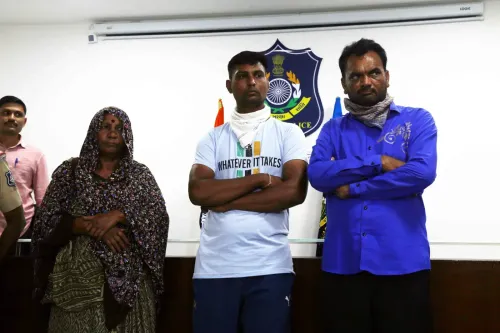
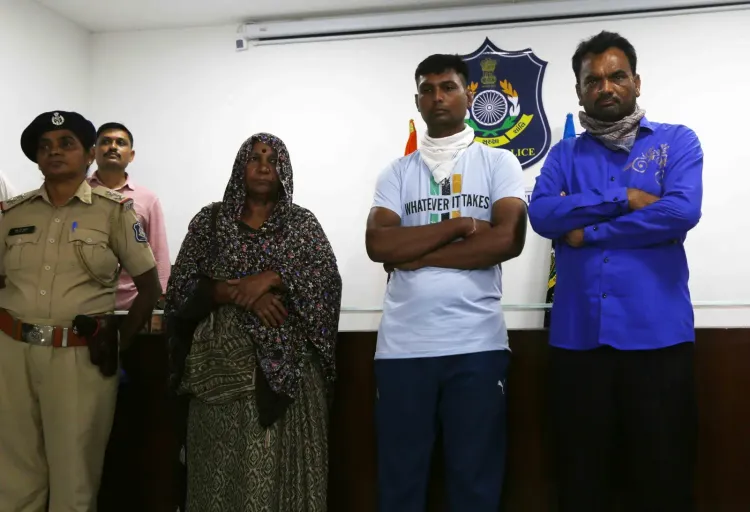
Main accused Mehul Dodia was arrested from Sabarmati after fleeing the scene injured; his mother Ramila Dodia and partner Sadiq Saiyed have also been arrested.
The factory's licence had expired on 4 March and was not renewed; it had resumed operations 20–25 days before the blast for Ganesh festival orders.
Investigators found explosives 'far more than 15 kg ' — the legal limit — stored at the site, with forensic teams citing 'total violations.' A blast at the same location in 2014 killed a 14-year-old; Ramila Dodia's licence was cancelled then, but she allegedly relicensed the unit in her son's name.
Two firecracker units in Gyaspur and Narol have been sealed; city-wide inspections are ongoing.
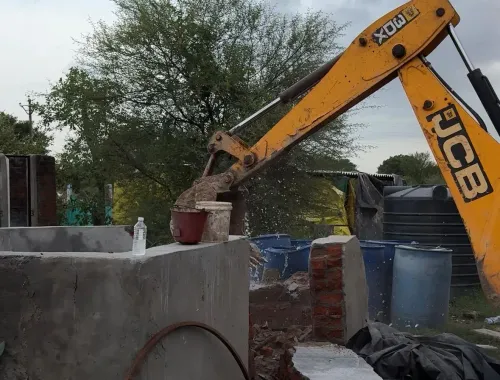
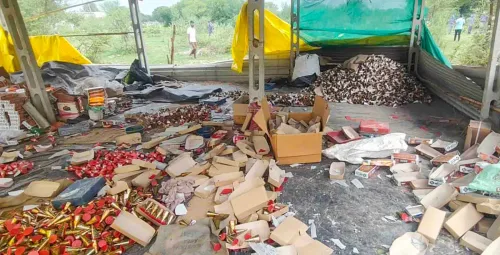
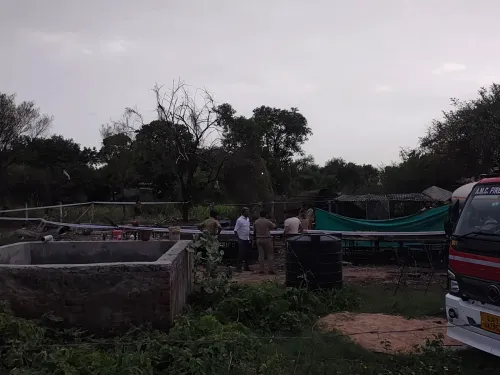
The alleged operator of an illegal firecracker factory in Ahmedabad's Ramol area, Mehul Dodia, has been arrested by the Crime Branch after a blast at the unit killed nine people — including three children — and injured six others on Saturday, 19 July. The explosion, which occurred at an unlicensed manufacturing unit on Ramol-Gatrad Road, was severe enough to shatter windows at neighbouring factories and hampered identification of some victims.
Key Arrests and Charges
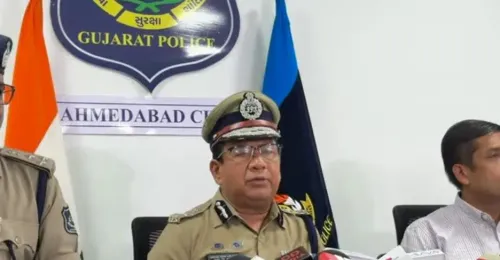
Ahmedabad Police Commissioner Anupam Singh Gahlaut confirmed at a press conference on Sunday that Dodia was tracked down and arrested from the Sabarmati area after he fled the blast site despite sustaining injuries. Two others have also been taken into custody: his mother, Ramila Dodia, who managed the factory and suffered ruptured eardrums in the blast, and alleged business partner Sadiq Saiyed.
An FIR has been registered at Ramol Police Station against all three accused under Sections 105, 287, 288 and 61(2) of the Bharatiya Nyaya Sanhita, along with Sections 5(a) and 6 of the Explosive Substances Act, 1908, and Section 9(b) of the Explosives Act, 1884. Police said additional accused could be named as the investigation progresses.
A Factory That Should Never Have Operated
According to Commissioner Gahlaut, the factory's licence had expired on 4 March and was not renewed. Despite this, the unit reportedly resumed operations 20 to 25 days before the blast to fulfil firecracker orders for the upcoming Ganesh festival. Labourers were brought in specifically from Dahod district for the work.
Forensic experts and explosives specialists who examined the site found what Gahlaut described as 'total violations.' Even under a valid licence, the unit would have been permitted to store only 15 kg of explosives — but investigators found multiple sacks containing far in excess of that limit. 'The factory had no permission whatsoever to operate, yet it was functioning,' the Commissioner said.
Preliminary findings suggest sparks during the filling process inside one of the two or three small structures at the site triggered the explosion. The exact sequence of events is expected to be established after further questioning of Mehul Dodia.
A Damning Pattern: The 2014 Blast Connection
This is not the first fatal incident at this location. A blast at the same site in 2014 killed a 14-year-old, at which time the factory was operated by Ramila Dodia. Her licence was cancelled following that incident. Investigators allege she subsequently obtained a fresh licence in her son Mehul's name and restarted operations — a pattern that raises serious questions about regulatory oversight and licence verification processes.
Notably, a separate firecracker unit linked to co-accused Sadiq Saiyed had also recently witnessed a blast in Kheda district, though no fatalities were reported in that incident.
Investigation Scope and Crackdown
Police are probing the full supply chain behind the factory's operations, including the role of the landowner in Vastral, financiers, and customers who placed orders. Some buyers had reportedly paid advances of ₹50,000, while others had paid approximately ₹1 lakh. Investigators are examining whether these customers were aware the unit was operating without legal sanction.
Following the blast, joint inspection teams from the Ahmedabad Police, Ahmedabad Municipal Corporation, and the Fire Department launched city-wide checks. Two firecracker units in Gyaspur and Narol were sealed on Saturday night, and the Commissioner said inspections would continue across Ahmedabad and adjoining rural areas.
'We will compile all the evidence, file the charge sheet at the earliest, and ensure that the accused do not escape this time and that the case is taken up for trial as soon as possible,' Commissioner Gahlaut said, signalling the administration's intent to pursue the case through conviction.
Point of View
A death, and yet the same family allegedly restarted operations under a fresh name — suggesting that Gujarat's explosives licensing system has a verification gap that bad actors can exploit with relative ease. The presence of migrant labourers from Dahod, advance payments from festival-order customers, and a linked blast in Kheda all point to a supply network that extends well beyond three individuals. Charging only the immediate operators without pursuing the landowner, financiers, and order-placers would repeat the pattern of 2014 — a conviction that changed nothing.
NationPress
18 Oct 2026
Frequently Asked Questions
What happened in the Ahmedabad firecracker factory blast?
An explosion at an allegedly illegal firecracker manufacturing unit on Ramol-Gatrad Road in Ahmedabad on 19 July killed nine people, including three children, and injured six others. The factory was operating without a valid licence and was found to be storing explosives far in excess of legal limits.
Who has been arrested in connection with the Ahmedabad blast?
Three people have been arrested: main accused Mehul Dodia, the alleged factory operator; his mother Ramila Dodia, who managed the unit; and alleged partner Sadiq Saiyed. Mehul was traced to the Sabarmati area after fleeing the blast site despite being injured.
Why was the factory operating without a licence?
The factory's licence had expired on 4 March and was not renewed, but it reportedly resumed operations 20 to 25 days before the blast to fulfil Ganesh festival firecracker orders. Police say the unit had 'no permission whatsoever to operate' and found multiple violations, including explosives stockpiled well beyond the permitted 15 kg limit.
Is there a prior history of blasts at the same factory?
Yes. A blast at the same Ramol location in 2014 killed a 14-year-old, after which Ramila Dodia's licence was cancelled. Investigators allege she subsequently obtained a fresh licence in her son Mehul's name and restarted the factory, leading to the current tragedy.
What action is being taken beyond the three arrests?
Police are probing the landowner, financiers, and customers who placed orders — some of whom paid advances of ₹50,000 to ₹1 lakh — to determine how far knowledge of the illegal operations extended. Two firecracker units in Gyaspur and Narol have been sealed, and inspections are continuing across Ahmedabad and surrounding rural areas.