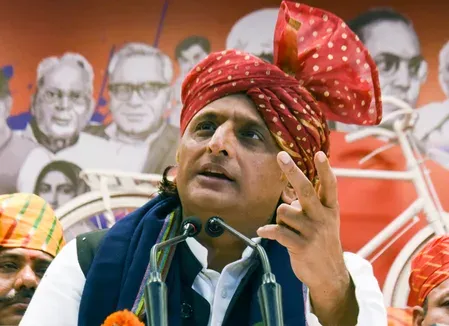
Akhilesh Yadav rewrites PDA to woo Brahmins ahead of UP 2027 polls
Synopsis
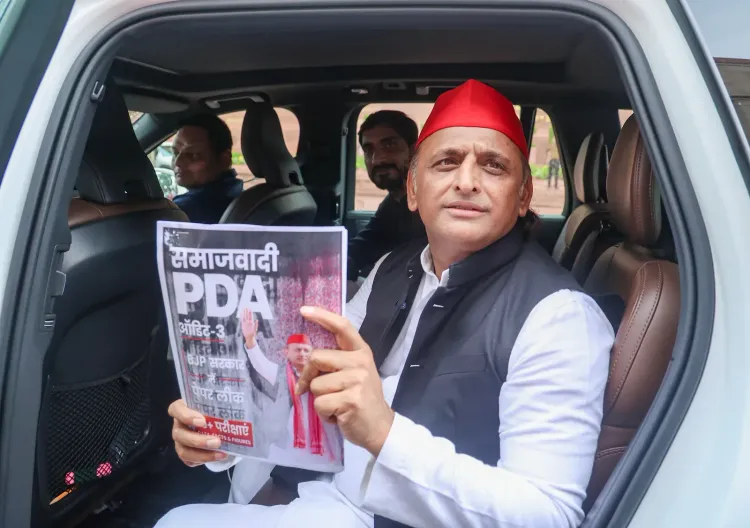
Akhilesh Yadav is rewriting his own PDA playbook ahead of UP 2027 — stretching the 'P' to include 'pandits' (Brahmins) and quietly invoking the Hanuman Chalisa at Bada Mangal events. The SP chief is attempting a coalition no one has pulled off since Mayawati's Dalit-Brahmin bank of 2007, and the arithmetic is as ambitious as it is fragile.
Key Takeaways
Akhilesh Yadav declared at a Brahmin Sammelan in Lucknow that the 'P' in PDA now also stands for 'pandits' , extending the acronym's original meaning.
PDA has been revised multiple times: originally pichhda, Dalit, alpashankhak ; in 2025 the 'A' was changed to aadhi aabadi (women); now 'P' also covers Brahmins.
Yadav has reportedly recited the Hanuman Chalisa at Bada Mangal events, a move political observers call a 'soft Hindutva' strategy.
Brahmins make up an estimated 9–10% of UP's population; OBCs over 50% ; Dalits over 21% ; Yadavs around 19% of the total population.
The Brahmin outreach follows reported BJP bypolls losses in Bihar's Bankipur and Madhya Pradesh's Datia , seen as upper-caste disenchantment with the ruling party.
Mayawati's Dalit-Brahmin coalition in 2007 remains the last successful precedent for this kind of cross-caste arithmetic in UP.
Samajwadi Party (SP) chief Akhilesh Yadav is actively recalibrating his political outreach ahead of the 2027 Uttar Pradesh Assembly election, repeatedly expanding the meaning of his signature PDA acronym to draw in new voter communities — most recently, Brahmins — while simultaneously pursuing a quiet Hindu cultural outreach strategy. The moves signal a deliberate shift from the SP's traditional Muslim-Yadav (MY) coalition politics toward a broader electoral arithmetic.
The Evolving PDA Acronym
When Yadav first coined the PDA framework roughly three years ago, the letters stood for pichhda (backwards), Dalit, and alpashankhak (minority). The acronym has since been reengineered multiple times. In 2025, following the Opposition Mahagathbandhan's poor performance in the Bihar assembly polls, Yadav swapped the 'A' from alpashankhak to 'aadhi aabadi' — a reference to women — in what observers read as an attempt to counter the SP's perceived pro-Muslim image.
Now, the 'P' has been stretched further. Addressing a Brahmin Sammelan at the SP state headquarters in Lucknow earlier this month, Yadav declared that 'P' would henceforth also stand for 'pandits' — the term commonly used for Brahmins. Alpashankhak, meanwhile, appears to have returned to the fold as well, making the acronym a fluid, election-season construct.
Wooing Brahmins: The Political Logic
Brahmins constitute an estimated nine to ten per cent of Uttar Pradesh's population, based on projections from the 2011 census. They are considered a politically influential community and have historically leaned toward the Bharatiya Janata Party (BJP). Yadav's new overture is being linked, according to political observers, to the BJP's losses in Assembly bypolls in Bihar's Bankipur and Madhya Pradesh's Datia — results that are being read as signs of erosion in the party's upper-caste support base.
Notably, it was Bahujan Samaj Party (BSP) chief Mayawati who last engineered a successful Dalit-Brahmin coalition, securing a simple majority in 2007 — a precedent that is not lost on SP strategists.
The 'Soft Hindutva' Layer
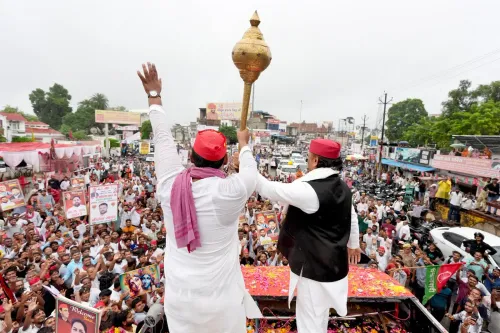
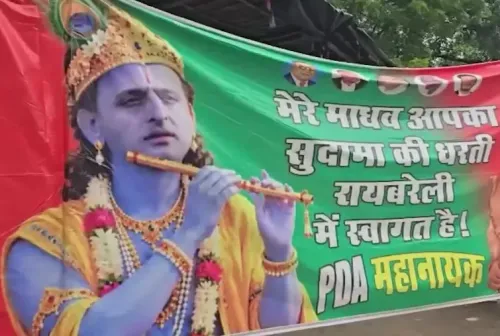
Alongside the PDA rebranding, Yadav has reportedly been reciting verses from the Hanuman Chalisa at Bada Mangal events — a festival observed primarily in eastern Uttar Pradesh, where devotees worship Sankat Mochan Hanuman on all Tuesdays of the month of Jeth (Jyestha, May-June). Reports describe this as an effort to project Yadav as rooted in Sanatan Dharma traditions.
Political observers characterise this as a 'soft Hindutva' strategy — a cultural assertion intended to reassure Hindu voters without alienating the SP's core PDA base. The broader objective, they argue, is to deny the BJP room for counter-polarisation ahead of 2027. Yadav has also reportedly positioned himself as a 'neo-socialist' who consults priests and astrologers before major decisions.
The MY Base: Gains, Losses, and Realignments
The SP's original Muslim-Yadav coalition powered the party through multiple election cycles. However, a section of Yadav voters reportedly shifted toward the BJP after allegations that the SP was tilting disproportionately toward Muslims. The 'M' factor, meanwhile, was contested by rival parties. The cumulative effect has pushed Yadav toward a more expansive electoral strategy.
Uttar Pradesh's demographic breakdown underscores the stakes: Other Backward Classes (OBCs) account for over half the state's population, with Yadavs forming the single largest OBC group at roughly 40 per cent of OBCs and around 19 per cent of the total state population. Dalits constitute over 21 per cent. Religion-wise, Hindus comprised close to 80 per cent of the state's population in the last census, with Muslims at over 19 per cent.
Ayodhya Donations Row and What Comes Next
Yadav has also stepped up protests over the alleged embezzlement of donations at the Ram Janmabhoomi temple in Ayodhya — a move that serves a dual purpose: keeping the BJP on the defensive on a symbolic issue while simultaneously signalling that the SP is not indifferent to Hindu religious concerns.
With the 2027 Uttar Pradesh Assembly election drawing closer, the SP's evolving PDA playbook will face its ultimate test in whether these overlapping outreaches can be stitched into a cohesive, winning coalition — or whether they risk alienating existing supporters faster than they attract new ones.
Point of View
But it carries real risk: Brahmin voters have institutional memory of the SP as a Yadav-first party, and soft cultural signals may not override that. More fundamentally, the acronym's serial reinvention risks becoming a liability — when PDA can mean anything, it may end up meaning nothing to the voters it most needs to persuade. The Mayawati 2007 parallel is instructive, but her Dalit-Brahmin bank was built over years of organisational groundwork, not election-season rebranding.
NationPress
1 Oct 2026
Frequently Asked Questions
What does PDA stand for in Akhilesh Yadav's political strategy?
PDA originally stood for pichhda (backwards), Dalit, and alpashankhak (minority) when Yadav coined it roughly three years ago. The acronym has since been revised — in 2025 the 'A' was changed to aadhi aabadi (women), and most recently the 'P' was expanded to also include 'pandits' (Brahmins), reflecting Yadav's shifting electoral outreach ahead of the 2027 UP polls.
Why is Akhilesh Yadav reaching out to Brahmins before the 2027 UP election?
Yadav's Brahmin outreach follows reported BJP losses in Assembly bypolls in Bihar's Bankipur and Madhya Pradesh's Datia, which observers have read as signs of upper-caste disenchantment with the BJP. Brahmins constitute an estimated 9–10% of Uttar Pradesh's population and are considered a politically influential bloc that has historically backed the BJP.
What is the 'soft Hindutva' strategy attributed to Akhilesh Yadav?
Political observers use the term to describe Yadav's reported recitation of Hanuman Chalisa verses at Bada Mangal events and his positioning as a 'neo-socialist' who consults priests and astrologers. The strategy is seen as an attempt to reassure Hindu voters and prevent BJP counter-polarisation in 2027, without abandoning the SP's core PDA base.
How does the SP's Brahmin outreach compare to Mayawati's 2007 strategy?
BSP chief Mayawati engineered a Dalit-Brahmin coalition that secured her a simple majority in the 2007 Uttar Pradesh Assembly election — the last time such a cross-caste alliance worked decisively in the state. Yadav's current effort draws on a similar logic but faces the challenge that the SP is historically associated with Yadav-first politics, making Brahmin trust harder to build quickly.
What is the demographic breakdown of Uttar Pradesh relevant to these political calculations?
According to estimates based on the 2011 census, OBCs constitute over half of UP's population, with Yadavs forming the largest OBC group at roughly 40% of OBCs and about 19% of the total population. Dalits account for over 21%, Brahmins for 9–10%, and religion-wise, Hindus comprised close to 80% of the state and Muslims over 19%.