SP rewrites PDA to woo women voters ahead of 2027 UP elections
Synopsis
Akhilesh Yadav is quietly rewriting his own political formula. The SP's PDA acronym — built to unite backward, Dalit, and minority voters — is being reframed to also mean 'aadhi aabadi' (half the population), a direct play for women voters who have backed the NDA in Bihar and West Bengal. The pivot is bold, but SP's own record of blocking women's reservation for decades makes it a complicated sell.
Key Takeaways
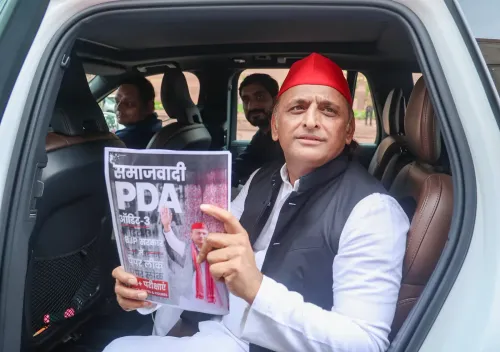
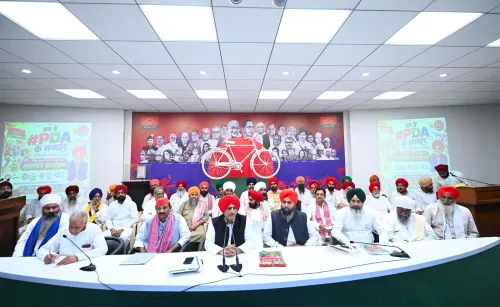
Samajwadi Party chief Akhilesh Yadav is recalibrating the PDA acronym to include women ('aadhi aabadi') ahead of the 2027 UP Assembly elections .
The original PDA stood for Pichda, Dalit, Alpsankhyak ; the new framing adds women as a core constituency.
Yadav's post on X invoking ASHA workers and women's dignity is currently pinned on his handle.
SP has a long record of opposing women's reservation bills — stalling legislation in 1996, 2008, 2010, and 2013–14 — by demanding separate OBC and Muslim women quotas.
In 2026 , SP voted against the Constitution (131st Amendment) Bill , citing delimitation concerns.
Women voters have backed the NDA decisively in recent Bihar and West Bengal elections, making them a key target for opposition parties.
Samajwadi Party (SP) chief Akhilesh Yadav is reportedly recalibrating the party's signature PDA coalition strategy ahead of the 2027 Uttar Pradesh Assembly elections, with a visible pivot toward women voters — a demographic that has increasingly backed the National Democratic Alliance (NDA) in recent state polls. The shift signals a significant rethink of SP's electoral arithmetic as it seeks to broaden its base beyond its traditional support groups.
What PDA Means Now
The PDA acronym — originally standing for Pichda (backward), Dalit (oppressed), and Alpsankhyak (minority) — was itself a widening of the older MY (Muslim-Yadav) formula that had long defined SP's vote bank. Now, according to reports, the party appears to be reframing the 'A' to stand for 'aadhi aabadi' (half of the population), a direct appeal to women voters.
This reinterpretation comes amid concerns that the original PDA framing may have cost the party among a section of Yadav voters, who reportedly shifted allegiance owing to what some analysts describe as an excessive tilt toward minority communities.
Yadav's X Post and the ASHA Worker Angle
Following last year's Bihar election results, Yadav posted a message on X that explicitly redefined PDA to include women. 'The victim is the PDA,' he wrote, before adding: 'In today's BJP regime, we stand with full commitment in support of the demands of our neglected and oppressed ASHA worker sisters in every way. Why is the BJP government backing away from their economic security and social security? When the government has money to squander on BJP's false propaganda and lifeless statues, is the basis for discrimination against ASHA workers simply that they come from exploited, deprived, impoverished backgrounds, or that they are half of the population included in the PDA — meaning women — don't they have the right to live with dignity?'
The post is currently pinned on Yadav's X handle, underscoring its strategic importance to the party's messaging.
Women's Reservation Act: SP's Evolving Stance
This month, following a West Bengal mandate that reportedly favoured a Bharatiya Janata Party (BJP) government for the first time, Yadav urged the Union government to implement the Women Reservation Act, 2023, which provides a one-third quota for women in Parliament and state Assemblies. He reportedly said the SP would continue to raise the issue until the Act is implemented.
The SP's record on women's reservation, however, is complex. The party — along with Lalu Prasad Yadav's Rashtriya Janata Dal (RJD) and other regional allies — had opposed the Women's Reservation Bill even during the Congress-led United Progressive Alliance (UPA) regime, demanding a 'quota within quota' for OBC and minority women. This opposition contributed to stalling the Bill's passage for decades — including attempts in 1996 under the H.D. Deve Gowda government, in 2008 and 2010 under the UPA, and again in 2013–2014.
When the NDA reintroduced the Bill as the Nari Shakti Vandan Adhiniyam in 2023, Yadav supported reservation in principle but demanded clarity on the share for backward, Dalit, minority, and tribal women. In 2026, the SP voted against the Constitution (131st Amendment) Bill, citing its linkage to delimitation.
The Muslim Women Quota Demand
SP leaders have consistently argued that Muslim women — socially and economically backward and underrepresented — deserve a distinct share within any women's reservation framework. If OBC and SC women receive quotas, Muslim women should too, the party contends.
The NDA has countered that religion-based reservation is unconstitutional and that many Muslim sub-castes already fall under OBC categories. Analysts note that SP's position functions as both a legislative stance and an electoral strategy to consolidate Muslim votes ahead of 2027.
The Bigger Electoral Picture
Recent elections in Bihar and West Bengal have underscored the decisive role women voters play in electoral outcomes — and their consistent alignment with the NDA. For SP, which has struggled to make inroads with this demographic, the 'aadhi aabadi' reframing of PDA represents a calculated attempt to close that gap before the next UP Assembly contest. Whether the party's legislative record on women's reservation will complicate that pitch remains an open question.
Point of View
Alongside RJD, spent the better part of three decades blocking women's reservation legislation — not on principle, but to protect its Muslim vote bank through the 'quota within quota' demand. Now, with women voters consolidating behind the NDA in Bihar and West Bengal, Yadav is attempting a course correction that his own legislative history contradicts. The real question is whether UP's women voters — particularly in rural areas where ASHA workers are a lived reality — will respond to the messaging or remember the record. If SP cannot separate its new 'aadhi aabadi' branding from its old obstruction, the 2027 campaign could expose the contradiction rather than paper over it.
NationPress
19 Sept 2026
Frequently Asked Questions
What is the SP's new PDA strategy ahead of the 2027 UP elections?
The Samajwadi Party is reframing its PDA acronym — originally meaning Pichda (backward), Dalit, and Alpsankhyak (minority) — to also include 'aadhi aabadi' (half the population), a direct appeal to women voters. The shift is seen as a response to women voters backing the NDA in recent Bihar and West Bengal elections.
What did Akhilesh Yadav post on X about ASHA workers?
Following Bihar's 2024 election results, Yadav posted a message on X redefining PDA to include women, specifically invoking ASHA workers and questioning why the BJP government was withholding their economic and social security. The post is currently pinned on his official X handle.
What is the SP's stance on the Women Reservation Act, 2023?
Yadav has urged the Union government to implement the Women Reservation Act, 2023, which guarantees a one-third quota for women in Parliament and Assemblies. However, SP supported the Bill in principle while demanding a separate quota for backward, Dalit, minority, and tribal women — a condition it has historically attached to all such legislation.
Has the SP previously opposed women's reservation bills?
Yes. SP, along with RJD and other regional allies, blocked women's reservation legislation multiple times — in 1996, 2008, 2010, and 2013–14 — by demanding a 'quota within quota' for OBC and Muslim women. In 2026, SP voted against the Constitution (131st Amendment) Bill, citing its link to delimitation.
Why does SP demand a separate quota for Muslim women?
SP argues that Muslim women are socially and economically backward and underrepresented, and therefore deserve a distinct share within any women's reservation framework. The NDA has countered that religion-based reservation is unconstitutional and that many Muslim sub-castes already fall under OBC categories. Analysts view SP's position as partly an electoral strategy to consolidate Muslim votes ahead of 2027.