Amit Shah Critiques Congress on Caste Census and OBC Reservations
Synopsis
In a striking address, Amit Shah criticizes Congress for its historical opposition to caste census and OBC reservations, challenging their commitment to social justice amidst ongoing legislative discussions.
Key Takeaways
Amit Shah criticizes Congress for its history of opposing caste census.
He highlights the significance of having an OBC leader as Prime Minister under Modi .
Shah references key historical events regarding the Mandal Commission .
The Women’s Reservation Bill is a focal point of current political debates.
Shah positions the BJP as a champion of OBC empowerment.
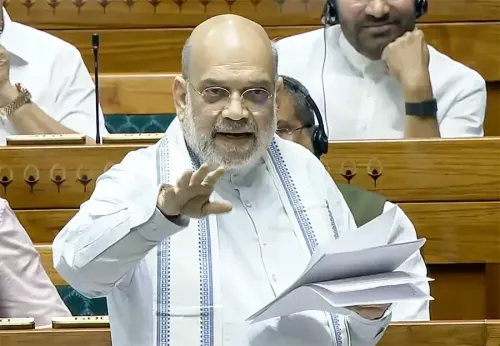
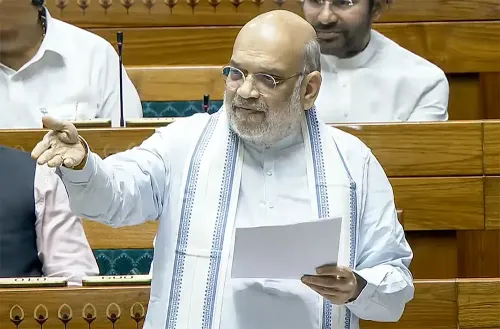
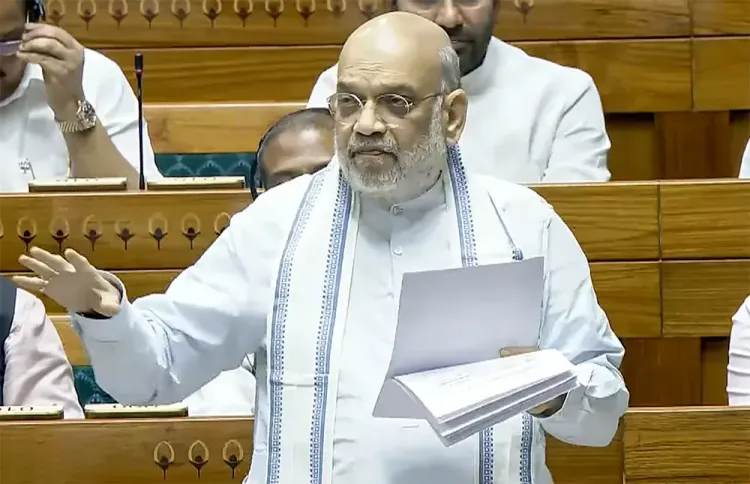
On April 17 in New Delhi (NationPress), Union Home Minister Amit Shah launched a scathing critique of the Congress party during a Lok Sabha session, accusing it of a long-standing opposition to a caste-based census and reservations for Other Backward Classes (OBCs) throughout its tenure in governance.
In response to the ongoing discussion surrounding the Women’s Reservation Bill and related delimitation proposals during the special Parliamentary session, Shah emphasized that Congress has historically neglected social justice initiatives aimed at backing marginalized communities.
He stated, “The Congress party has consistently resisted both caste-based census and reservation policies.”
Shah pointed out that during its time in power, Congress had never appointed an OBC leader to the position of Prime Minister, a situation that changed only with the advent of PM Modi as Prime Minister, marking a significant milestone in the nation's leadership.
To reinforce his argument, Shah referenced key events from Congress's past, such as in 1980 when former Prime Minister Indira Gandhi stalled the recommendations of the Mandal Commission.
In 1990, while serving as Prime Minister, Rajiv Gandhi endorsed the Mandal Commission report but delivered a vehement two-and-a-half-hour speech in Parliament opposing OBC reservations.
The Home Minister contrasted the Congress’s stance with that of the current administration, asserting, “For Congress, electoral success is paramount. However, our priority lies in ensuring the representation of our nation's populace and their authentic involvement in governance.”
His comments arose amid intense discussions in the House regarding the timing and implications of the women's quota legislation, which is tied to a forthcoming delimitation process.
Opposition parties, including Congress and regional allies, have called for a caste census prior to moving ahead with delimitation and the implementation of reservations, arguing it is vital for ensuring proper sub-quotas for OBC, SC, and ST women.
By revisiting Congress’s historical actions on the Mandal Commission, Shah aimed to dismantle the opposition's narrative and position the BJP-led government as the genuine advocate for the empowerment of backward classes.
He reiterated that the focus of the PM Modi administration remains on fostering inclusive representation rather than mere electoral calculations.
This statement is poised to escalate the political discourse surrounding social justice, caste enumeration, and reservation policies as the House continues its discussions on the proposed constitutional amendments.
As voting on critical bills approaches, Shah’s remarks have established a confrontational tone, placing Congress in a defensive position regarding its historical stance on OBC matters.
Point of View
Highlighting the contrasting approaches of the BJP and Congress regarding OBC representation and social justice. This discourse reveals the complexities of caste dynamics in Indian politics and the ongoing struggle for equitable governance.
NationPress
19 Sept 2026
Frequently Asked Questions
What did Amit Shah accuse Congress of?
Amit Shah accused Congress of consistently opposing caste-based census and reservations for Other Backward Classes (OBCs) during its time in power.
What historical actions did Shah cite from Congress?
Shah referenced Indira Gandhi's stalling of the Mandal Commission recommendations in 1980 and Rajiv Gandhi's opposition to OBC reservations in 1990.
What is the significance of the Women's Reservation Bill?
The Women's Reservation Bill aims to ensure greater representation of women in legislative bodies, and its discussion is intertwined with broader issues of caste representation.
How did Shah contrast the BJP's approach to governance?
Shah emphasized that while Congress prioritizes electoral success, the BJP focuses on genuine representation and participation in governance for all communities.
What are the implications of Shah's remarks?
Shah's remarks are expected to intensify political discussions on social justice and reservation policies as the House debates constitutional amendments.