Pakistan Failing Minorities: Amnesty Flags Blasphemy, Censorship Crisis
Synopsis
Amnesty International's 2024 annual report, highlighted by Pakistan's Dawn, reveals a sweeping crackdown on civil liberties — from jailing 100+ PTI leaders and silencing journalists under PECA, to a 25% spike in violence against women and forced Afghan refugee returns. Pakistan's own press is now calling it a fundamental failure of state priorities.
Key Takeaways
Amnesty International's 2024 annual report criticised Pakistan for systematic suppression of civil liberties, targeting journalists, activists, and opposition leaders under PECA and anti-terror laws.
The 27th Constitutional Amendment was flagged for undermining judicial independence and granting broad immunity to heads of the armed forces and the president.
More than 100 PTI leaders and activists were convicted by anti-terrorism courts over the May 9, 2023 protests , including Omer Ayub , Shibli Faraz , and Zartaj Gul .
Imran Khan remains in solitary confinement on what Amnesty calls "politically motivated charges," with restricted access to legal counsel.
Child rights organisation Sahil recorded a 25 per cent increase in reported violence against women and girls over an 11-month period .
Pakistan's leading daily Dawn called on the government to reform repressive laws, criminalise enforced disappearances, and uphold the rights of minorities and Afghan refugees.
Islamabad, April 23: Pakistan's systematic persecution of religious minorities, rampant misuse of blasphemy laws, escalating violence against women, and the forced repatriation of Afghan refugees collectively expose the state's deep failure to protect its most vulnerable populations, according to Amnesty International's latest annual report, as highlighted by Pakistan's leading daily Dawn. The findings paint a damning picture of a nation where civil liberties are eroding at an alarming pace under legislative and executive pressure.
Amnesty International's Damning Verdict on Civil Liberties
Amnesty International, in its 2024 annual report released on Tuesday, April 22, documented a systematic pattern of restrictions on freedom of expression, peaceful assembly, and political participation across Pakistan. The report identified amendments to the Prevention of Electronic Crimes Act (PECA) and anti-terror laws as key instruments being weaponised against dissent.
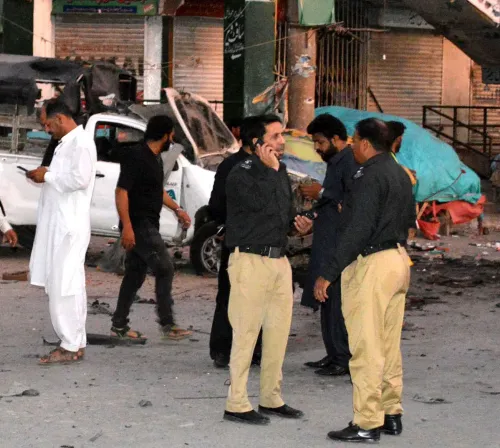
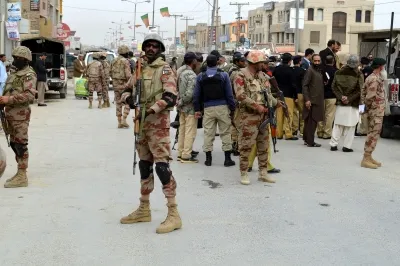
Journalists, civil society activists, and opposition political leaders have faced arrests and persecution under these expanded laws. Enforced disappearances remain a chronic and unresolved concern, with security forces continuing to use coercive tactics against protesters and imposing arbitrary restrictions on movement.
The report also flagged the use of economic pressure on media outlets — specifically, the selective withdrawal of government advertising from publications that carry critical reporting — as a covert but effective tool of censorship.
Judiciary Independence Undermined, Opposition Leaders Jailed
On the legislative front, Amnesty's report highlighted that the 27th Constitutional Amendment "significantly undermined the independence of the higher judiciary" while providing sweeping immunity to the heads of the armed forces and the president — a move critics say shields the establishment from accountability.
More than 100 Pakistan Tehreek-e-Insaf (PTI) leaders and activists were convicted by anti-terrorism courts in connection with the May 9, 2023 protests. Among those convicted are prominent opposition figures including Omer Ayub, Shibli Faraz, Member of National Assembly Zartaj Gul, and activist Khadija Shah.
PTI founder Imran Khan remains imprisoned on what Amnesty describes as "politically motivated charges." The report noted he has been held in solitary confinement and denied regular access to his legal counsel — a condition that human rights bodies globally consider a violation of fair trial standards.
Minorities, Women, and Afghan Refugees Bearing the Brunt
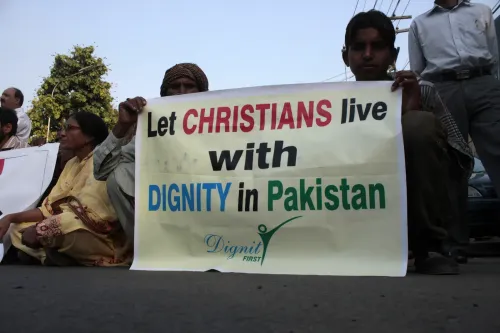
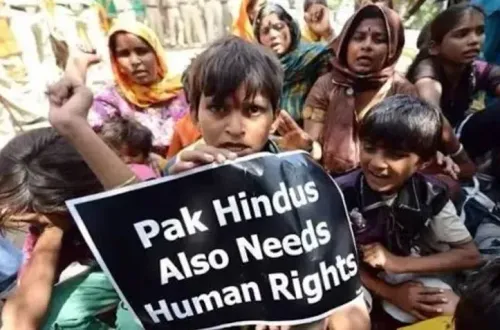
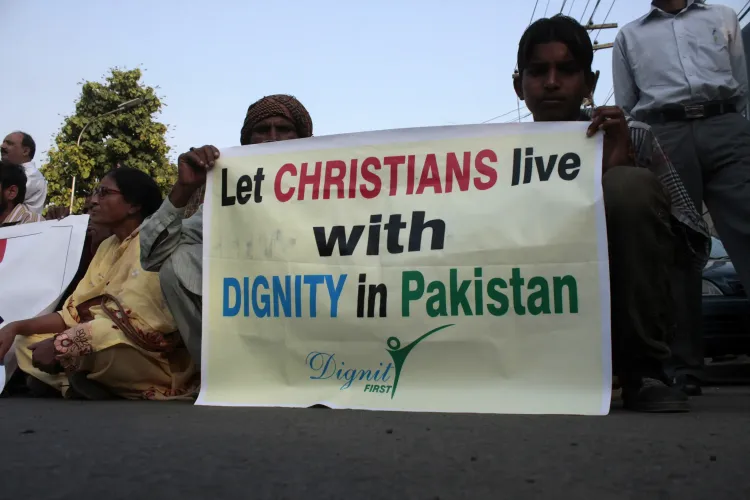
The Dawn editorial drew sharp attention to the persecution of religious minorities and the continued misuse of Pakistan's controversial blasphemy laws, which rights groups have long argued are disproportionately weaponised against Christians, Hindus, Ahmadis, and Shia Muslims.
On violence against women, the Amnesty report cited data from the child rights organisation Sahil, which documented a 25 per cent increase in reported abuse cases over an 11-month period — a figure that underscores the worsening safety crisis for women and girls across Pakistan.
The forced return of Afghan refugees — many of whom face persecution, torture, or death upon repatriation — was flagged as another critical failure, placing Pakistan in potential violation of international non-refoulement obligations under refugee law.
Journalists and Human Rights Defenders Targeted Under PECA
The report specifically named journalists Asad Toor and Sohrab Barkat as individuals barred from leaving Pakistan, with Barkat subsequently charged under PECA. Human rights defenders Imaan Zainab Mazari and Hadi Ali Chatta were criminally charged for social media posts — a chilling signal to civil society about the cost of speaking out.
This pattern reflects a broader regional trend where digital speech laws, originally framed as cybersecurity tools, have been repurposed as instruments of political suppression — a trajectory documented in countries ranging from Bangladesh to Egypt.
Dawn's Call to Action and the Road Ahead
The Dawn editorial was unequivocal in its prescription: "Pakistan must reform repressive laws, criminalise enforced disappearances, safeguard media independence and uphold the rights of minorities and refugees. It must also restore investment in social sectors and strengthen climate resilience. At its core, it is a question of priorities, and it appears rights have been set aside."
This critique from within Pakistan's own mainstream press is significant — it signals that even establishment-adjacent media can no longer ignore the scale of the rights crisis. With Pakistan seeking continued IMF bailout support and positioning itself for international investment, sustained global scrutiny over its human rights record could have direct economic and diplomatic consequences in the months ahead.
As international pressure mounts and domestic dissent grows, the trajectory of Pakistan's civil liberties situation will be closely watched by UN human rights bodies, bilateral partners, and diaspora advocacy groups through the remainder of 2025.
Point of View
A newspaper deeply embedded in Pakistan's establishment ecosystem, has chosen to amplify it so forcefully. This signals a rare fracture between the civilian press and the security-political complex that has long managed Pakistan's narrative. The simultaneous crackdown on minorities, women, journalists, and political opposition is not a series of isolated failures — it is a coherent pattern of a state prioritising control over constitutionalism. For India and the broader region, a Pakistan that suppresses internal dissent while seeking IMF lifelines and international legitimacy presents a contradiction that global partners can no longer conveniently overlook.
NationPress
19 Sept 2026
Frequently Asked Questions
What did Amnesty International's 2024 report say about Pakistan?
Amnesty International's 2024 annual report documented systematic restrictions on civil liberties in Pakistan, including curbs on freedom of expression, peaceful assembly, and political participation. It criticised amendments to PECA and anti-terror laws, enforced disappearances, persecution of minorities, and the forced return of Afghan refugees.
Why are over 100 PTI leaders in jail in Pakistan?
More than 100 PTI leaders and activists were convicted by anti-terrorism courts in cases linked to the May 9, 2023 protests across Pakistan. Those convicted include opposition leaders Omer Ayub, Shibli Faraz, MNA Zartaj Gul, and activist Khadija Shah.
What is the status of Imran Khan's imprisonment according to Amnesty?
Amnesty International's report states that PTI founder Imran Khan remains in prison on what it describes as politically motivated charges. He has been held in solitary confinement and denied regular access to his legal counsel.
How are blasphemy laws being misused in Pakistan?
Pakistan's blasphemy laws are frequently used against religious minorities including Christians, Ahmadis, and Hindus, often on unsubstantiated accusations. Rights groups argue the laws are weaponised for personal vendettas and communal violence rather than genuine religious protection.
What is Pakistan's PECA law and why is it controversial?
PECA, or the Prevention of Electronic Crimes Act, is Pakistan's primary digital speech law, originally framed to combat cybercrime. It has become deeply controversial because authorities have used it to arrest journalists, ban activists from travelling, and criminally charge human rights defenders for social media posts critical of the government.