Baksei Chamkrong temple restoration complete at Angkor Park
Synopsis
A 1,000-year-old Hindu temple at Cambodia's UNESCO-listed Angkor Archaeological Park was on the brink of collapse — stones had already fallen twice in one rainy season. Cambodian conservators have now completed a seven-month emergency rescue, marking a milestone in the country's growing capacity to preserve its own ancient heritage without foreign-led intervention.
Key Takeaways
The Baksei Chamkrong temple emergency restoration at Angkor Archaeological Park was completed in May 2026 .
The project ran from October 2025 to May 2026 , lasting approximately seven months.
Critical damage included decayed bricks on the roof and fallen stones in the upper sanctuary; stones had fallen twice during the 2025 rainy season.
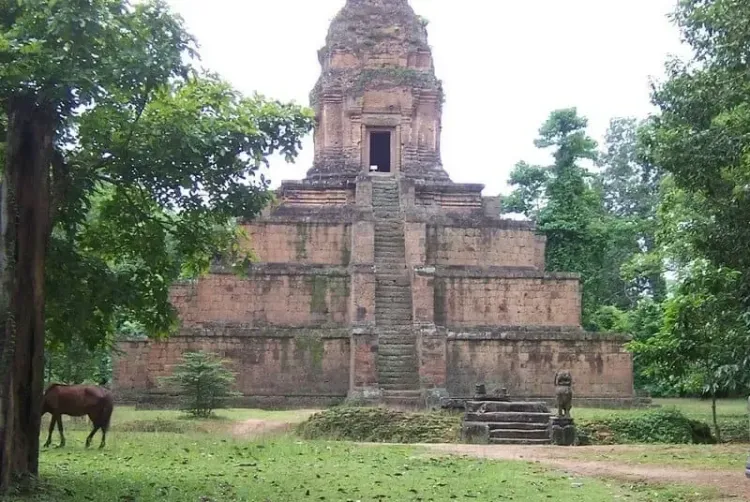
The 29.2-metre-high temple, over 1,000 years old , is built of bricks, laterite, and sandstone on a four-tiered laterite platform.
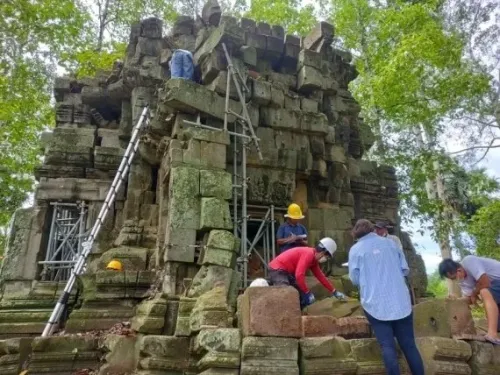
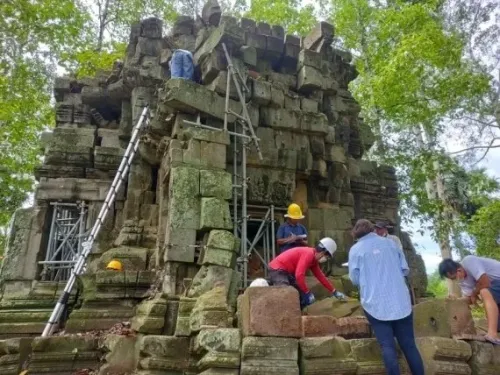
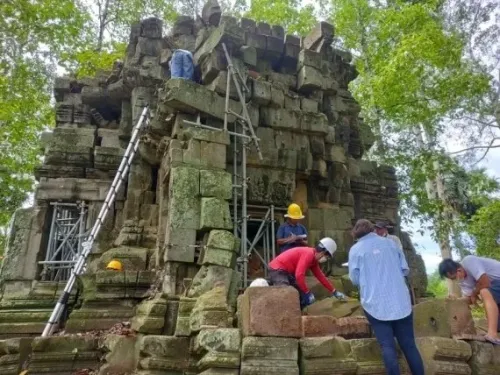
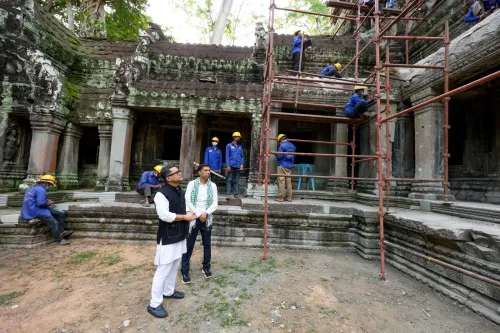
Scaffolding will remain temporarily to allow experts to monitor mortar and cracked stones for long-term durability.
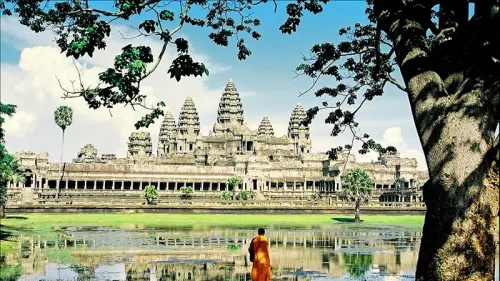
Angkor Archaeological Park in Siem Reap province is home to 91 ancient temples built between the 9th and 13th centuries .
Archaeologists have completed the emergency restoration of the early 10th-century Baksei Chamkrong temple in Cambodia's Angkor Archaeological Park, after critical sections of the 1,000-year-old Hindu monument were at risk of collapse. The APSARA National Authority (ANA) confirmed the project's completion in an official release on 9 May 2026.
What Was at Risk
The most vulnerable sections identified by conservators were the roof and the inner walls of the upper sanctuary. According to Put Soth, head of the Baksei Chamkrong restoration site, the roof had suffered severe deterioration due to decayed bricks, and stones had fallen twice during the rainy season in 2025. The 29.2-metre-high tower, built of bricks, laterite, and sandstone on a four-tiered laterite platform, faced a genuine risk of structural failure without urgent intervention.
How the Restoration Was Carried Out
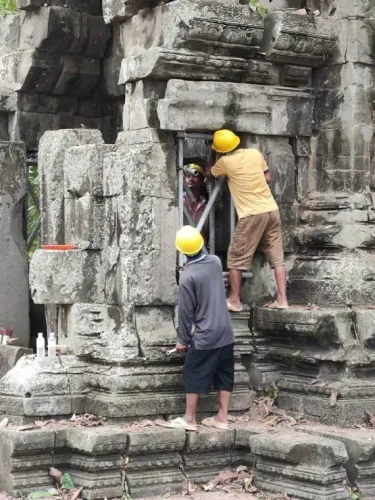
The emergency stabilisation project began in October 2025 and concluded in May 2026. The ANA restoration team replaced damaged bricks with newly produced ones, refilled the interior core of the upper structure to restore its original form, and applied additional mortar reinforcement to strengthen the walls. Soth said the work was aimed at ensuring
Point of View
But for who saved it. Angkor's conservation history has long been dominated by foreign missions — French, Japanese, Indian, and Chinese teams have each staked a claim to its monuments. The ANA leading this project with Cambodian specialists signals a deliberate shift toward sovereign heritage management, one that carries both cultural weight and diplomatic significance. The caveat is that 91 temples across a UNESCO site represent an enormous maintenance burden; emergency interventions will keep recurring unless a systematic, funded conservation programme is institutionalised. One rescued tower does not a preservation strategy make.
NationPress
22 Sept 2026
Frequently Asked Questions
What is the Baksei Chamkrong temple?
Baksei Chamkrong is an early 10th-century Hindu temple located in Cambodia's UNESCO-listed Angkor Archaeological Park in Siem Reap province. Standing 29.2 metres tall on a four-tiered laterite platform, it is one of 91 ancient temples in the park built between the 9th and 13th centuries.
Why was emergency restoration needed at Baksei Chamkrong?
Parts of the temple's roof and inner walls of the upper sanctuary had severely deteriorated due to decayed bricks, and stones had fallen twice during the 2025 rainy season, placing the structure at risk of collapse. The APSARA National Authority launched an emergency stabilisation project to prevent further damage.
When was the Baksei Chamkrong restoration completed?
The emergency stabilisation and restoration project began in October 2025 and was completed in May 2026, spanning approximately seven months.
What restoration work was carried out on the temple?
The ANA team replaced damaged bricks with newly produced ones, refilled the interior core of the upper structure to restore its original form, stabilised remaining walls, and applied mortar reinforcement. Scaffolding has been left in place temporarily for ongoing monitoring of the mortar and cracked stones.
Is the Angkor Archaeological Park a UNESCO World Heritage Site?
Yes, the Angkor Archaeological Park in northwest Siem Reap province, Cambodia, is a UNESCO-listed site. It is home to 91 ancient temples constructed between the 9th and 13th centuries and is one of Southeast Asia's most significant archaeological landscapes.