Andhra Pradesh adopts Dharavi model for Visakhapatnam slum redevelopment
Synopsis
Andhra Pradesh is betting on a Dharavi-style TDR mechanism to rehouse slum dwellers in Visakhapatnam without spending public money — a market-driven first for the state. If the 177-unit Velampeta pilot works, it could reshape urban housing policy across AP's congested cities.
Key Takeaways
Andhra Pradesh has approved a Dharavi-inspired slum redevelopment model, beginning with the Velampeta slum in Visakhapatnam .
The pilot will deliver 177 housing units on a 1,986.45 sq metre site via a high-rise of up to 45 metres .
A private bidder will finance construction in exchange for Transferable Development Rights (TDR) at a ratio of up to 1:4 — no direct government expenditure.
Special exemptions include reduced parking norms ( 10% vs the standard 22% ) and waiver of GVMC fees.
The Commissioner and Director of Municipal Administration have been directed to draft a broader slum and middle-class housing policy for statewide replication.
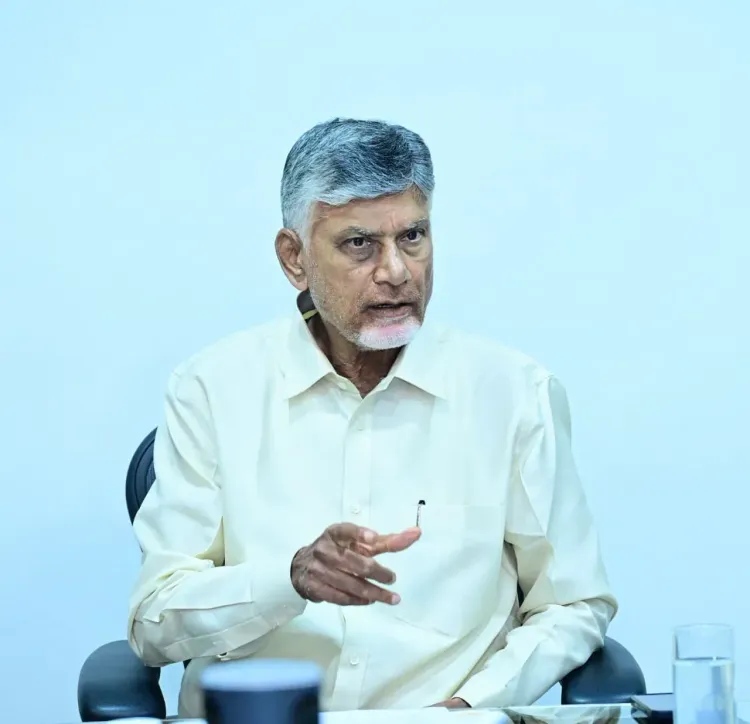
The Andhra Pradesh government, led by Chief Minister Chandrababu Naidu, has cleared a private-sector-driven slum redevelopment model — inspired by large-scale urban renewal efforts such as the Dharavi project in Mumbai — beginning with the Velampeta slum in Visakhapatnam, officials said on Tuesday, 11 August. The pilot marks a significant departure from conventional government-funded housing schemes, instead leveraging urban land value and Transferable Development Rights (TDR) to finance modern housing for existing residents.
How the Velampeta Pilot Works
The state government has granted permission to the Greater Visakhapatnam Municipal Corporation (GVMC) to redevelop the Velampeta slum in Zone-IV, Ward No. 35 under the Visakhapatnam Economic Region (VER) Programme on a Design, Build, Finance and Transfer (DBFT) basis. The project will deliver 177 housing units on a site measuring just 1,986.45 sq metres, through the construction of a high-rise residential complex of up to 45 metres.
Rather than drawing on the state exchequer directly, the successful private bidder will undertake construction in exchange for TDR — the right to develop additional floor space elsewhere in the city. The government has set a TDR ratio of up to 1:4 as the maximum bidding parameter, with the final ratio to be determined through a competitive tender. Bidders will quote their TDR requirement in lieu of a cash construction cost, creating a market-driven pricing mechanism for the redevelopment.
Special Relaxations Approved
To make the Velampeta project financially viable, the government has approved a package of exemptions under the Andhra Pradesh Building Rules. These include permission to construct a high-rise complex in a congested locality, reduced setback requirements, and a parking provision of approximately 10 per cent of total built-up area — against the normally prescribed 22 per cent. Specified fees and charges payable to GVMC, urban development authorities, and other agencies have also been waived.
Statutory requirements covering fire safety, energy conservation, and post-allotment maintenance of common areas and utilities must, however, be fully complied with before possession is handed over to beneficiaries.
Replication Across Visakhapatnam and Beyond
The government has directed GVMC to execute the Velampeta project in a time-bound manner and treat it as a pilot for scaling across other slum pockets within the Visakhapatnam Economic Region. Simultaneously, the Commissioner and Director of Municipal Administration have been tasked with preparing a draft policy for slum redevelopment and middle-class housing in consultation with all stakeholder departments.
Officials said the Visakhapatnam model could serve as a scalable framework for rejuvenating congested urban settlements across Andhra Pradesh while unlocking economic value from scarce city land. Notably, the in-situ approach is designed to ensure that existing residents receive modern housing without being permanently displaced from their neighbourhoods — a key criticism that has dogged earlier slum clearance drives in India.
The Broader Context
The Dharavi redevelopment project in Mumbai — one of Asia's largest slum rehabilitation exercises — has long been cited as both a template and a cautionary tale: a model that promises in-situ housing but has faced repeated delays and disputes over beneficiary eligibility and private developer profit. Andhra Pradesh's adaptation of the TDR mechanism attempts to address the fiscal burden problem, though independent urban planners have cautioned that TDR-based models can inflate land values in receiving zones and require robust regulatory oversight to prevent misuse. How the state navigates those trade-offs will determine whether Velampeta becomes a genuine blueprint or another stalled urban renewal experiment.
Point of View
Largely because TDR inflates land values in receiving zones and creates speculative pressure that regulators rarely contain. The Velampeta pilot's true test is not whether 177 units get built, but whether the beneficiary list stays clean, the TDR receiving zones are capped, and the post-allotment maintenance framework survives beyond the builder's exit. If the state can demonstrate those controls at a 177-unit scale, the statewide policy directive has a credible foundation. If it cannot, Andhra Pradesh risks replicating not just Dharavi's ambition but also its decade-long delays.
NationPress
25 Sept 2026
Frequently Asked Questions
What is the Dharavi model that Andhra Pradesh is adopting for slum redevelopment?
The Dharavi model refers to a large-scale in-situ slum redevelopment approach pioneered in Mumbai, where private developers finance the construction of free housing for existing slum residents in exchange for the right to build and sell additional floor space on the same or nearby land. Andhra Pradesh is adapting this concept using Transferable Development Rights (TDR) to redevelop the Velampeta slum in Visakhapatnam without direct government expenditure.
What is the Velampeta slum redevelopment project?
The Velampeta slum redevelopment is a pilot project approved by the Andhra Pradesh government under the Visakhapatnam Economic Region Programme. It will construct 177 housing units on a 1,986.45 sq metre site in Zone-IV, Ward No. 35 of Visakhapatnam, through a high-rise complex of up to 45 metres, financed by a private bidder in exchange for TDR at a ratio of up to 1:4.
What are Transferable Development Rights (TDR) and how do they work in this project?
TDR is a planning tool that allows a developer to transfer unused floor-space entitlements from one plot to another. In the Velampeta project, the private bidder who builds free housing for slum residents will receive TDR — the right to construct additional floor space elsewhere in the city — as payment, eliminating the need for the government to pay cash construction costs.
Who will benefit from the Velampeta redevelopment, and will residents be displaced?
The existing residents of the Velampeta slum in Visakhapatnam are the intended beneficiaries, who will receive modern housing units in the newly constructed high-rise. The in-situ design is specifically intended to avoid permanent displacement, allowing residents to remain within their existing neighbourhood.
Will this model be extended to other slums in Andhra Pradesh?
Yes, the government has directed the Commissioner and Director of Municipal Administration to prepare a draft statewide policy for slum redevelopment and middle-class housing. The Velampeta project is explicitly designated as a pilot for replication across other slum pockets within the Visakhapatnam Economic Region and, eventually, across Andhra Pradesh.