Army's Spearhead Division Launches Major Cleanliness Drive in Arunachal Frontier Valleys
Synopsis
The Indian Army's Spearhead Division conducted a large-scale cleanliness drive across three strategic frontier valleys in Arunachal Pradesh on April 23, while Assam Rifles facilitated a meeting between specially abled students from Mizoram and Governor V.K. Singh, revealing how India's military is doubling as a development force along its China border.
Key Takeaways
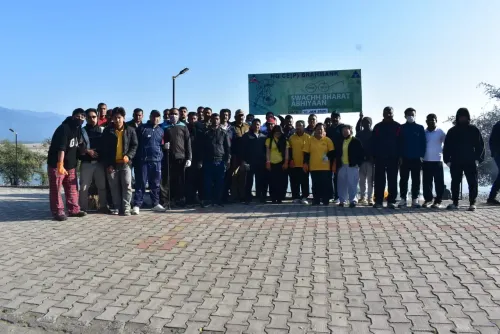
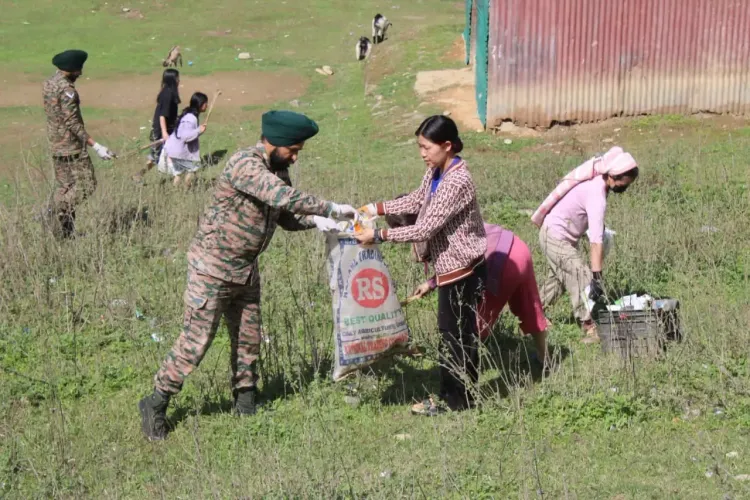
Army's Spearhead Division under Spear Corps conducted a large-scale cleanliness drive across Siyom, Subansiri, and Siyang valleys in Arunachal Pradesh on April 23, 2025 .
The drive was themed Clean Surroundings, Strong Communities and included structured awareness sessions on sustainable environmental practices for local residents.
Defence spokesman Lieutenant Colonel Mahendra Rawat confirmed the initiative underscores the Army's commitment to environmental conservation and community welfare in remote frontier zones.
Assam Rifles facilitated an educational tour for 18 specially abled students and 5 teachers from Shalom Special School, Serchhip district, Mizoram , who met Governor General (Retd) Vijay Kumar Singh at Lok Bhavan, Aizawl .
Both initiatives are part of a broader civil-military strategy to strengthen community bonds and demonstrate Indian institutional presence in strategically sensitive northeastern border regions.
The Siyom, Subansiri, and Siyang valleys lie adjacent to the Line of Actual Control (LAC) , a region China claims as part of its territory, giving these Army outreach programmes significant geopolitical weight.
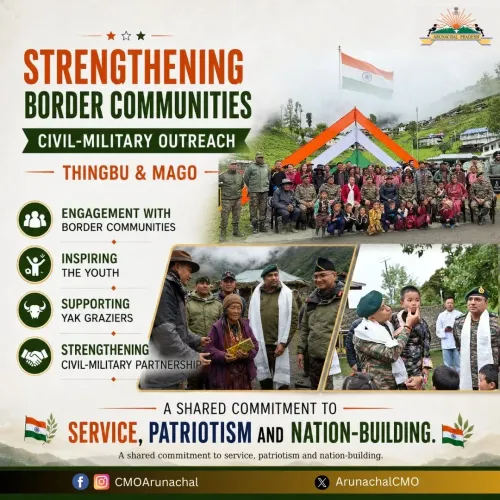
The Indian Army's Spearhead Division under Spear Corps launched a sweeping cleanliness campaign across the Siyom, Subansiri, and Siyang valleys in Arunachal Pradesh on April 23, reinforcing its dual mandate of border security and community welfare in one of India's most strategically sensitive frontier regions. The initiative drew enthusiastic participation from local residents and stands as a significant example of civil-military collaboration in India's remote northeastern borderlands.
Operation Overview: Scale and Scope of the Drive
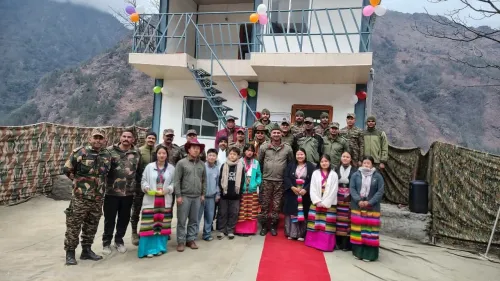
Defence spokesman Lieutenant Colonel Mahendra Rawat confirmed that the cleanliness drive was conducted as part of the Army's broader civic outreach programme, aimed at environmental conservation and the holistic well-being of communities living in remote frontier zones. The campaign spanned multiple valleys simultaneously, indicating a coordinated, large-scale operational effort rather than a token gesture.
Guided by the theme Clean Surroundings, Strong Communities, the initiative emphasized the critical link between clean public spaces, public health, hygiene standards, and civic pride among border populations who often lack access to regular municipal services. The Army's involvement fills a critical governance gap in these geographically isolated areas.
Community Participation and Awareness Outreach
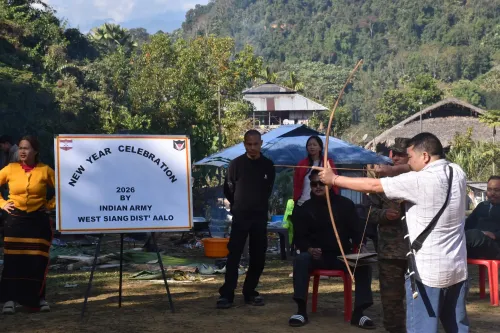
Local residents across the three valleys turned out in significant numbers, reflecting what officials described as a shared sense of responsibility towards preserving the natural beauty of the region. This community-first approach is central to the Army's hearts-and-minds strategy in Arunachal Pradesh, a state that shares a 1,129-kilometre disputed border with China.
Beyond physical cleanliness, the programme incorporated structured awareness interactions encouraging residents to adopt sustainable environmental practices. Participants were urged to contribute actively toward a cleaner, healthier ecosystem, a message that carries added weight in biodiversity-rich valleys like Siyom and Subansiri, which are home to rare flora and fauna.
Lieutenant Colonel Rawat underscored that cleanliness is not merely a civic virtue but a collective duty that strengthens community spirit and social harmony, language that signals the Army's intent to use such drives as tools for long-term social cohesion in a region where ethnic diversity and geographical isolation can otherwise create divisions.
Strategic Significance: Why These Valleys Matter
The choice of Siyom, Subansiri, and Siyang valleys is not incidental. These regions lie in Upper Arunachal Pradesh, directly adjacent to the Line of Actual Control (LAC) with China, which has repeatedly claimed the entire state as part of its territory. The Indian Army's visible civic presence in these valleys serves a dual strategic purpose: building local trust and demonstrating Indian administrative reach in contested frontier zones.
This comes amid heightened infrastructure development activity along the China border, including the construction of the Sela Tunnel and expansion of the Trans-Arunachal Highway, reflecting New Delhi's accelerated push to integrate border communities into the national mainstream. Civil-military cleanliness drives complement this larger strategic architecture.
Assam Rifles Facilitates Interaction for Specially Abled Students in Mizoram
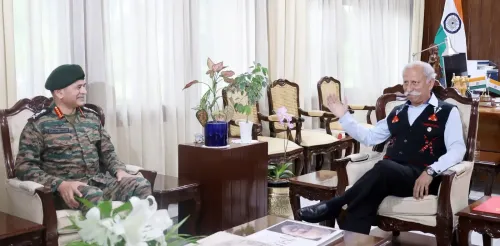
In a parallel development in Mizoram, the Assam Rifles facilitated an educational tour for 18 specially abled students and 5 teachers from Shalom Special School in Serchhip district. The group met with Mizoram Governor General (Retired) Vijay Kumar Singh at Lok Bhavan, Aizawl on Thursday, April 24.
The Governor engaged warmly with the students, appreciating their enthusiasm and encouraging them to pursue their aspirations with confidence. Lieutenant Colonel Rawat noted that the interaction left a lasting impression on the students and reinforced institutional commitment to the welfare and overall development of differently-abled children in the Northeast.
The Assam Rifles' role in organizing this educational tour highlights a lesser-discussed dimension of paramilitary operations in India's Northeast, their function as social enablers in states where civil infrastructure for inclusivity remains underdeveloped.
Broader Implications for Civil-Military Relations in Northeast India
Both initiatives reflect a deliberate institutional strategy to position the Indian Army and its affiliated forces as development partners, not just security providers, in India's Northeast. This approach has historical precedent: the Army's Operation Sadbhavana, launched in the 1990s, pioneered civic action in conflict-affected border regions and remains a template for such outreach today.
As Arunachal Pradesh continues to gain geopolitical prominence amid the India-China rivalry, expect the frequency and scale of such civil-military outreach programmes to increase significantly in the months ahead.
Point of View
And these initiatives are far more than PR exercises. With China aggressively contesting Arunachal Pradesh diplomatically and militarily, the Army's visible civic presence in the Siyom, Subansiri, and Siyang valleys sends a clear message: Indian institutions are embedded here, not just deployed. The Assam Rifles' outreach to specially abled children in Mizoram reflects a sophisticated understanding that lasting security requires social legitimacy. What mainstream coverage misses is that these drives are part of a doctrine, not charity, and their frequency will only grow as the India-China border competition intensifies.
NationPress
16 Sept 2026
Frequently Asked Questions
What cleanliness drive did the Indian Army conduct in Arunachal Pradesh in April 2025?
The Indian Army's Spearhead Division under Spear Corps conducted a large-scale cleanliness drive across the Siyom, Subansiri, and Siyang valleys in Arunachal Pradesh on April 23, 2025. The initiative was themed Clean Surroundings, Strong Communities and included awareness sessions on sustainable practices.
Which valleys in Arunachal Pradesh were covered in the Army's cleanliness drive?
The cleanliness drive covered three frontier valleys: Siyom, Subansiri, and Siyang, all located in Upper Arunachal Pradesh near the Line of Actual Control with China. These are strategically significant regions that border disputed territory claimed by Beijing.
What did Assam Rifles do for specially abled students in Mizoram?
Assam Rifles facilitated an educational tour for 18 specially abled students and 5 teachers from Shalom Special School in Serchhip district, Mizoram. The group met Mizoram Governor General (Retired) Vijay Kumar Singh at Lok Bhavan, Aizawl, where he encouraged the students to pursue their aspirations.
Why is the Indian Army conducting civic outreach in Arunachal Pradesh?
The Army's civic outreach in Arunachal Pradesh serves a dual purpose: building trust with local communities in remote border areas and reinforcing India's administrative presence in a region disputed by China. Such initiatives are part of a long-standing doctrine of civil-military engagement in the Northeast.
Who is the Defence spokesman for the Spear Corps initiatives in Northeast India?
Lieutenant Colonel Mahendra Rawat is the Defence spokesman who provided official statements regarding both the Spearhead Division's cleanliness drive in Arunachal Pradesh and the Assam Rifles' educational initiative in Mizoram.