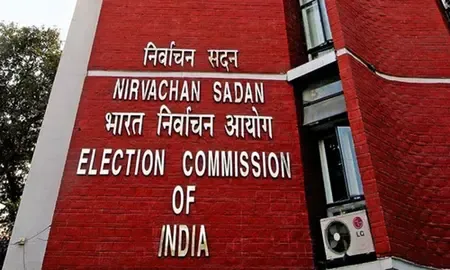
Are Voter Roll Revisions in Assam Unconstitutional?
Synopsis
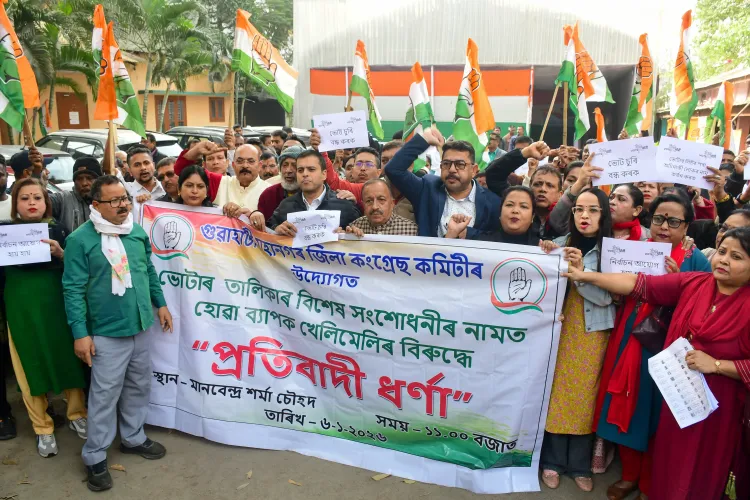
Opposition parties in Assam have raised alarms over the ongoing Special Revision of electoral rolls, labeling the process unconstitutional and alleging widespread voter disenfranchisement and political interference. They warn that millions of eligible voters might be excluded as they call for immediate corrective measures to ensure electoral integrity.
Key Takeaways
Opposition parties in Assam allege serious electoral violations.
Claims of political interference and harassment of voters.
Final electoral rolls are set to be published on February 10 .
Demands for corrective measures to ensure electoral integrity.
Concerns raised over disenfranchisement of eligible voters.
Guwahati, Jan 25 (NationPress) - On Sunday, opposition political factions in Assam submitted a memorandum to the Chief Electoral Officer (CEO) alleging significant legal breaches, political meddling, and targeted intimidation of authentic voters during the current Special Revision (SR) of electoral rolls. Labeling the process as arbitrary, unlawful, and unconstitutional, these parties cautioned that millions of eligible voters could be omitted from the final rolls, set for publication on February 10.
The memorandum states that election officials at multiple levels have contravened provisions of the Representation of the People Act, 1950, the Registration of Electors Rules, 1960, the Manual on Electoral Rolls, 2023, and specific instructions issued by the Election Commission of India (ECI) on November 17, 2025.
The opposition is demanding immediate corrective measures to guarantee that the revision process remains free, fair, and unbiased. According to data referenced, the draft electoral roll released on December 27, 2025, contained 2.51 crore voters, with authorities asserting complete verification across over 61 lakh households. The ECI had previously identified 4.78 lakh deceased voters, 5.23 lakh shifted voters, and 53,619 duplicate entries for removal.
Despite these acknowledgments, the opposition claims that an unusually high volume of bulk objections arose during the claims and objections period from December 27 to January 22, predominantly citing death or permanent relocation. The parties have cast doubt on the legitimacy of these objections, asserting that such extensive demographic shifts within a brief period are implausible.
They argue that Electoral Registration Officers (EROs) should have outright dismissed these objections rather than issuing notices. Furthermore, the memorandum alleges that numerous objections were fraudulently submitted without the knowledge of the listed objectors, misusing EPIC numbers and mobile information. Nevertheless, notices were purportedly sent to voters, allegedly breaching Rule 17 of the Registration of Electors Rules, 1960.
The opposition also contends that notices frequently lacked clear rationale and provided unreasonably brief response times, contrary to ECI standards. Serious apprehensions were raised regarding alleged coercion of Booth Level Officers (BLOs) to perform suo moto deletions of voter names, which is prohibited under ECI rules.
Some BLOs have claimed they experienced coercion or misuse of their signatures.
Additionally, the opposition charged that voters displaced by eviction actions were barred from submitting Form 8 for address modifications, effectively disenfranchising them.
Pointing to alleged political interference, the memorandum highlighted supposed involvement of BJP officials in the South Kamrup Co-District Office, citing reports of late-night meetings and mass issuance of notices.
It also referenced a recent public statement from the Assam Chief Minister, alleging the targeted delivery of notices to members of the Miya community, which they view as indicative of a preordained bias and a direct challenge to electoral impartiality.
The opposition cautioned that ongoing meddling in the SR process could erode constitutional assurances of equality and the principles of free and fair elections.
Point of View
It is crucial to approach the allegations surrounding Assam's voter roll revisions with a lens of scrutiny and fairness. While the opposition has raised significant concerns about potential disenfranchisement and legal violations, it is essential to await a comprehensive investigation and response from electoral authorities to ensure that all voices are heard in this pivotal issue.
NationPress
24 Sept 2026
Frequently Asked Questions
What are the main allegations made by the opposition in Assam?
The opposition alleges large-scale legal violations, political interference, and targeted harassment of voters during the Special Revision of electoral rolls.
What is the significance of the Special Revision of electoral rolls?
The Special Revision is crucial for updating voter lists and ensuring that eligible voters can participate in upcoming elections.
When will the final electoral rolls be published?
The final electoral rolls are scheduled for publication on February 10.
What actions have the opposition called for?
The opposition has demanded immediate corrective measures to ensure a free, fair, and unbiased revision process.
What is the potential impact of these alleged violations?
If true, these violations could lead to significant disenfranchisement of eligible voters, undermining the electoral process.