What Are the Implications of Bahrain Foreign Minister's Visit to India?

Synopsis
Bahrain’s Foreign Minister Abdullatif bin Rashid Alzayani visits India to co-chair the 5th India-Bahrain High Joint Commission with EAM S. Jaishankar. This significant engagement aims to enhance bilateral relations and explore new areas of cooperation. Key discussions will focus on trade, investment, and cultural exchanges.
Key Takeaways
Strengthening Bilateral Relations: The visit aims to enhance ties between India and Bahrain.
Focus on Economic Collaboration: Discussions will explore trade, investment, and cultural exchanges.
Historical Context: India-Bahrain relations date back to 1971.
Key Sectors: Bilateral trade encompasses petroleum, machinery, and food.
Future Prospects: The partnership is set to grow in digital technology and renewable energy.
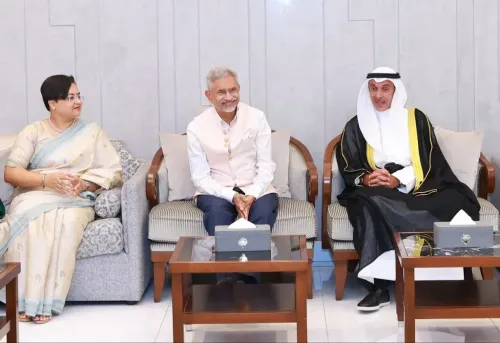
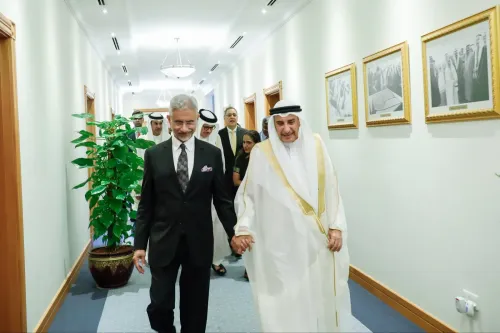
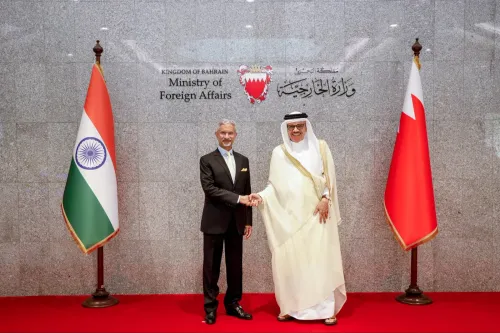
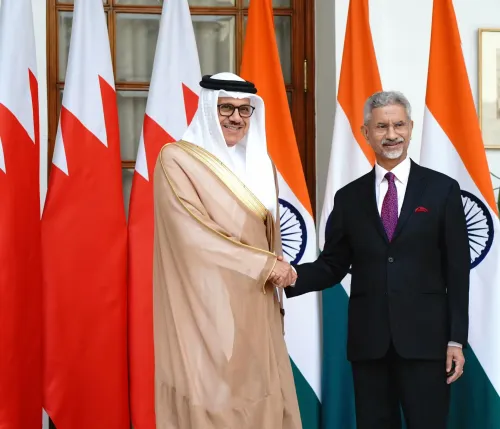
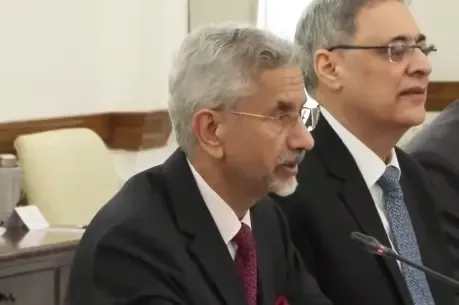
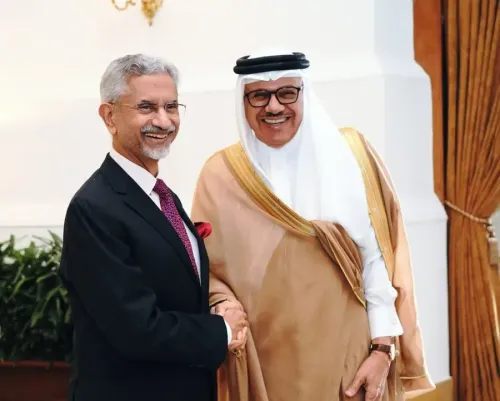
New Delhi, Nov 2 (NationPress) Bahrain’s Foreign Minister Abdullatif bin Rashid Alzayani has touched down in India to co-chair the fifth session of the India-Bahrain High Joint Commission alongside External Affairs Minister S. Jaishankar. This visit is a strategic move to bolster the bilateral ties between these two nations.
The Ministry of External Affairs (MEA) announced the visit on social media platform X, highlighting its significance as a key engagement to assess cooperation across multiple sectors.
“We extend a warm welcome to FM Abdullatif bin Rashid Alzayani of Bahrain. He will co-chair the 5th India-Bahrain High Joint Commission meeting with EAM @DrSJaishankar. This visit is a chance to build on the positive momentum in 🇮🇳-🇧🇭 relations,” tweeted MEA Spokesperson Randhir Jaiswal on Sunday.
The High Joint Commission (HJC) is the primary framework for enhancing and reviewing the diverse partnership between India and Bahrain.
This latest HJC meeting aims to evaluate the progress in existing collaborations and identify new opportunities in trade, investment, fintech, energy, healthcare, education, and cultural exchanges.
India and Bahrain share a rich history, with diplomatic ties established in 1971. A significant Indian community thrives in Bahrain, contributing to its economy.
Bilateral trade encompasses sectors like petroleum products, machinery, electronics, and food items, showing a strong upward trend according to official data.
In recent years, trade and investment have become crucial aspects of cooperation, with sectors such as petroleum, machinery, electronics, iron and steel, and food showing robust growth.
The two nations have also been exploring enhanced collaboration in renewable energy, digital technologies, and start-ups.
High-level exchanges have further strengthened these ties. Notably, Prime Minister Narendra Modi's visit to Bahrain in August 2019 marked the first visit by an Indian Prime Minister, resulting in several agreements and a significant upgrade in their strategic relationship.
The current visit by Bahrain’s Foreign Minister is anticipated to maintain the positive trajectory of bilateral relations, as both countries aim to strengthen economic ties and enhance cooperation in regional and international platforms.
Discussions during the 5th India-Bahrain High Joint Commission are expected to reaffirm the shared commitment of New Delhi and Manama to deepen their partnership based on mutual respect, economic collaboration, and people-centric development.
Point of View
The visit of Bahrain's Foreign Minister signifies a pivotal moment in strengthening India-Bahrain relations. It reflects India's commitment to enhancing its strategic partnerships in the Gulf region, fostering economic ties, and promoting cultural exchanges that benefit both nations.
NationPress
29 Sept 2026
Frequently Asked Questions
What is the purpose of Bahrain's Foreign Minister's visit to India?
The visit aims to co-chair the 5th India-Bahrain High Joint Commission meeting, focusing on strengthening bilateral relations and exploring new areas of cooperation.
When were diplomatic relations between India and Bahrain established?
Diplomatic relations between India and Bahrain were established in 1971.
What sectors are included in the bilateral trade between India and Bahrain?
Bilateral trade includes sectors such as petroleum products, machinery, electronics, and food items.
What is the significance of the India-Bahrain High Joint Commission?
The High Joint Commission serves as a key mechanism for reviewing and enhancing the multi-faceted partnership between India and Bahrain.
How many Indians live in Bahrain?
A substantial Indian community resides in Bahrain, significantly contributing to the kingdom's economy.