West Bengal civic body polls likely in Nov, results in Dec: WBSEC
Synopsis
After 13 years without an election in Howrah and administrator-led governance across 15 civic bodies, West Bengal is finally moving toward urban local body polls. The WBSEC has a tight window — notifications by late October, voting by end of November, results by 2 December — making this the BJP government's first major electoral test in the cities it now governs.
Key Takeaways
The WBSEC plans to hold polls for seven urban civic bodies in West Bengal in the last week of November 2026 .
Election notifications are tentatively set for 27 or 28 October ; results are expected on 2 December .
Voting will be held across 6,301 booths covering the KMC , HMC , and five other municipalities.
The Howrah Municipal Corporation has not held elections in 13 years — its last poll was in 2013 and its term ended in 2018 .
A total of 15 civic bodies across 12 districts in Bengal are currently run by administrators without elected boards.
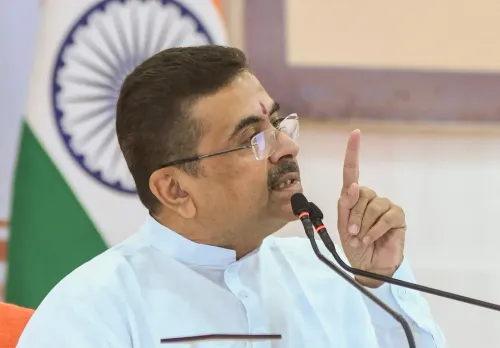
Chief Minister Suvendu Adhikari has been pushing for early elections; Minister Agnimitra Paul met him specifically on the poll schedule.
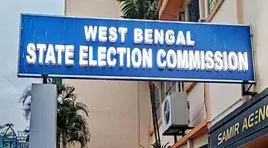
The West Bengal State Election Commission (WBSEC) is set to conduct polls for seven urban civic bodies in the state — including the Kolkata Municipal Corporation (KMC) and the Howrah Municipal Corporation (HMC) — in the last week of November 2026, with results likely to be declared in the first week of December, officials said on Thursday, 24 September 2026.
Key Dates and Timeline
According to a source from the WBSEC, election notifications are likely to be issued on either 27 October or 28 October — shortly after Durga Puja. Polling is tentatively scheduled for 28 November or 29 November, once the festive season concludes. The tentative date for counting and declaration of results is 2 December.
State Election Commissioner Krishna Gupta is set to meet District Magistrates of the concerned districts on Friday to finalise the voting outline. Electronic Voting Machines (EVMs) will begin to be dispatched to the relevant districts from the following week.
The Seven Civic Bodies Going to the Polls
Voting will take place across 6,301 booths in the seven municipal bodies: the Kolkata Municipal Corporation, Howrah Municipal Corporation, Bali municipality in Howrah district, Haldia municipality in East Midnapore district, Dhupguri municipality in Jalpaiguri district, and Kalimpong and Kurseong municipalities in Darjeeling district.
A Long-Pending Electoral Exercise
At present, a total of 15 urban civic bodies spread across 12 districts of West Bengal are without elected municipal boards, with administrators running civic services in their place. The Howrah Municipal Corporation, in particular, has not held elections in 13 years — its last election was in 2013 and its term ended in 2018.
This comes amid sustained political pressure from the new Bharatiya Janata Party (BJP)-led state government in West Bengal. Chief Minister Suvendu Adhikari had been pushing for expedited elections for these urban bodies at the administrative level. Shortly after the formation of the new Cabinet, State Municipal Affairs and Urban Development Minister Agnimitra Paul met the Chief Minister to discuss the poll schedule.
What This Means for Residents
For residents of these seven cities and towns, the elections represent a return to elected local governance after years of administrator-led management — a development that will directly affect the delivery of civic services ranging from water supply and drainage to sanitation and property tax assessments. The elections will serve as an early political test for the BJP government in urban West Bengal, with the KMC being the most closely watched contest given its scale and the presence of strong opposition.
Point of View
Which rode to power in the state on an anti-establishment wave, now governs cities where the Trinamool Congress had entrenched itself through decades of municipal control. Winning the KMC and HMC would be a significant symbolic and administrative prize; losing them would expose a gap between state-level electoral dominance and on-the-ground urban organisation. The 13-year election drought in Howrah is the starkest reminder that local democracy in Bengal has been a casualty of state-level power politics — something the new government, ironically, now has both the responsibility and the incentive to fix.
NationPress
24 Sept 2026
Frequently Asked Questions
When are the West Bengal urban civic body elections 2026?
Polling for seven urban civic bodies in West Bengal is tentatively scheduled for 28 or 29 November 2026 , with results expected on 2 December 2026 . Election notifications are likely to be issued on 27 or 28 October , shortly after Durga Puja.
Which municipalities are going to polls in West Bengal this year?
The seven civic bodies are the Kolkata Municipal Corporation , Howrah Municipal Corporation , Bali municipality (Howrah district), Haldia municipality (East Midnapore), Dhupguri municipality (Jalpaiguri), and Kalimpong and Kurseong municipalities in Darjeeling district.
Why has the Howrah Municipal Corporation not had elections for so long?
The last election in the Howrah Municipal Corporation was held in 2013 and its term ended in 2018 . No elections were conducted for 13 years , leaving the body under administrator-led governance — a pattern repeated across 15 civic bodies in West Bengal.
Who is overseeing the election preparations in West Bengal?
The West Bengal State Election Commission (WBSEC) , headed by State Election Commissioner Krishna Gupta , is overseeing preparations. Gupta is set to meet District Magistrates of the relevant districts on Friday to finalise the voting outline, with EVM dispatch beginning the following week.
What is the political significance of these civic body elections?
These polls represent the first major urban electoral test for Chief Minister Suvendu Adhikari 's BJP-led government in West Bengal. Contests in cities like Kolkata and Howrah, where the Trinamool Congress previously had strong municipal footholds, will be closely watched as a barometer of the BJP's urban governance credibility.