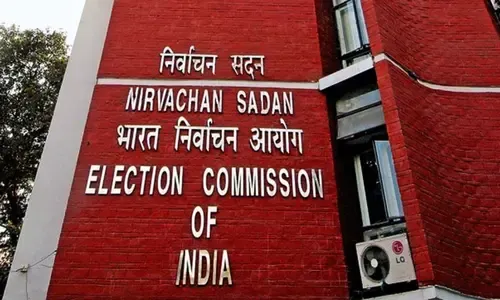
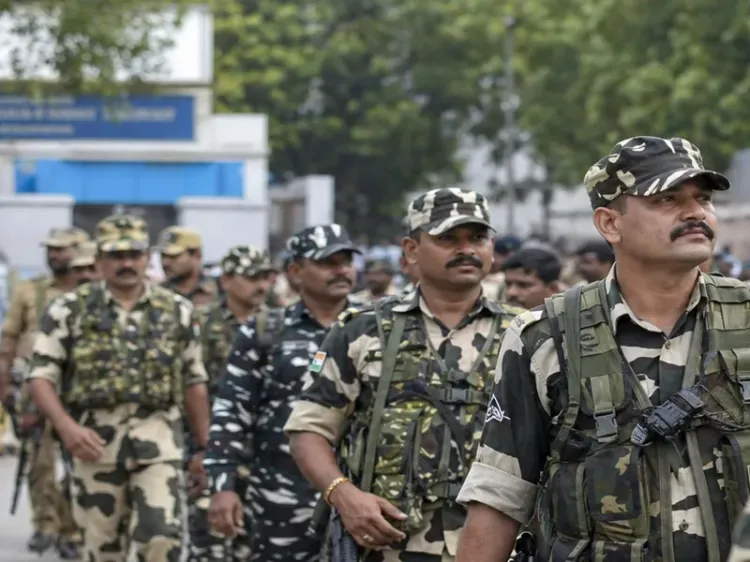
Bengal Phase 2: 2,348 Central Forces for 142 Seats on April 29
Synopsis
West Bengal's April 29 Phase 2 polls will deploy a massive 2,348 companies of central forces across 142 constituencies. North 24 Parganas leads with 507 companies due to its volatile electoral history and Bangladesh border proximity, making this one of the most heavily secured state elections in recent memory.
Key Takeaways
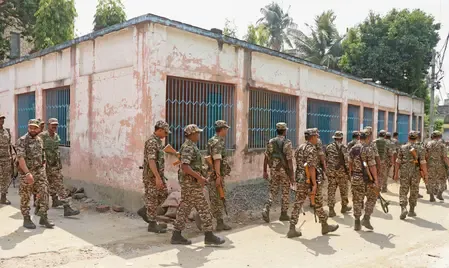
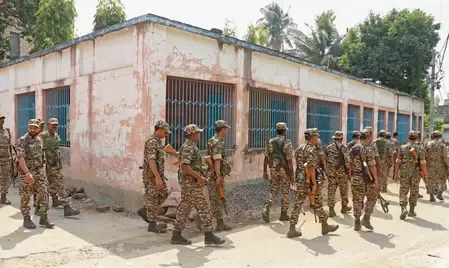
2,348 companies of central forces including CAPF, IRB, and other state armed police will be deployed for West Bengal Phase 2 polls on April 29 .
North 24 Parganas will receive the highest deployment with 507 companies , driven by its volatile electoral history and Bangladesh border proximity.
South 24 Parganas (409) , Hooghly (344) , and Nadia (285) follow in the deployment ranking, while Howrah has the lowest at 257 companies .
142 general observers and 95 police observers will oversee polling, with 11 additional police observers newly appointed from outside West Bengal.
Phase 1 across 152 constituencies was declared peaceful with zero re-polling required, setting a benchmark the ECI aims to surpass in Phase 2.
Central forces will function alongside Kolkata Police and West Bengal Police , creating a multi-layered security grid across all 142 constituencies.
West Bengal's second phase of Assembly elections on April 29 will be conducted under one of the most extensive security arrangements in the state's recent electoral history. A total of 2,348 companies of central forces comprising the Central Armed Police Forces (CAPF), India Reserve Battalion (IRB), and armed police units from other states will be deployed across 142 Assembly constituencies spanning six districts and the state capital Kolkata. The scale of deployment underscores the Election Commission of India's determination to ensure a free, fair, and violence-free electoral process.
District-Wise CAPF Deployment Breakdown
North 24 Parganas will receive the highest concentration of central forces, with 507 companies assigned to the district. This reflects the area's historically volatile electoral track record and its proximity to the international border with Bangladesh, which security planners consider a heightened risk factor.
South 24 Parganas follows with 409 companies, another border-adjacent district that has seen significant poll-related tensions in past elections. Hooghly district ranks third with 344 companies, while Nadia will see 285 companies deployed.
Both East Burdwan district and the state capital Kolkata will each have 273 companies of central forces on polling day. Howrah district, which shares its border with Kolkata, will see the lowest deployment at 257 companies still a substantial number reflecting the Commission's cautious approach.
These central forces will operate in addition to personnel from Kolkata Police and the West Bengal Police, creating a layered, multi-agency security grid across all constituencies.
Why North 24 Parganas Gets Maximum Security
According to an insider from the office of the Chief Electoral Officer (CEO), West Bengal, the distribution of central forces was determined by the number of critical or hyper-sensitive booths in each district. These classifications are drawn from records of poll-related violence in previous elections and additional risk factors such as the presence of international borders.
North 24 Parganas has historically been among the most sensitive districts in West Bengal for electoral violence. Its dense population, politically charged localities, and border proximity make it a perennial flashpoint during elections, factors the Election Commission of India (ECI) has clearly weighted heavily in its deployment calculus.
Observer Deployment and Election Commission Strategy
Polling on April 29 will be monitored by 142 general observers, one assigned per Assembly constituency, along with 95 police observers. This represents a significant step-up in oversight compared to the first phase.
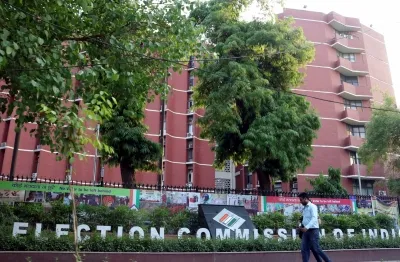
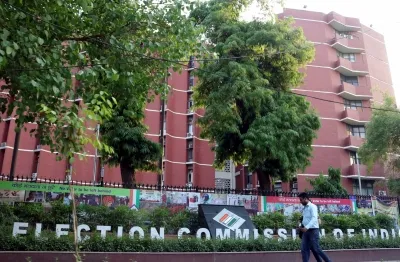
The first phase, which covered 152 constituencies, was supervised by 84 police observers. The ECI subsequently announced the appointment of 11 additional police observers, all drawn from states outside West Bengal, to ensure impartiality.
The Commission reported that the first phase of voting was overall peaceful with no reports of major violence and no requirement for re-polling in any of the 152 constituencies that voted in Phase 1, a benchmark the ECI is determined to replicate and improve upon in Phase 2.
Electoral Context and Historical Significance
West Bengal has a well-documented history of election-related violence, with incidents recorded across multiple electoral cycles. This two-phase structure covering a combined 294 Assembly constituencies was designed in part to allow security forces to be redeployed efficiently between phases.
The deployment of forces from other states' armed police units alongside CAPF and IRB signals the ECI's intent to avoid any perception of local bias in enforcement. Opposition parties in past elections have frequently alleged that state police forces act in favour of the ruling party, a concern the Commission appears to be addressing proactively.
What Voters Can Expect on April 29
With 2,348 companies of central forces on the ground, voters across the six districts and Kolkata can expect a heavy security presence at and around polling booths. Sensitive and hyper-sensitive booths will likely see dedicated CAPF personnel stationed throughout the day.
The ECI has made clear that security has been further tightened for Phase 2, and the appointment of additional police observers from outside the state adds another layer of accountability. As results from both phases will be counted together, the stakes for Phase 2 remain critically high for all political stakeholders.
With polling scheduled for April 29, all eyes will be on whether West Bengal can deliver a second consecutive phase of peaceful, credible voting, a result that would significantly bolster the ECI's authority and set a precedent for future state elections.
Point of View
348 central force companies for a single phase of state elections is not routine. It is an institutional admission that West Bengal's electoral environment remains deeply fragile. The ECI's decision to import police observers from other states implicitly acknowledges the credibility deficit surrounding local enforcement. The concentration of forces in border districts like North 24 Parganas also raises a larger question about how much of Bengal's electoral violence is enabled by porous borders and cross-border influence. The Commission is treating symptoms while the structural disease demands a harder national conversation.
NationPress
19 Sept 2026
Frequently Asked Questions
How many central forces will be deployed for West Bengal Phase 2 elections on April 29?
A total of 2,348 companies of central forces will be deployed for the West Bengal Phase 2 elections on April 29 . This includes CAPF, India Reserve Battalion (IRB), and armed police units from other states, covering 142 Assembly constituencies across six districts and Kolkata.
Which district has the highest CAPF deployment in West Bengal Phase 2 polls?
North 24 Parganas will see the highest deployment of central forces with 507 companies assigned to it. This is due to the district's history of poll-related violence and its proximity to the international border with Bangladesh.
How many observers will monitor the West Bengal Phase 2 elections?
The Election Commission of India has deployed 142 general observers and 95 police observers for Phase 2. Additionally, 11 new police observers from other states were appointed to ensure impartiality.
Was Phase 1 of the West Bengal Assembly elections peaceful?
Yes, the first phase covering 152 constituencies was reported as overall peaceful by the ECI, with no major violence incidents and no re-polling required in any booth. The Commission used this as a benchmark for tightening security further in Phase 2.
Why is security so heavy for the West Bengal Assembly elections?
West Bengal has a documented history of poll-related violence across multiple election cycles. The ECI bases its force deployment on the number of critical and hyper-sensitive booths, previous violence records, and risk factors like international border proximity with Bangladesh .