Who Decides Bengaluru Metro Fares: State or Centre?
Synopsis
Karnataka's CM Siddaramaiah clarifies that Bengaluru Metro fare decisions are made by a central panel, not the state government. Amidst public criticism, he emphasizes the importance of affordable transport and urges the Union Government to reconsider fare hikes.
Key Takeaways
Metro fares are determined by a central panel.
State Government has no authority over fare decisions.
Public transport must remain affordable for all.
Chief Minister advocates for fare reassessment.
Transparency in governance is crucial.
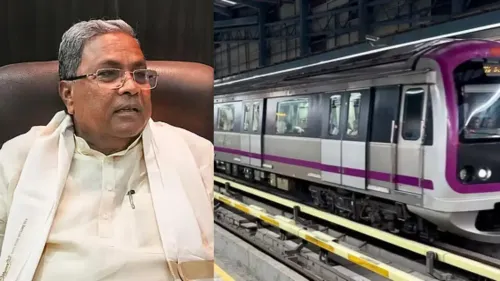
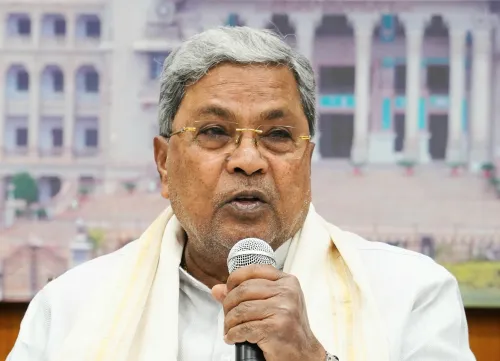
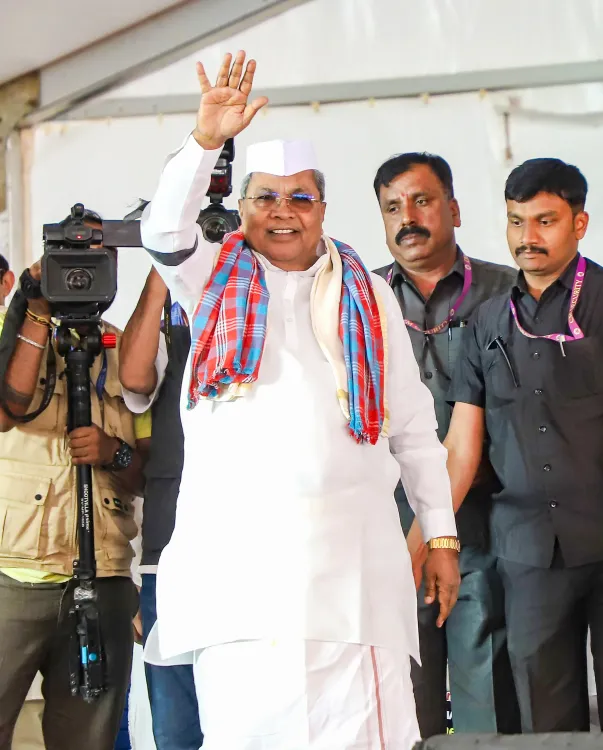
Bengaluru, Feb 6 (NationPress) In light of the public outcry and critiques from various political factions regarding the recent adjustments to Bengaluru Metro fares, Karnataka Chief Minister Siddaramaiah clarified on Friday that according to the Metro Railways (Operation and Maintenance) Act, 2002, it is not the State Government that sets Metro fares, but rather a panel established by the Centre through the Ministry of Housing and Urban Affairs.
In his official remarks, the Chief Minister emphasized that the Bengaluru Metro transcends mere transportation and serves as a reflection of the city's aspirations, acting as a daily vital resource for thousands of working individuals, students, and families. He affirmed that a responsible government must prioritize the voices of its citizens, assuring the people of Karnataka that their concerns would be addressed.
Nevertheless, Siddaramaiah highlighted the necessity for the public to understand the facts to avoid being misled by political narratives. He reiterated that the fares are determined by an independent Fare Fixation Committee appointed by the Union Government via the Ministry of Housing and Urban Affairs, not by the State Government.
Referring to Sections 36 and 37 of the Act, the Chief Minister stated that the committee is required to provide its recommendations within a specified timeframe, and these recommendations hold legal weight for the metro administration. He stressed that neither the State Government nor the Bengaluru Metro Rail Corporation Limited can override the committee's decisions.
The Fare Fixation Committee, as he noted, is directed by a former High Court judge, operates under a Central law, and its recommendations are mandated by Parliament. Accusing the Karnataka Government of responsibility for a decision made under a Union framework is not only factually incorrect but a deliberate attempt to mislead the populace, he asserted.
Despite these legal constraints, Siddaramaiah emphasized that the State Government's dedication to public welfare surpasses procedural limitations. He reiterated the importance of maintaining an affordable, inclusive public transport system that supports everyday livelihoods, asserting that Bengaluru's development should not inflict hardship on commuters.
The Chief Minister expressed his intention to formally address the issue with the Union Government, advocating for a reassessment of the fare levels suggested by the Fare Fixation Committee, encouraging exploration of methods to moderate fares — particularly for daily commuters, students, and low-income individuals — and the need to find policy solutions that harmonize financial viability with social fairness.
Siddaramaiah remarked that Karnataka has consistently been at the forefront of urban mobility and public institutions, vowing to continue constructive and constitutional engagement to safeguard the interests of Bengalureans.
He also urged the Opposition to rise above misinformation and unite for the welfare of Karnataka's populace.
In a pointed critique of the BJP, Siddaramaiah noted that the very leaders who failed to advocate for Karnataka's interests in Delhi are now protesting in Bengaluru and unjustly targeting the State Government. He queried why BJP MPs from Karnataka did not assertively address the matter in Parliament and why Union Ministers from the State did not advocate against high fare levels at the national level.
The Chief Minister accused Karnataka BJP leaders of prioritizing their allegiance to their high command over the interests of the State's citizens. He claimed that the metro fare increase is part of a larger pattern of injustice perpetuated by the BJP-led Union Government, including diminished tax devolution, unfair grant allocations, delays in infrastructure support, and policies that escalate living costs for common people.
In closing, Siddaramaiah urged the BJP to cease misleading the public, affirming that the State Government will always advocate for the people and assuring that no form of injustice — whether fiscal, administrative, or political — would go unanswered.
Point of View
It's critical to recognize the complexities surrounding fare decisions for public transport systems like Bengaluru Metro. The Chief Minister's statements highlight the need for transparency and accountability in governance. It is essential for authorities to balance financial sustainability with the welfare of citizens, particularly in urban settings where public transport is a lifeline.
NationPress
27 Sept 2026
Frequently Asked Questions
Who decides the fares for the Bengaluru Metro?
The fares for the Bengaluru Metro are determined by an independent Fare Fixation Committee set up by the Centre, not the State Government.
What is the role of the Fare Fixation Committee?
The Fare Fixation Committee is mandated to provide recommendations regarding fare structures, which are legally binding for the metro administration.
Why is the Karnataka Government facing criticism over Metro fares?
The Karnataka Government is criticized for the fare revision, but the Chief Minister clarified that the state has no control over the fare-setting process, which is under central jurisdiction.
What steps is the Chief Minister taking regarding Metro fares?
The Chief Minister intends to formally engage with the Union Government to reassess the fare levels and explore options for making fares more affordable for daily commuters.
How does the fare increase affect commuters?
The fare increase could impose additional financial strain on daily commuters, students, and low-income groups, emphasizing the need for a balanced approach to fare structures.