Haldighati 450th anniversary: Bhagwat says Pratap's legacy proves true victor
Synopsis
RSS chief Mohan Bhagwat used Udaipur's Haldighati 450th anniversary to make a pointed historical argument: Akbar's birthday goes uncelebrated; Maharana Pratap's does not. For Bhagwat, that popular verdict settles the question of who truly won — and the speech signals that the battle over medieval Indian historiography is far from over.
Key Takeaways
RSS chief Mohan Bhagwat addressed the Rashtra Chetna Sankalp Sabha in Udaipur on 17 June , marking the 450th anniversary of the Battle of Haldighati .
Bhagwat cited Mughal historians' own accounts to argue that the Mughal army was forced to retreat at multiple stages of the battle.
He said Akbar's birth anniversary is not observed anywhere, while Maharana Pratap's is celebrated nationally — calling this 'the verdict of history.' The event also marked the 486th birth anniversary of Maharana Pratap , organised by Pratap Gaurav Kendra 'Rashtriya Tirtha' .
Bhagwat called for a formal re-examination of historical accounts surrounding Haldighati and urged citizens to draw inspiration from Pratap's legacy.
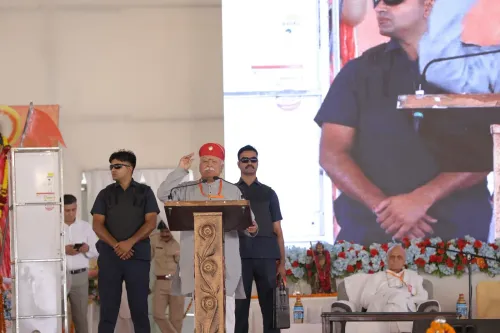
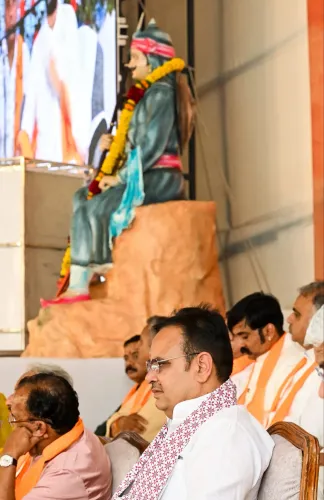
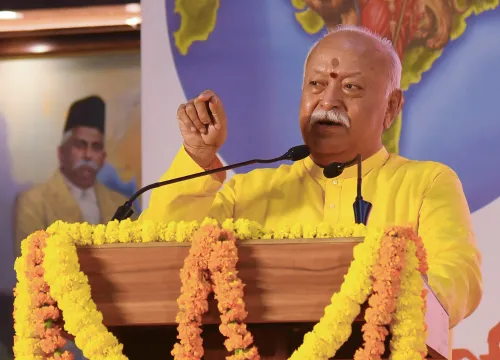
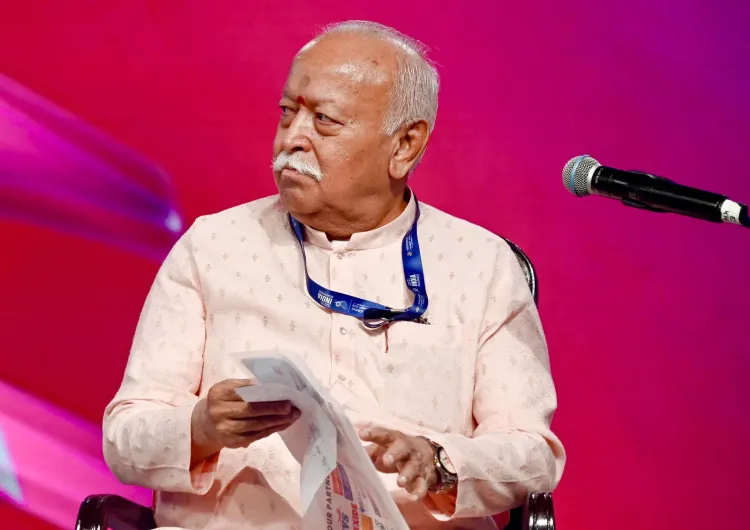
Rashtriya Swayamsevak Sangh (RSS) chief Mohan Bhagwat on Wednesday, 17 June declared that India's history is fundamentally one of resistance and national pride — not subjugation — as he addressed a large gathering in Udaipur to mark the 450th anniversary of the Battle of Haldighati and the 486th birth anniversary of Maharana Pratap. Speaking at the Rashtra Chetna Sankalp Sabha organised at Gandhi Maidan under the aegis of Pratap Gaurav Kendra 'Rashtriya Tirtha', Bhagwat argued that the outcome of Haldighati has long been misread by history.
Bhagwat's Case for Maharana Pratap as Victor
The RSS chief contended that contemporary sources — including writings by Mughal historians themselves — indicate that Mughal forces were compelled to retreat at multiple stages of the battle. 'The Battle of Haldighati was not merely a clash between two armies; it was a monumental struggle waged by the entire society to safeguard national consciousness and self-respect,' he said.
Bhagwat argued that the continued state of fear and insecurity among the enemy after the battle is itself historical evidence of who truly prevailed. He cited the very first assault by Maharana Pratap's forces, which reportedly pushed the Mughal army back a considerable distance, as a key episode in this reinterpretation.
The Akbar Comparison
Bhagwat made his most pointed remark when drawing a contrast between the two principal figures of the conflict. 'Akbar's birth anniversary is not celebrated anywhere in the world, whereas Maharana Pratap is still remembered by the masses today. This verdict of history itself reveals who truly emerged victorious,' he said.
He added that the nationwide reverence with which Maharana Pratap's birth anniversary is observed stands as the 'greatest proof that a nation never forgets its true heroes.' Bhagwat described Maharana Pratap as 'Hindua Suraj' — Sun of the Hindus — and said the title was earned through a lifelong struggle for faith, culture, self-respect, and national interest.
A Broader Call for Social Unity
Bhagwat emphasised that Maharana Pratap's army drew strength from the whole of society — cutting across caste, creed, region, and social divisions — and called this inclusive mobilisation a model for the present. He invoked historical figures including Bappa Rawal and Lalitaditya alongside Maharana Pratap to argue that resistance to foreign domination has been a recurring thread in Indian civilisation.
'India's strength lies in its unity, social harmony, and self-confidence. Society must remain organised and vigilant not only during times of crisis but also under normal circumstances,' he said, urging citizens to draw inspiration from Maharana Pratap's life for national upliftment and social organisation.
Other Voices at the Gathering
Distinguished guest Nimbarkacharya Shriji Shyam Sharan Devacharya described the event as 'not merely a historical commemoration but a grand celebration of patriotism, self-respect, and the resurgence of Sanatan culture.' He noted that misconceptions about history 'propagated over the years are now being dispelled,' and called upon society to rise above caste and class divisions in the national interest.
He highlighted the dual legacy of the Mewar region — as the birthplace of both Maharana Pratap and the saint-poet Meerabai — and said the spirit of patriotism exemplified by Pratap has manifested in various forms across Indian history.
Historical Context and What It Signals
The event comes amid a broader national conversation about the interpretation of medieval Indian history, with several political and cultural organisations pushing for a reassessment of battles and rulers long framed through a colonial historiographical lens. Bhagwat's remarks at Udaipur are likely to intensify that debate, particularly his call for a 're-examination of the facts surrounding the Battle of Haldighati.'
As India marks the 486th birth anniversary of Maharana Pratap, the RSS chief's address signals that the question of historical legacy — and who defines it — remains very much a live issue in Indian public life.
Point of View
The RSS chief is doing what ideological movements do best — reclaiming contested symbols. The 'who celebrates whom' argument is rhetorically powerful but historically thin; popular memory and historical outcome are not the same measure. What the speech does signal clearly is that the RSS intends to keep the reassessment of medieval Indian historiography at the centre of public discourse — and that Maharana Pratap, not just as a regional hero but as a national archetype, is central to that project.
NationPress
18 Sept 2026
Frequently Asked Questions
What did Mohan Bhagwat say about the Battle of Haldighati?
RSS chief Mohan Bhagwat said the Battle of Haldighati was not a defeat for Maharana Pratap, citing contemporary sources and Mughal historians' own accounts to argue that Mughal forces were compelled to retreat at multiple stages. He called for a formal re-examination of historical accounts surrounding the battle.
Why did Bhagwat compare Maharana Pratap and Akbar at the Udaipur event?
Bhagwat used the comparison to argue that popular memory — not formal historical record — reveals the true victor of Haldighati. He noted that Akbar's birth anniversary is not celebrated anywhere while Maharana Pratap's is observed with reverence across India, calling this 'the verdict of history.'
What was the Rashtra Chetna Sankalp Sabha in Udaipur?
It was a large public gathering organised at Gandhi Maidan, Udaipur, by Pratap Gaurav Kendra 'Rashtriya Tirtha' to mark the 450th anniversary of the Battle of Haldighati and the 486th birth anniversary of Maharana Pratap. RSS chief Mohan Bhagwat was the principal speaker.
Who else spoke at the Udaipur event alongside Bhagwat?
Nimbarkacharya Shriji Shyam Sharan Devacharya addressed the gathering as a distinguished guest, describing the event as a celebration of patriotism and Sanatan culture. He also highlighted the Mewar region's dual legacy as the birthplace of both Maharana Pratap and the saint-poet Meerabai.
What is the significance of the 450th anniversary of Haldighati?
The Battle of Haldighati, fought in 1576, is one of the most debated engagements in Indian medieval history, pitting Maharana Pratap of Mewar against the Mughal forces of Emperor Akbar. The 450th anniversary has prompted renewed public and political discussion about how the battle's outcome should be interpreted in Indian historical memory.