RSS Chief Bhagwat: Haldighati victory belonged to Maharana Pratap, not Mughals
Synopsis
RSS chief Mohan Bhagwat used the 450th anniversary of the Battle of Haldighati to directly contest the Mughal-victory narrative — citing Mughal historians themselves as evidence that Maharana Pratap prevailed. The Udaipur address frames India's medieval history as one of continuous resistance, not defeat, and lands squarely in an ongoing national debate over how that history is taught.
Key Takeaways
RSS chief Mohan Bhagwat spoke at the Rashtra Chetna Sankalp Sabha in Udaipur on 17 June , marking the 450th anniversary of the Battle of Haldighati.
Bhagwat claimed the Battle of Haldighati was won by Maharana Pratap , citing accounts by Mughal historians themselves as evidence.
He described the battle in three phases , arguing the Mughal Army retreated, suffered heavy losses, and ultimately focused on self-preservation.
Bhagwat called for a re-examination of medieval Indian history, saying it has been 'written from the perspective of victors or those close to power.' Shriji Shyamcharan Maharaj of the Nimbark Peeth also addressed the gathering, urging societal unity and preservation of cultural values.
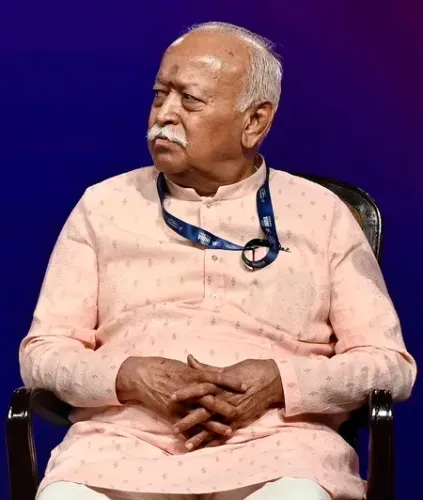
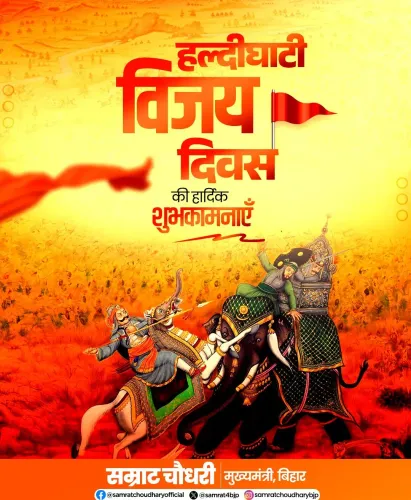
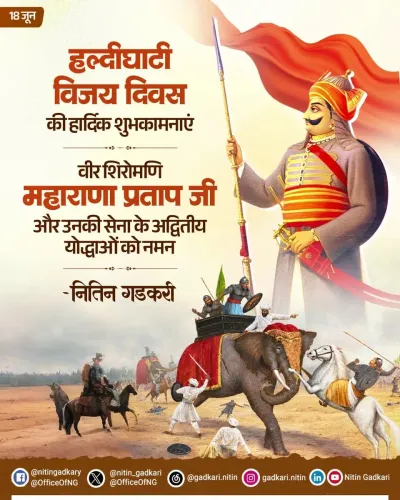
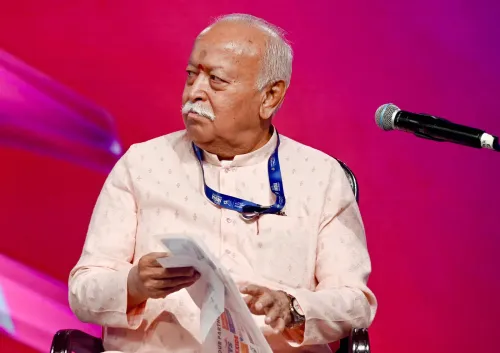
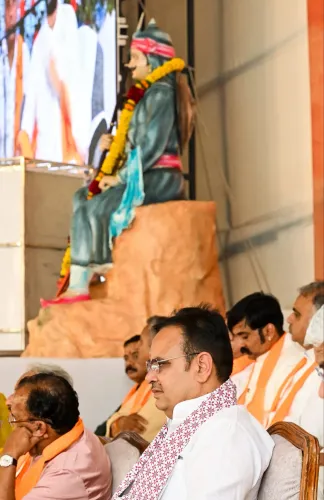
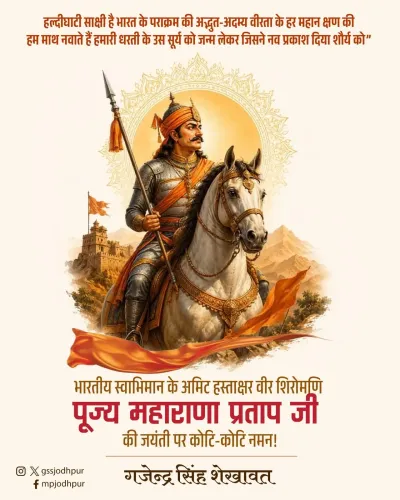
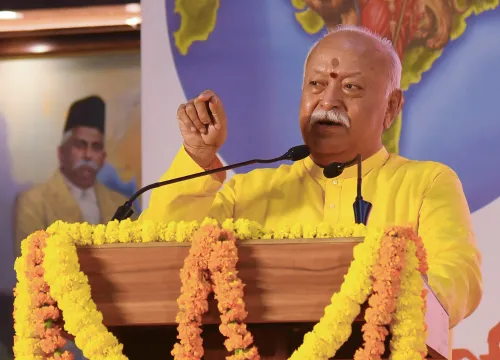
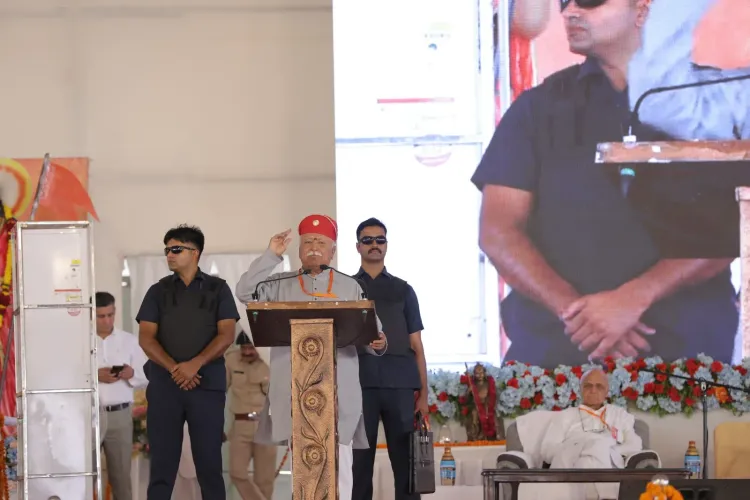
Rashtriya Swayamsevak Sangh (RSS) chief Mohan Bhagwat on Wednesday, 17 June declared that India's history is not a chronicle of subjugation but of unbroken resistance against invaders, asserting that the Battle of Haldighati was won by Maharana Pratap — a claim he grounded in the accounts of Mughal historians themselves. Bhagwat was speaking at the Rashtra Chetna Sankalp Sabha (National Consciousness Resolution Gathering) at Gandhi Maidan, Udaipur, convened to mark the 486th birth anniversary of Maharana Pratap and the 450th anniversary of the Battle of Haldighati.
Bhagwat's Case for Maharana Pratap's Victory
The RSS chief drew directly from Mughal-era chronicles to challenge the conventional historiographical reading of Haldighati as a Mughal triumph. 'The accounts by Mughal historians themselves mention that the Mughal Army was forced to retreat during the battle,' Bhagwat said. 'If the Mughal Army faced continuous hardships during various stages of the conflict and remained in a state of fear and insecurity even after the battle, then it is essential to consider who truly achieved victory.'
He outlined the battle in three phases: the initial assault, during which the Mughal forces were pushed back; a second phase in which Maharana Pratap's warriors inflicted heavy losses on key enemy commanders; and a third phase after which, Bhagwat argued, the Mughal Army 'dared not advance openly and focused instead on self-preservation.' He also highlighted the legendary warhorse Chetak's extraordinary courage during the engagement.
The Broader Historical Argument
'The Battle of Haldighati was not merely a conflict involving Maharana Pratap or his Army; it symbolised the collective resistance of the entire society,' Bhagwat said. He noted that despite the Mughal Empire's overwhelming advantages — superior army size, resources, and weaponry — Maharana Pratap, with limited funds and a smaller force, refused to abandon the struggle.
Bhagwat extended the argument beyond Haldighati, citing figures such as Bappa Rawal and Lalitaditya as having checked the westward wave of aggression that had swept from Spain to Siberia. He also referenced Babu Kunwar Singh, who reportedly regained his kingdom and ruled independently during the anti-British struggle, as another example of history being 'presented through a specific narrative' that obscures actual outcomes.
History Written by Victors: RSS Chief's Critique
'History has often been written from the perspective of victors or those close to power,' Bhagwat said, calling for a re-examination of the facts surrounding Haldighati. He described Maharana Pratap as 'Hindua Suraj' (Sun of the Hindus), saying his struggle 'was not driven by personal self-interest or the pursuit of power, but was dedicated to the protection of society, culture, and the nation.'
Notably, Bhagwat's remarks come at a time of heightened public debate in India over the framing of medieval history in school curricula and public monuments — making the Udaipur gathering as much a cultural-political statement as a commemorative event.
Call for Unity and Organisation
The RSS chief urged Indian society to remain organised not only in times of crisis but also under ordinary circumstances, saying Maharana Pratap's life embodied that very message. 'Whenever an invader attempted to seize control of this land, the process of resistance began immediately,' he said, adding that Indian society has 'successfully preserved its culture and religion' through centuries of hardship.
Also addressing the gathering, Shriji Shyamcharan Maharaj, head of the Nimbark Peeth, called for unity and the preservation of cultural values, urging society to 'shun divisive tendencies' and advance on a path that is 'positive, constructive, and in the national interest.' The event signals a renewed RSS push to reshape how the Haldighati narrative is taught and remembered across India.
Point of View
The RSS chief attempts to shift the debate onto evidentiary ground, making it harder to dismiss as revisionism. This comes as school curriculum debates over medieval history intensify nationally, and the timing — a high-profile public gathering in Rajasthan — amplifies the political resonance. The deeper question mainstream coverage underplays is this: who controls the authoritative interpretation of contested medieval battles, and what institutional mechanisms exist to adjudicate competing historical claims? Without that framework, anniversary speeches, however well-sourced, risk becoming recurring political flashpoints rather than scholarly reckonings.
NationPress
16 Sept 2026
Frequently Asked Questions
What did RSS chief Mohan Bhagwat say about the Battle of Haldighati?
Bhagwat declared that the Battle of Haldighati was won by Maharana Pratap, not the Mughal Empire, citing accounts by Mughal historians themselves that the Mughal Army was forced to retreat and remained in a state of fear after the battle. He made these remarks at the Rashtra Chetna Sankalp Sabha in Udaipur on 17 June.
What was the occasion for Bhagwat's speech in Udaipur?
The speech was delivered at the Rashtra Chetna Sankalp Sabha held at Gandhi Maidan, Udaipur, to mark the 486th birth anniversary of Maharana Pratap and the 450th anniversary of the Battle of Haldighati.
What is the conventional historical view of the Battle of Haldighati?
The Battle of Haldighati (1576) is conventionally described as a Mughal victory, with Akbar's general Man Singh leading the imperial forces against Maharana Pratap of Mewar. Bhagwat contests this reading, arguing the Mughal Army's own records indicate a retreat and sustained insecurity following the engagement.
Who else spoke at the Rashtra Chetna Sankalp Sabha in Udaipur?
Shriji Shyamcharan Maharaj, the head of the Nimbark Peeth, also addressed the gathering, calling for societal unity, the rejection of divisive tendencies, and the preservation of Indian cultural values.
Why does Bhagwat's claim about Haldighati matter today?
The claim is significant because it feeds into an active national debate over how medieval Indian history is framed in textbooks, public discourse, and official narratives. Bhagwat's use of Mughal-era sources to support the argument gives it an evidentiary dimension that goes beyond symbolic commemoration.