Bhagwat's Hindu-Muslim unity remarks spark political row; BJP, Opposition divided
Synopsis
RSS chief Mohan Bhagwat told a New York audience that anyone who believes Muslims have no place in India is not a Hindu — a statement that has united BJP spokespeople in support and Opposition leaders in scepticism. The divide lays bare a recurring fault line: whether the RSS's conciliatory rhetoric translates into policy and practice back home.
Key Takeaways
RSS chief Mohan Bhagwat said at a New York faith conference that a Hindu who opposes Muslim inclusion ceases to be a Hindu.
BJP spokespeople RP Singh and Shahnawaz Hussain defended the remarks, citing the inclusive philosophy of Hindutva and 'Vasudhaiva Kutumbakam' .
TMC MP Saugata Roy called the statement positive but questioned whether it reflected Bhagwat's genuine beliefs.
Congress MP Pramod Tiwari pointed to the Constitution's guarantee of equality for all citizens regardless of religion, caste, or gender.
Elangovan invoked Article 25 and accused the RSS and BJP of disregarding constitutional rights.
Bhagwat had made a similar statement during his Delhi lecture series in 2018 , making this a reiteration on an international platform.
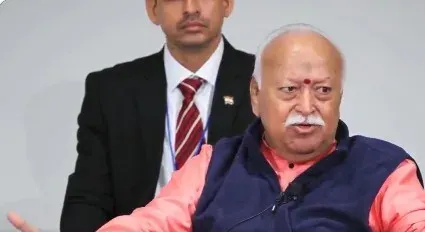
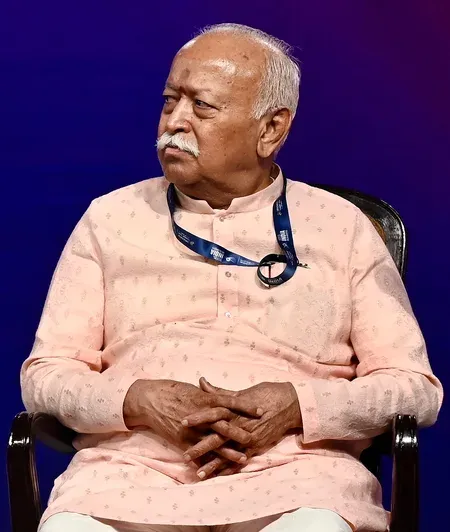
Rashtriya Swayamsevak Sangh (RSS) chief Mohan Bhagwat's remarks on Hindu-Muslim unity, delivered at a faith leaders' conference in New York, have triggered a sharp political debate in India, with Bharatiya Janata Party (BJP) leaders rallying behind his message of inclusivity while Opposition parties questioned both his sincerity and the RSS's track record on constitutional equality.
What Bhagwat Said
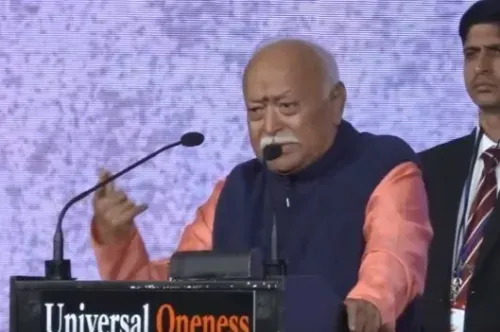
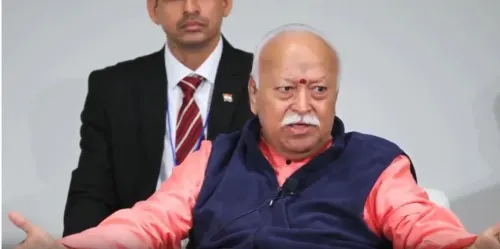
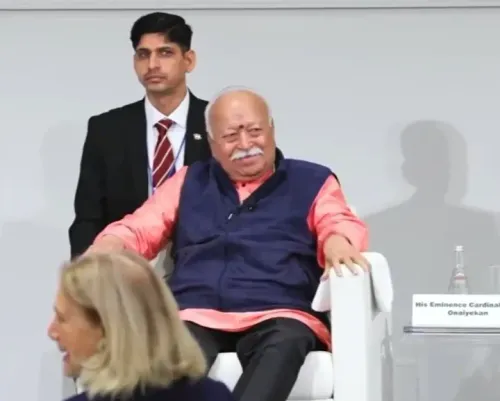
Speaking at the 'One World, One Humanity' faith leaders' conference in New York, Bhagwat asserted that a Hindu who believes Muslims have no place in India ceases to be a Hindu. He recalled a question posed by Muslim participants during his lecture series in Delhi in 2018, when they had asked whether Muslims would be driven out under a 'Hindu Rashtra'. Bhagwat said he had responded then — and reiterated now — that such thinking ran contrary to Hindutva. He maintained that Hindu identity required acceptance of religious diversity and recognition of the equal worth of every individual.
BJP Backs the Message
BJP National Spokesperson RP Singh defended the remarks, arguing that Hinduism was inherently inclusive and could not be confined to any sect, religion, or mode of worship. 'Hindu is inclusive. 'Hindu' is not the name of a sect, nor the name of a religion, nor can 'Hindu' be tied to a specific mode of worship. Being Hindu is a way of life,' Singh said.
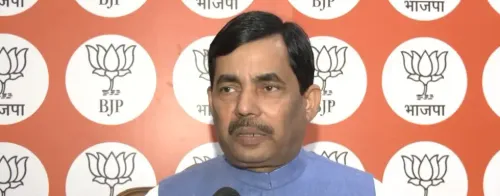
BJP spokesperson Shahnawaz Hussain also backed Bhagwat, saying the message was consistent with his earlier positions. 'There might be some narrow-minded people, some narrow individuals who think like that,' Hussain said, adding that Indian citizens belonged to the country irrespective of their mode of worship. He invoked the principle of 'Vasudhaiva Kutumbakam' to argue that Hindutva did not exclude or isolate the Muslim community.
Opposition Reacts with Scepticism
All India Trinamool Congress (TMC) MP Saugata Roy described the statement as a positive development in principle but expressed doubt about whether it reflected Bhagwat's genuine convictions. 'It's a good thing. We all want unity and diversity in India. But I don't know whether Mohan Bhagwat has said something that he truly believes or not...' Roy said.
Congress MP Pramod Tiwari redirected the debate to the Constitution, noting that it already guaranteed equality to all citizens regardless of gender, religion, caste, or language. 'If someone follows their religion without violating the law, they have the same rights in India as everyone else,' Tiwari said.
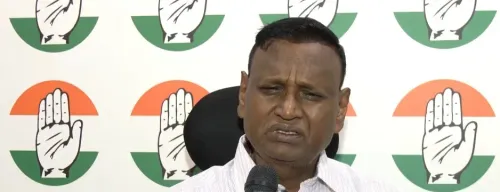
Dravida Munnetra Kazhagam (DMK) spokesperson T. K. S. Elangovan went further, invoking Article 25 of the Constitution — which guarantees citizens the freedom to profess, practise, and propagate religion — and accusing the RSS and BJP of disregarding these constitutional provisions. 'They don't care about what the Constitution says... They are behaving like barbarians. That is what I say. They simply don't care about the law,' Elangovan said.
Context and Significance
Bhagwat's New York remarks come at a time when questions about minority rights and communal harmony in India remain a live political flashpoint. Notably, this is not the first time the RSS chief has addressed Hindu-Muslim relations publicly; his 2018 Delhi lecture series drew similar attention. The fact that he has now repeated and amplified this position on an international platform adds a new dimension to the domestic debate. Critics argue that the RSS's organisational actions at home have not always matched its leadership's conciliatory rhetoric, while BJP leaders insist the ideological foundation of Hindutva has always been pluralist. How this tension resolves will shape the political narrative heading into the next electoral cycle.
Point of View
In part, to affiliated organisations. The BJP's defence, led pointedly by Shahnawaz Hussain, signals a deliberate optics play. What is missing from this entire debate is any concrete policy or institutional mechanism that would translate Bhagwat's philosophical inclusivity into measurable protection for minority communities — and neither side is pressing for one.
NationPress
15 Oct 2026
Frequently Asked Questions
What did Mohan Bhagwat say about Hindu-Muslim unity?
RSS chief Mohan Bhagwat said at a faith leaders' conference in New York that a Hindu who believes Muslims have no place in India ceases to be a Hindu, asserting that Hindutva recognises the dignity of every human being and accepts different paths to the same truth. He recalled making a similar statement during his Delhi lecture series in 2018.
How did the BJP respond to Bhagwat's remarks?
BJP National Spokesperson RP Singh and BJP spokesperson Shahnawaz Hussain both defended Bhagwat, arguing that Hinduism is inherently inclusive and that Hindutva does not exclude the Muslim community. Hussain cited the principle of 'Vasudhaiva Kutumbakam' in support.
Why did the Opposition criticise or question Bhagwat's statement?
Opposition leaders reacted with a mix of cautious welcome and scepticism. TMC's Saugata Roy questioned whether the remarks reflected Bhagwat's genuine beliefs, Congress's Pramod Tiwari argued the Constitution already guarantees equality for all, and DMK's T. K. S. Elangovan accused the RSS and BJP of disregarding Article 25 of the Constitution in practice.
What is Article 25 of the Indian Constitution?
Article 25 guarantees every Indian citizen the fundamental right to freely profess, practise, and propagate religion. DMK spokesperson T. K. S. Elangovan invoked this provision to argue that the RSS and BJP have historically disregarded these constitutional protections.
Has Bhagwat made similar remarks before?
Yes. Bhagwat said he first made this argument in response to Muslim participants at his Delhi lecture series in 2018, when they asked whether Muslims would be driven out under a Hindu Rashtra. His New York remarks represent a reiteration and amplification of that earlier position on an international platform.