RSS chief Bhagwat: No Hindu can demand Muslims' ouster from India
Synopsis
At a global faith leaders' summit in New York, RSS chief Mohan Bhagwat drew a hard line within Hindutva itself: any Hindu who seeks the expulsion of Muslims from India, he said, is no longer a Hindu. The statement, rooted in a 2018 Delhi exchange he recounted publicly, is among the most direct inclusivity assertions from the RSS leadership — and arrives during the organisation's centenary year.
Key Takeaways
RSS Sarsanghchalak Mohan Bhagwat declared on 29 August that a Hindu who seeks the expulsion of Muslims from India 'ceases to be a Hindu.' He made the statement at the 'One World, One Humanity' interfaith conference in New York .
Bhagwat recalled a 2018 Delhi lecture series where Muslim attendees asked whether a Hindu Rashtra would drive them out — and said his answer then, as now, was an unequivocal no.
He argued that Hindutva mandates belief in the equal dignity of every human being and the acceptance of all religious paths.
The remarks fall within the RSS centenary period; the organisation was founded in Nagpur in 1925 by Keshav Baliram Hedgewar .
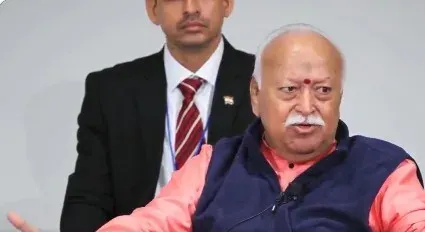
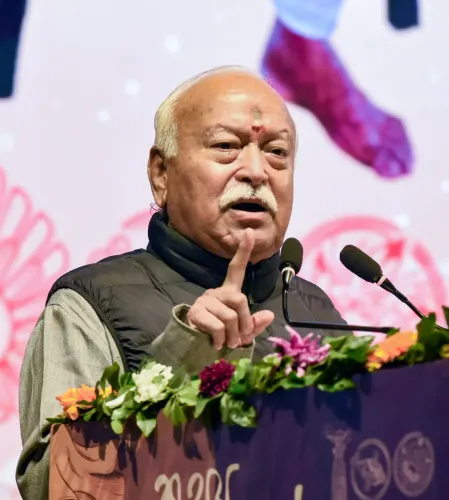
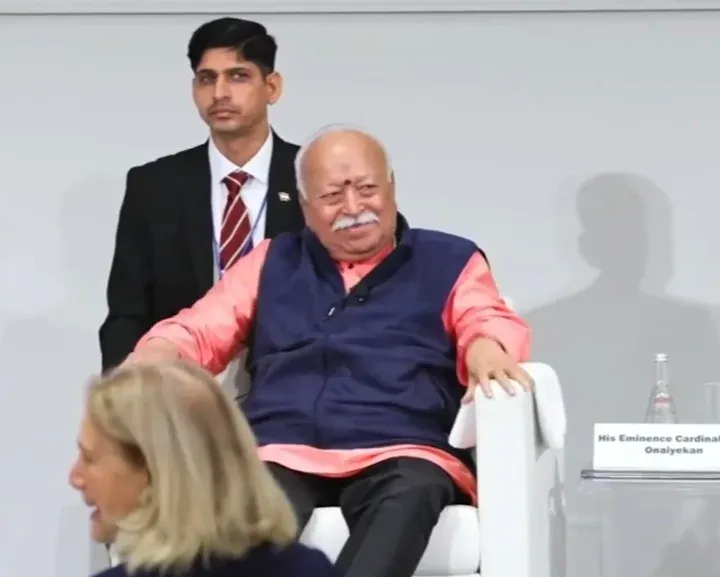
Rashtriya Swayamsevak Sangh (RSS) chief Mohan Bhagwat on Saturday, 29 August declared that any Hindu who believes Muslims have no place in India forfeits his Hindu identity, arguing that Hindutva is rooted in the dignity of every human being and the acceptance of all paths to a single truth. He made the remarks at the 'One World, One Humanity' faith leaders' conference in New York.
The Core Assertion
Bhagwat drew on an exchange from a 2018 lecture series he conducted in Delhi, when Muslim attendees asked whether an RSS-led Hindu Rashtra would expel them. His response, as he recounted it in New York, was unequivocal.
'In 2018, during my lecture series in Delhi, several Muslim brothers present there asked me, "You are a Hindu organisation. You speak of Hindu Rashtra. What about us Muslims? Will you drive us out?" I told them, "No, that is not Hindutva. If any Hindu thinks that there should be no Muslim in Bharat, he ceases to be a Hindu,"' Bhagwat said.
He went further, stating that a Hindu identity demands the recognition of religious diversity and the equal worth of every individual. 'If you want to call yourself Hindu, you must believe that all paths lead to the same goal. Every human being has dignity, and there is no difference between human beings,' he said.
Unity in Diversity: The Philosophical Framing
Bhagwat was careful to present himself not as a theological authority but as a practitioner shaped by Indian society's long civilisational tradition. 'I am not a religious scholar, nor a religious authority like you, but I am working in a society which traditionally says that religions might be different, but humanity is one. Truth is one, and humanity is a product of that truth,' he told the gathering.
He described differences of faith and culture as decorative rather than divisive. 'All these differences decorate nature, and we have to acknowledge them. But the reality that is always present is that we are one,' he said. He added that human beings remain 'prisoners of the software that has been created in our heads,' limiting their perception of a single underlying truth expressed in many ways.
India's Tradition of Coexistence
Bhagwat acknowledged that India's civilisational heritage had suffered losses through foreign invasions over the course of history, but argued that the tradition of coexistence had survived intact. 'People of all denominations live together because, traditionally, Bharat has given shelter to everybody,' he said, while noting that 'people unnecessarily carry' historical baggage that complicates the present.
He called on religious leaders worldwide to continuously reinforce the message of human unity, warning that deviations emerge when that message is not actively transmitted. 'Given the present condition of humanity, it will be a laborious, tedious and time-consuming job,' he said.
Context: RSS Centenary and Bhagwat's Broader Message
The RSS, founded in Nagpur in 1925 by Keshav Baliram Hedgewar, describes itself as a volunteer-based cultural organisation and has grown into one of India's largest social networks. Bhagwat has led the organisation as Sarsanghchalak since 2009. His New York remarks fall within the RSS centenary period and are consistent with a series of outreach statements he has made in recent years aimed at projecting an inclusive reading of Hindutva — a framing that critics and scholars continue to debate in the context of ground-level communal tensions in India.
Bhagwat also cautioned against materialism, the pursuit of influence, and feelings of superiority, arguing that societies must build the resilience to resist these forces. 'All these things cause disturbances. So, we have to build societies that can withstand these attractions and views,' he said. How that vision translates into organisational practice will remain the central question for observers watching the RSS in its second century.
Point of View
During the RSS centenary, with an international audience. The RSS chief has made similar inclusivity arguments before, but the gap between platform rhetoric and ground-level communal incidents in India remains a persistent credibility challenge for the organisation. The real test of these statements is whether they translate into internal RSS messaging that reaches its vast network of local branches — not just the faith-leaders circuit abroad. Until that linkage is demonstrated, the remarks risk being read as diplomatic positioning rather than doctrinal shift.
NationPress
14 Oct 2026
Frequently Asked Questions
What did RSS chief Mohan Bhagwat say about Muslims in India?
Bhagwat said that any Hindu who believes Muslims should have no place in India ceases to be a Hindu. He made the statement at the 'One World, One Humanity' faith leaders' conference in New York on 29 August, recounting an exchange from a 2018 lecture series in Delhi.
Where did Bhagwat make these remarks?
He spoke at the 'One World, One Humanity' interfaith conference in New York on 29 August. The remarks were part of a broader address on religious coexistence, human dignity, and India's civilisational tradition of pluralism.
What is Bhagwat's view on Hindutva and religious diversity?
Bhagwat argued that Hindutva requires belief in the equal dignity of all human beings and the acceptance that all religious paths lead to the same truth. He said differences of faith 'decorate nature' but do not alter the fundamental unity of humanity.
What is the RSS and who is Mohan Bhagwat?
The Rashtriya Swayamsevak Sangh (RSS) is a volunteer-based cultural organisation founded in Nagpur in 1925 by Keshav Baliram Hedgewar. Mohan Bhagwat has served as its Sarsanghchalak, or chief, since 2009 and is one of India's most influential social-organisation leaders.
Why are Bhagwat's New York remarks significant?
The remarks come during the RSS centenary period and represent one of the most explicit public statements from the RSS chief on Muslim inclusion within a Hindu Rashtra framework. Critics and scholars, however, continue to scrutinise the gap between such statements and communal ground realities in India.