RSS chief Mohan Bhagwat: LGBTQ+ people deserve dignity, must not be isolated
Synopsis
RSS chief Mohan Bhagwat's call for LGBTQ+ inclusion — rooted not in rights language but in Indian civilisational tradition — marks a rhetorically significant moment for an organisation historically associated with social conservatism. By invoking Shikhandi and the Kumbh Mela, Bhagwat reframes the debate on terms the Sangh can own, even as India's legal status on same-sex rights remains unchanged.
Key Takeaways
RSS chief Mohan Bhagwat said LGBTQ+ people must not be isolated and deserve dignity, speaking in Hyderabad on 26 July .
Bhagwat cited Shikhandi from the Mahabharata as evidence that Indian tradition has historically accommodated gender diversity.
He distinguished between innate and acquired tendencies, saying neither is new to Indian society.
The RSS chief argued that India's 'quiet' traditional approach was preferable to the 'incomplete' Western framework on such issues.
His remarks come after the Supreme Court declined to legalise same-sex marriage in 2023 , keeping LGBTQ+ rights legally unresolved in India.
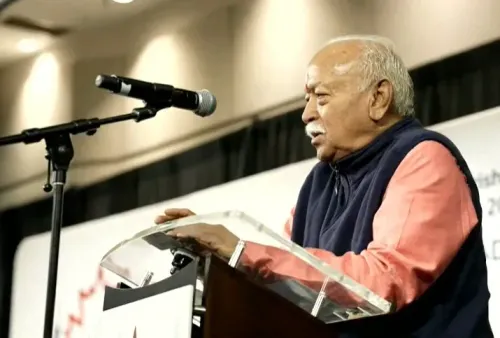
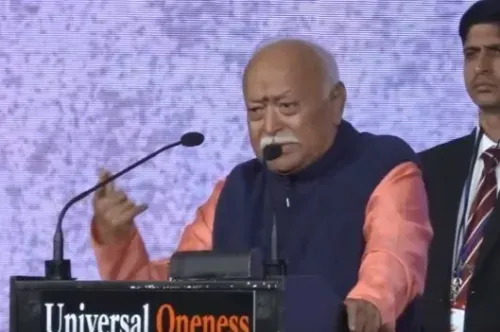
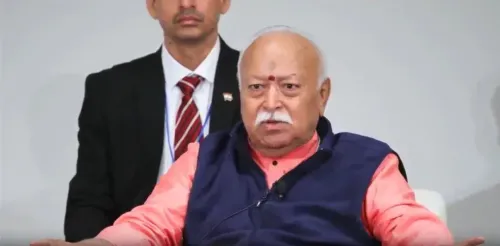
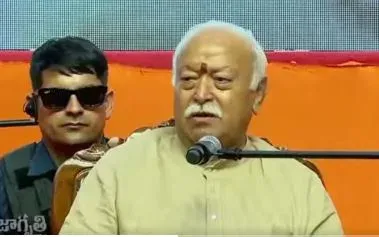
Rashtriya Swayamsevak Sangh (RSS) chief Mohan Bhagwat on Sunday, 26 July called for social inclusion of LGBTQ+ individuals, asserting that they are human beings with the right to live and must not be pushed to the margins of society. Speaking at an event in Hyderabad, Bhagwat drew on Indian tradition and classical texts to argue that such communities have always had a recognised, if quiet, place in the country's social fabric.
Key Remarks by Bhagwat
Bhagwat distinguished between what he described as innate and acquired tendencies within the LGBTQ+ spectrum. 'Some are innate, determined by nature itself; neither we nor they can do anything about it — that is simply how they were born,' he said. He added that acquired tendencies also exist and that neither category is new to Indian society.
Calling for empathy over ostracism, he said: 'They are also human beings and have the right to live. They should not be isolated from society. In the broader social order, there is a place for them as well. Do not look down upon them.'
Bhagwat's Reference to Indian Tradition
The RSS chief invoked the example of Shikhandi from the Mahabharata — a figure of ambiguous gender who fought alongside celebrated warriors — to illustrate that Indian civilisation had historically accommodated gender diversity. He noted that such communities today have their own deities, places of worship, and even Mahamandaleshwars who participate in the Kumbh Mela.
'Rather than making unnecessary noise or fanfare about these matters, we handled them quietly to ensure society maintained a sympathetic attitude toward them,' Bhagwat said. He argued that this quiet accommodation, rather than loud contestation, was the traditional Indian approach.
Critique of Western Frameworks
Bhagwat also argued that Indians had drifted from their own traditions — a process he traced to the period around the Mahabharata era and accelerated by subsequent invasions. He said colonial influence instilled an inferiority complex that led Indians to uncritically adopt Western frameworks, including on questions of gender and sexuality.
'Based on an incomplete perspective, there is a wrong understanding that has been continuing in Western countries, due to which many problems have emerged there. We adopted that understanding from them, but since they do not have answers to these problems, we are also not finding answers,' he said.
Significance and Context
Bhagwat's remarks are notable given the RSS's historical conservatism on social issues and come at a time when LGBTQ+ rights remain a contested legal and political question in India, following the Supreme Court's 2023 refusal to legalise same-sex marriage. While the RSS chief stopped short of endorsing legal recognition, his call for dignity and non-discrimination represents a rhetorically significant shift in tone from the Sangh's public posture. Notably, Bhagwat framed inclusion through the lens of Indian civilisational values rather than rights-based discourse — a framing that sets his position apart from both progressive advocacy and outright rejection.
How these remarks translate into the RSS's organisational positions or influence policy within the ruling Bharatiya Janata Party (BJP) government remains to be seen.
Point of View
Empathy without rights. By anchoring his argument in the Mahabharata and Kumbh Mela rather than constitutional guarantees, he carves a position the RSS can hold without conceding ground on marriage equality or anti-discrimination law. The remarks are unlikely to shift BJP policy, but they do signal that the Sangh is adjusting its public tone on a question that younger, urban Indians increasingly care about. What mainstream coverage may miss is the implicit critique of Western liberal frameworks embedded in the same speech — Bhagwat is not moving toward a rights-based position; he is asserting a civilisational alternative to one.
NationPress
25 Oct 2026
Frequently Asked Questions
What did RSS chief Mohan Bhagwat say about LGBTQ+ people?
Mohan Bhagwat said LGBTQ+ individuals should not be isolated from society, asserting they are human beings with the right to live and deserve dignity. He made these remarks at an event in Hyderabad on 26 July.
How did Bhagwat connect LGBTQ+ inclusion to Indian tradition?
Bhagwat cited the Mahabharata character Shikhandi — a figure of ambiguous gender who fought in the great war — as proof that Indian civilisation had long accommodated gender diversity. He also noted that such communities have their own deities and Mahamandaleshwars who attend the Kumbh Mela.
Did Bhagwat support legal rights for LGBTQ+ individuals?
Bhagwat did not call for legal recognition or rights for LGBTQ+ individuals. His remarks focused on social dignity and non-discrimination, framed through Indian tradition rather than a rights-based or legal argument.
Why are Bhagwat's remarks significant?
The RSS has historically held conservative positions on gender and sexuality. Bhagwat's call for inclusion — even if framed in civilisational rather than rights terms — represents a notable shift in public tone, coming two years after the Supreme Court declined to legalise same-sex marriage in India.
What did Bhagwat say about Western approaches to LGBTQ+ issues?
Bhagwat argued that India had uncritically adopted an 'incomplete' Western framework on such matters, which he said has produced unresolved problems in Western societies. He contended that India's traditional approach of quiet accommodation was more effective and humane.