Is Surge Pricing the Future? Bharat Taxi App in Testing Phase, Nitin Gadkari Says
Synopsis
The 'Bharat Taxi App' is in testing and aims to combat surge pricing by fostering driver-owned services in a cooperative model. Union Minister Nitin Gadkari highlights fare regulations and driver welfare in response to rising surge pricing concerns.
Key Takeaways
Bharat Taxi App is in testing phase to address surge pricing.
The app supports a driver-owned cooperative model .
The Motor Vehicles Aggregators Guidelines, 2025 regulate fare and safety.
Surge pricing capped at twice the base fare during peak hours.
Drivers receive a significant share of the fare.
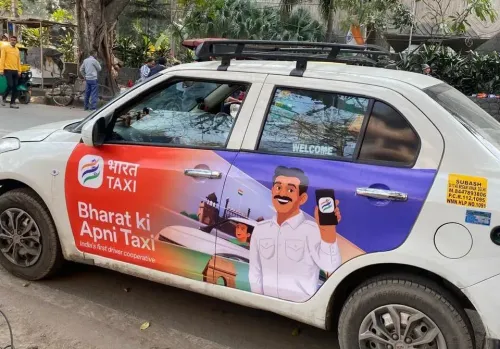
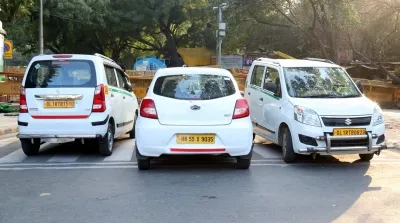
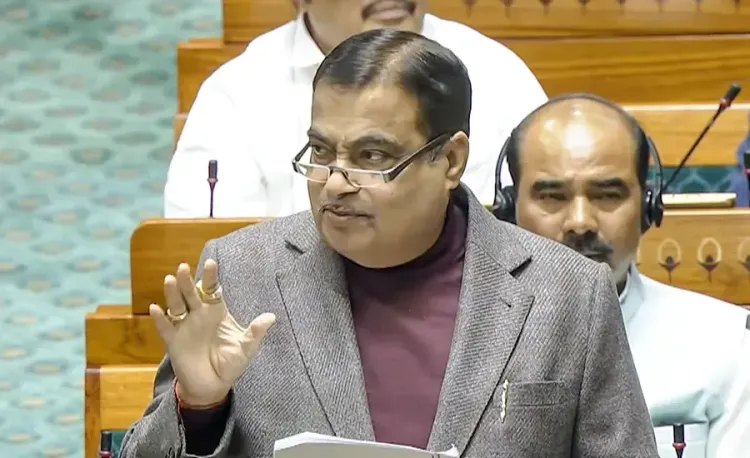
New Delhi, Dec 11 (NationPress) In light of increasing instances of surge pricing by private online cab aggregators, a mobile application named 'Bharat Taxi App' is currently undergoing testing and trial, as revealed by Union Road Transport and Highways Minister Nitin Gadkari during a parliamentary session on Thursday.
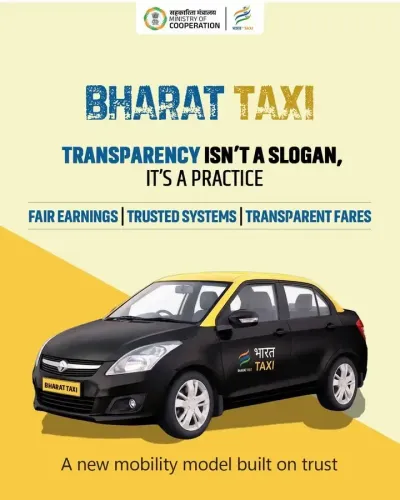
The objective of the Bharat Taxi App is to facilitate a driver-owned taxi service operating on a cooperative model, under the supervision of the Sahakar Taxi Cooperative Limited (STCL), Gadkari mentioned in a written response to a Lok Sabha inquiry.
The National Cooperative Development Corporation (NCDC) is instrumental in launching the cooperative-oriented 'Bharat Taxi' ride-hailing service. The registration of a new multi-state cooperative society has been completed, and efforts for driver enrollment and technological enhancements are currently ongoing, as stated by the government earlier.
Gadkari elaborated that the government has implemented The Motor Vehicles Aggregators Guidelines, 2025 for aggregators, including app-based taxi services, aiming to create a light-touch regulatory framework that addresses user safety and driver welfare. The state government’s designated authority holds the power to issue licenses for such aggregators, covering the entire state.
In addition to passenger protections, these Guidelines outline fare regulations.
“Recognizing that fares are influenced by market dynamics pertaining to the demand and supply of aggregated vehicles, the Guidelines permit dynamic pricing, enabling aggregators to set fares at up to 50 percent lower than the state-determined base fares while capping maximum surge pricing at twice the base fare during peak hours,” stated the minister.
“To ensure transparency, accountability, and passenger welfare, the state-notified fare will serve as the base fare.”
As per the guidelines, drivers who own their vehicles will receive at least 80 percent of the fare, whereas drivers using vehicles owned by the aggregator will receive a minimum of 60 percent of the fare.
Thus, during surge pricing, the primary beneficiary will be the driver of the owned vehicle. This mechanism is expected to enhance supply and improve availability during high-demand periods, according to Gadkari.
Furthermore, the Guidelines stipulate the possibility of suspending or revoking an aggregator's license for various violations, including charging passengers unreasonable or dynamic fares.
“The Guidelines also guarantee that no passenger will incur charges for dead mileage, except when the distance to avail the ride is less than three kilometers, with fares applicable only from the point of origin to the destination,” added the minister.
Point of View
The development of the 'Bharat Taxi App' signifies a proactive approach to regulate the volatile surge pricing issue in the cab aggregation industry. By prioritizing driver welfare and implementing transparent fare guidelines, the government aims to strike a balance between market dynamics and passenger safety, fostering a cooperative model that could reshape the ride-hailing landscape.
NationPress
30 Sept 2026
Frequently Asked Questions
What is the Bharat Taxi App?
The Bharat Taxi App is a mobile-based application designed to support driver-owned taxi services under a cooperative model, currently in its testing phase.
Who is overseeing the Bharat Taxi App?
The app is being developed under the Sahakar Taxi Cooperative Limited (STCL) with the National Cooperative Development Corporation (NCDC) facilitating its establishment.
What are the key features of the Motor Vehicles Aggregators Guidelines, 2025?
The guidelines focus on user safety, fare regulation, and ensuring that drivers receive a fair portion of the fare, with dynamic pricing being allowed under certain conditions.
How does surge pricing work under these guidelines?
Under the guidelines, surge pricing can be implemented with a cap at twice the state-notified base fare during peak hours, ensuring transparency and accountability.
What is the fare distribution for drivers?
Drivers owning their vehicles will receive at least 80 percent of the fare, while those using aggregator-owned vehicles will get a minimum of 60 percent.