What Defined the 2025 Bihar Polls: SIR Row, NDA Strength, and Opposition Fragmentation?
Synopsis
The 2025 Bihar Assembly elections showcased a battle of narratives, with NDA's strategic unity overshadowing the Grand Alliance's internal discord, leading to a noteworthy political shift in the state.
Key Takeaways
Significant electoral roll changes ignited political controversy.
NDA maintained unity while the Grand Alliance faced internal strife.
Opposition launched campaigns to raise awareness Key welfare promises were made by both NDA and Opposition.
The election results favored NDA, marking a significant political shift.
Patna, Dec 29 (NationPress) The year 2025 is poised to be a pivotal chapter in Bihar's political landscape, primarily owing to the recent Assembly elections in which the National Democratic Alliance (NDA) claimed victory.
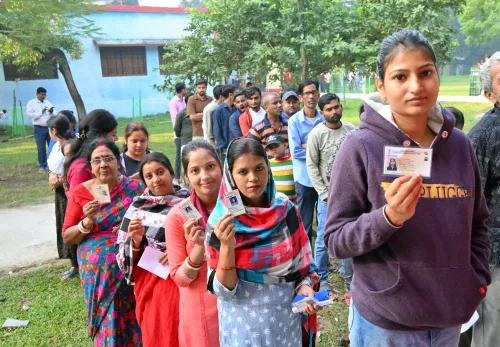
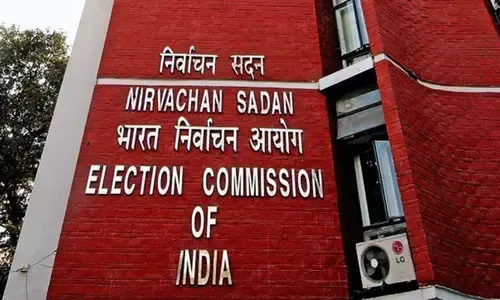
Nonetheless, the journey to the elections was fraught with significant political events, with the most notable being the Special Intensive Revision (SIR) of electoral rolls, executed just two months ahead of polling.
During the SIR operation, over 65 lakh voters were purged from the electoral rolls, while approximately 24 lakh new voters were registered.
This extensive electoral roll update was undertaken by the Election Commission of India (ECI) with assistance from Booth Level Officers (BLOs) and booth-level agents from political parties recognized by the Commission.
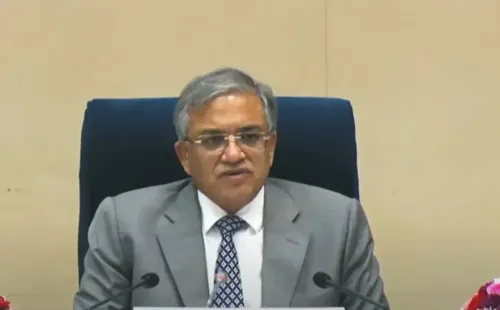
The ECI characterized this process as a routine yet expansive revision intended to ensure the integrity of voter lists.
However, this initiative incited a considerable political uproar.
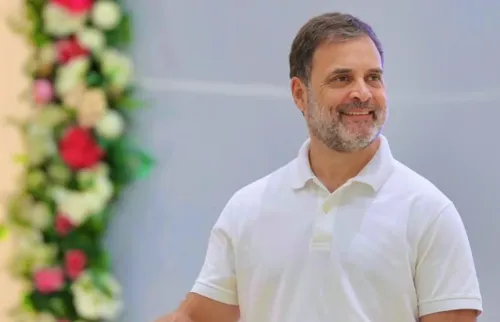
Opposition figures, including Congress leader Rahul Gandhi, Rashtriya Janata Dal leader Tejashwi Yadav, VIP Chief Mukesh Sahani, and CPI(ML) Liberation leader Dipankar Bhattacharya, accused the ECI and ruling parties of committing “vote theft” (Vote Chori).
They contended that the removal of such a vast number of voters disproportionately impacted impoverished, migrant, and marginalized communities.
Conversely, leaders from the ruling NDA staunchly defended the ECI.
Prime Minister Narendra Modi, Union Home Minister Amit Shah, Bihar Chief Minister Nitish Kumar, and Union Ministers Chirag Paswan, Jitan Ram Manjhi, and Upendra Kushwaha argued that the SIR initiative was essential to identify illegal migrants, especially from Bangladesh and the Rohingya Muslim communities.
Opposition leaders, however, raised questions regarding this assertion. Tejashwi Yadav repeatedly highlighted that the Election Commission did not mention any infiltrators in its affidavit submitted to the Supreme Court. He also challenged why the Commission failed to produce figures on the number of alleged infiltrators identified during the SIR process, despite numerous requests.
Regardless, NDA leaders continued to emphasize the issue of illegal immigration during campaign events, accusing the Opposition of harboring infiltrators and jeopardizing national security. This topic became a central theme throughout the campaign.
To counter the narrative and raise public consciousness, the Opposition—led by Rahul Gandhi and Tejashwi Yadav—initiated a month-long “Voter Adhikar Yatra”, which traversed more than 25 districts across Bihar.
Through rallies and road shows, opposition figures underscored alleged discrepancies in the SIR operation and alerted voters about what they termed systematic disenfranchisement.
The 2025 Bihar Assembly election will also be notable for the stark contrast between NDA unity and the internal conflicts within the Grand Alliance. Even after the Model Code of Conduct was enacted, Grand Alliance partners struggled to address seat-sharing disagreements. In the 243-member Bihar Assembly, the RJD, Congress, and VIP failed to establish a mutually agreeable seat-sharing arrangement.
This resulted in friendly contests occurring on more than 12 seats, a scenario that directly benefitted the NDA.
Numerous meetings took place in Patna and New Delhi involving RJD leader Tejashwi Yadav, Congress Bihar in-charge Krishna Allavaru, and VIP Chief Mukesh Sahani, but no compromise was reached—largely due to Congress's rigid position.
The Congress aimed to contest over 70 seats, while the RJD was reluctant to offer more than 60 seats. Furthermore, the Congress leadership initially hesitated to endorse Tejashwi Yadav as the Chief Ministerial candidate. Eventually, after extended discussions, the INDIA Bloc alliance reached a late agreement.
Veteran Congress leader and former Rajasthan Chief Minister Ashok Gehlot formally announced Tejashwi Yadav as the Chief Ministerial candidate and Mukesh Sahani as the Deputy Chief Ministerial candidate.
Despite this belated consensus, the damage inflicted by internal strife had already adversely affected the opposition's electoral outlook—contributing significantly to the NDA's emphatic win. During the electoral campaign, Opposition Grand Alliance’s Chief Ministerial candidate Tejashwi Yadav unveiled a series of welfare commitments aimed at luring voters.
His principal promises included one government job for every family in Bihar, 200 units of free electricity, a Rs 2,500 monthly pension for women under the “Mai Bahin Maan Yojana”, a Rs 1,500 social security pension, three 'dismil' of land for landless families, and several other populist initiatives. These pledges were formally incorporated into the Grand Alliance's election manifesto ('Sankalp Patra').
In contrast, the NDA, led by Bihar Chief Minister Nitish Kumar, countered with its own set of assurances. The alliance pledged Rs 10,000 as cash support to women associated with self-help groups, 125 units of free electricity, a Rs 1,100 social security pension, and a commitment to create one crore jobs over the next five years.
Nitish Kumar also stated that women beneficiaries receiving Rs 10,000 would qualify for additional financial assistance of up to Rs 2 lakh in the future. Notably, the Bihar government disbursed Rs 10,000 to over 1.56 crore women statewide, even while the Model Code of Conduct was in effect and just prior to voting in the second phase of the election.
This action sparked intense political controversy, with opposition leaders accusing the NDA government of distributing cash to purchase votes. The ruling NDA coalition dismissed these claims, asserting that the transfers were part of previously sanctioned welfare programs.
Amid fierce allegations and counter-allegations exchanged between the NDA and the Grand Alliance, voting in Bihar occurred in two phases on November 6 and November 11, with the outcomes announced on November 14.
The NDA achieved a decisive victory, winning 202 of the 243 Assembly seats.
The BJP won 89 seats, JD-U secured 85 seats, LJP (Ram Vilas) led by Chirag Paswan won 19 seats, Hindustani Awam Morcha (HAM) led by Jitan Ram Manjhi won 5 seats, and Rashtriya Lok Morcha led by Upendra Kushwaha won 4 seats.
The results were a significant setback for the Grand Alliance, which was reduced to merely 35 seats. Of these, RJD won 25 seats, Congress claimed 6 seats, CPI-ML secured 2 seats, and both the Indian Inclusive Party (IIP) and CPI-M won 1 seat each.
Outside the two major coalitions, All India Majlis-e-Iteehadul Muslimeen won 5 seats, while the Bahujan Samaj Party secured 1 seat.
With this sweeping mandate, Nitish Kumar assumed office once again as Chief Minister of Bihar, reinforcing NDA solidarity and marking one of the most significant victories in the state's recent political saga.
Point of View
It's evident that the 2025 Bihar elections highlight a critical juncture in the state's political dynamics. The NDA's ability to maintain unity amid opposition discord has reshaped voter sentiment. While controversies surrounding electoral roll revisions have raised questions, the ultimate focus must remain on ensuring fair representation and accountability in governance.
NationPress
5 Oct 2026
Frequently Asked Questions
What was the Special Intensive Revision (SIR) of electoral rolls?
The SIR was a large-scale electoral roll update that removed over 65 lakh voters and added around 24 lakh new voters, aimed at enhancing the accuracy of voter lists.
Why did opposition leaders accuse the ECI of 'vote theft'?
Opposition leaders claimed that the removal of a significant number of voters disproportionately affected marginalized communities, alleging systematic disenfranchisement.
What were some key promises made by Tejashwi Yadav during the campaign?
Tejashwi Yadav promised one government job for each family, free electricity, and various welfare measures aimed at supporting women and landless families.
How did the NDA respond to the opposition's welfare promises?
The NDA countered with its own promises, including cash assistance for women in self-help groups, free electricity, and a commitment to create one crore jobs.
What was the outcome of the 2025 Bihar Assembly elections?
The NDA won a decisive majority, securing 202 out of 243 seats, while the Grand Alliance was reduced to only 35 seats.