India's Supply Chain Rise: Biswal Calls It India's Economic Moment
Synopsis
Former US official Nisha Biswal declared it 'India's moment' as global companies race to de-risk from China, with US-India trade surging to $212 billion without a formal trade deal. Experts at Washington's New India Conference warned that domestic reforms — not just geopolitics — will determine if India seizes this historic opportunity.
Key Takeaways
Nisha Biswal , former US Assistant Secretary of State and Partner at The Asia Group , declared "It is India's moment in the economic space" at the New India Conference in Washington on April 23, 2025 .
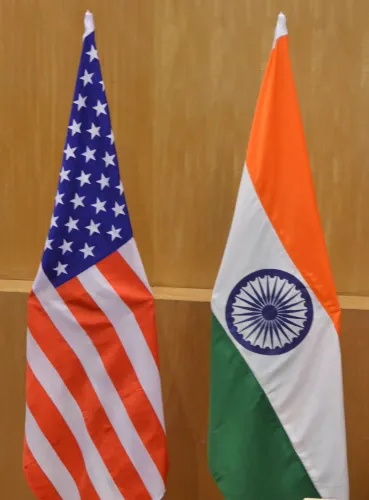
US-India bilateral trade has surged from approximately $50 billion to $212 billion without a formal trade agreement, reflecting India's growing economic pull.
A US-India trade deal is anticipated but is expected to take shape as a phased arrangement rather than a comprehensive agreement in the near term.
Energy, advanced technology, and critical minerals were identified as the top three sectors for deeper US-India economic cooperation .
World Bank expert Hemang Jani flagged skills gaps and low workforce participation as "binding constraints" on India's sustained growth.
CSIS Senior Adviser Richard Rossow warned that state-level reforms on infrastructure and regulation are critical to unlocking India's full investment potential.
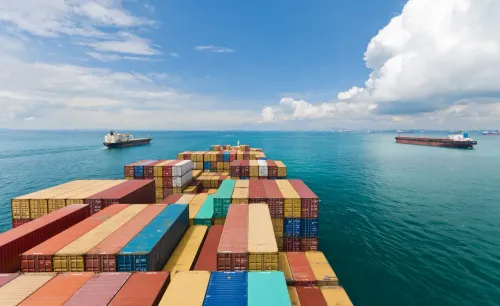
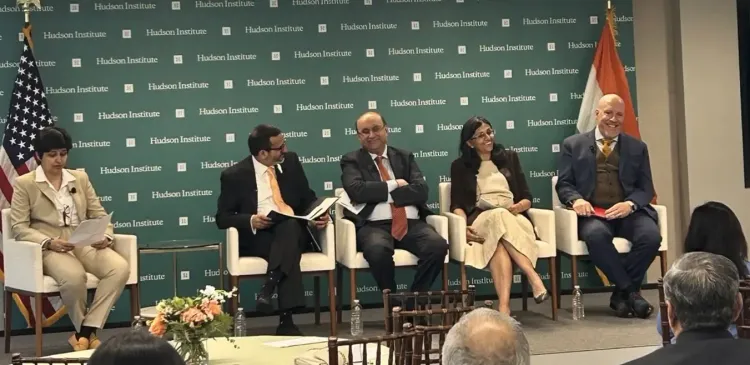
Washington, April 23 — India is rapidly positioning itself as a cornerstone of the global supply chain realignment, as multinational companies accelerate efforts to reduce their dependence on China. Nisha Biswal, Partner at The Asia Group and former US Assistant Secretary of State for South and Central Asian Affairs, declared at the New India Conference in Washington that this is unequivocally "India's moment in the economic space."
India at the Center of Global Supply Chain Shift
Speaking at the high-profile policy forum, Biswal highlighted the remarkable trajectory of US-India bilateral trade, which has surged from approximately $50 billion to nearly $212 billion — all without a formal trade agreement in place. This growth, she argued, is a testament to the organic pull of India's vast market and its deep reservoir of skilled talent.
Businesses across sectors are now actively asking "what does a de-risking from China look like," Biswal noted, and India is increasingly the answer. The country's scale, demographic dividend, and economic resilience make it a natural alternative destination for global manufacturing and services.
This shift is not incidental — it reflects years of geopolitical friction between the United States and China, supply chain vulnerabilities exposed during the COVID-19 pandemic, and rising tariff disputes that have pushed corporations to diversify their operational footprints across South Asia and Southeast Asia.
US-India Ties Evolving Beyond Strategy to Commerce
Biswal emphasized that the US-India relationship is undergoing a structural evolution — moving beyond its traditional strategic and defense dimensions to embrace a stronger commercial and economic partnership. Washington is increasingly focused on supply chain collaboration, investment flows, and technology transfer with New Delhi.
On the question of a formal US-India trade agreement, Biswal said one is likely but not imminent. She suggested it could take shape as a phased or sectoral arrangement rather than a sweeping comprehensive deal in the near term — a pragmatic framing that aligns with both governments' current negotiating postures.
She identified energy, advanced technology, and critical minerals as the three pillars most ripe for deeper bilateral cooperation — sectors that are strategically vital for both nations amid the global clean energy transition and the race for technological supremacy.
Domestic Reforms: The Binding Constraint on India's Growth
While the external opportunity is clear, panelists at the conference were candid about the internal challenges India must overcome to fully capitalize on this moment. Hemang Jani, Public Policy and Governance Expert at the World Bank, pointed to skills gaps and low workforce participation rates — particularly among women — as "binding constraints" on sustained economic growth.
Ashok Malik, also a Partner at The Asia Group, noted that India has recalibrated its approach to trade policy after earlier agreements exposed structural vulnerabilities in domestic industries. "That did cause a recalibration of approach to trade," he said, underscoring that New Delhi's caution in signing free trade agreements is rooted in hard-learned lessons.
Richard Rossow, Senior Adviser at the Center for Strategic and International Studies (CSIS), stressed that state-level governance is the real frontier for economic transformation. "States run the country," he said bluntly, pointing to infrastructure bottlenecks and regulatory inconsistencies across Indian states that continue to deter foreign direct investment.
Geopolitical Shocks Reshaping Economic Decisions
Biswal also placed India's rise in the context of a broader global reconfiguration driven by geopolitical tensions, supply disruptions, and the weaponization of trade. Countries and corporations alike are prioritizing supply chain resilience over pure cost efficiency — a paradigm shift that benefits India enormously.
Notably, this discussion comes at a time when the United States has imposed sweeping tariffs on Chinese goods under the Trump administration, further accelerating the corporate exodus from China and intensifying the search for alternative manufacturing hubs. India, Vietnam, and Mexico are the primary beneficiaries of this restructuring, but India's combination of democratic governance, English-language proficiency, and a massive domestic consumer market gives it a distinct edge.
What Comes Next for India's Economic Trajectory
Experts at the New India Conference converged on a clear consensus: the pace of India's domestic economic reforms and the depth of its trade engagement with the United States will define the next chapter of its growth story. The window of opportunity is open, but it requires decisive policy action — on labor laws, land acquisition, skilling, and regulatory simplification — to translate geopolitical goodwill into tangible economic gains.
As global supply chains continue to rewire through 2025 and beyond, India's ability to absorb investment, scale manufacturing, and deliver on its reform promises will determine whether this moment becomes a lasting structural advantage or a missed inflection point.
Point of View
But whether New Delhi can reform fast enough to catch the wave before Vietnam or Indonesia does.
NationPress
19 Sept 2026
Frequently Asked Questions
What did Nisha Biswal say about India's role in global supply chains?
Nisha Biswal, former US Assistant Secretary of State and Partner at The Asia Group, said it is 'India's moment in the economic space' as companies globally seek to de-risk from China. She highlighted that US-India trade has grown from $50 billion to $212 billion even without a formal trade agreement.
Is a US-India trade agreement likely in 2025?
According to Nisha Biswal, a US-India trade agreement is likely but not immediate. She suggested it could emerge as a phased or sectoral arrangement rather than a comprehensive deal in the near term.
Which sectors are key for US-India economic cooperation?
Biswal identified energy, advanced technology, and critical minerals as the primary areas for deeper US-India cooperation. These sectors are strategically important amid the global clean energy transition and the competition for technological leadership.
What challenges could slow India's economic growth momentum?
World Bank expert Hemang Jani cited skills gaps and low workforce participation as 'binding constraints' on India's growth. CSIS Senior Adviser Richard Rossow also pointed to state-level infrastructure and regulatory issues as critical barriers to attracting investment.
What is the New India Conference in Washington?
The New India Conference is a Washington-based policy forum that brings together policymakers, analysts, and business leaders to discuss India's economic outlook and the trajectory of US-India relations. The April 2025 edition focused on supply chain shifts, trade policy, and domestic reforms.