BJP Slams Karnataka Govt Over SC Internal Quota: 'Historic Betrayal'
Synopsis
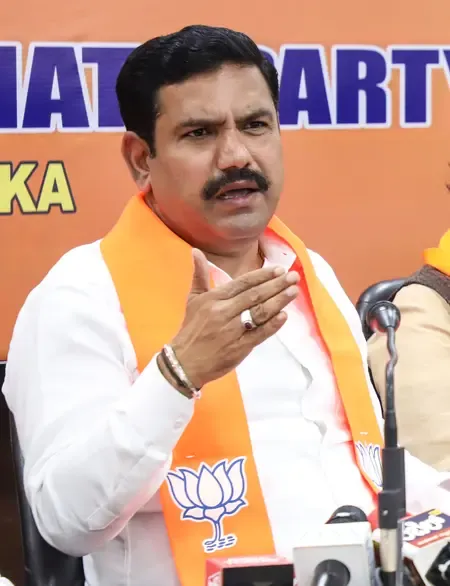
Karnataka BJP chief B.Y. Vijayendra has accused the Siddaramaiah-led Congress government of a 'historic betrayal' of Scheduled Castes, alleging that the new internal reservation framework cuts Category A and B quotas, scraps separate allocations for Banjara and nomadic communities, and reverses the BJP-era 17 per cent SC reservation — all while lakhs of government posts remain vacant.
Key Takeaways
Karnataka BJP President B.Y.
Vijayendra on Saturday, April 25 accused the Congress government of a 'historic betrayal' of Scheduled Castes over its new internal reservation framework.
The Karnataka Cabinet approved SC internal reservation in the ratio of 5.25:5.25:4.5 for left, right, and other communities respectively.
BJP alleges Category A quota was cut from 6 to 5.25 per cent and Category B from 5.5 to 5.25 per cent , causing injustice to multiple SC communities.
Communities including Banjara, Bhovi, Koracha, and Korama lost a separate 1 per cent nomadic reservation and have been merged into Category C with only 4.5 per cent .
Chief Minister Siddaramaiah announced the state will fill 56,432 government posts this year, with notifications to be issued shortly.
BJP warned that Mallikarjun Kharge, Rahul Gandhi, Siddaramaiah, and D.K.
Shivakumar will face political consequences for the alleged injustice to SCs in Karnataka .
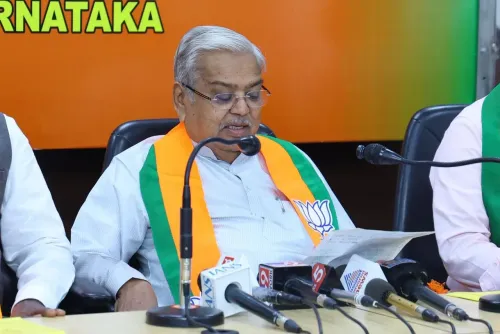
Bengaluru, April 25: Karnataka BJP President B.Y. Vijayendra launched a sharp attack on the Congress-led state government on Saturday, accusing it of committing a 'historic betrayal' of Scheduled Castes (SCs) through its newly announced internal reservation framework. Vijayendra alleged that the Siddaramaiah government delayed implementing the Supreme Court's reservation distribution directives for nearly two-and-a-half years, only to ultimately reduce allocations within key SC categories.
BJP's Core Allegations Against the Congress Government
Vijayendra stated that the state Cabinet's decision to divide Scheduled Castes into Category A, B, and C groups in the ratio of 5.25:5.25:4.5 is deeply unjust. He pointed out that under the previous BJP government led by Chief Minister Basavaraj Bommai, SC reservation had been raised from 15 per cent to 17 per cent — a gain he claims has now been effectively reversed.
According to Vijayendra, the quota for Category A has been slashed from 6 per cent to 5.25 per cent, while Category B has been trimmed from 5.5 per cent to 5.25 per cent. He argued these reductions amount to a systematic injustice against multiple SC communities across Karnataka.
He further alleged that the earlier 4.5 per cent allocation for communities including Banjara, Bhovi, Koracha, and Korama, along with a separate 1 per cent reservation for nomadic groups, has been scrapped. These communities have now been merged into a single Category C, receiving only 4.5 per cent instead of what he termed a justified 5.5 per cent.
Affidavit Controversy and Government Vacancy Crisis
One of Vijayendra's most pointed allegations was that despite the absence of any court stay order, the Karnataka government voluntarily filed an affidavit agreeing to reduce overall SC reservation from 17 per cent back to 15 per cent — a move he described as self-inflicted damage to the SC community's rights.
The BJP State President also criticised the Congress administration's handling of government employment, noting that lakhs of government posts remain unfilled. He accused the ruling party of deliberately stalling recruitment for two-and-a-half years and now, with only about two years left in its tenure, announcing job drives as a political distraction ahead of elections.
Political Warning to Congress Leadership
Vijayendra issued a stern political warning, stating that senior Congress leaders — including party President Mallikarjun Kharge, Leader of Opposition Rahul Gandhi, Chief Minister Siddaramaiah, and Deputy Chief Minister D.K. Shivakumar — would face electoral consequences for the alleged injustice done to SC communities in Karnataka.
He called on the Congress government to mount a strong legal challenge to restore the 17 per cent SC reservation implemented under the previous BJP administration, warning that failure to do so could trigger a significant political decline for Congress across South India.
What the Karnataka Cabinet Actually Decided
The Karnataka Cabinet on Friday approved a unanimous decision on internal reservation for Scheduled Castes, dividing the quota into left communities (5.25 per cent), right communities (5.25 per cent), and other communities (4.5 per cent).
Chief Minister Siddaramaiah announced that as per the Budget commitment, the state government would fill 56,432 government posts this year, with notifications to be issued shortly. He added that until the court delivers a final verdict, the government would adhere to the 50 per cent reservation cap, while remaining committed to implementing 56 per cent reservation in the future.
Deeper Context: Why This Battle Matters Beyond Politics
This controversy sits at the intersection of caste politics, judicial mandates, and electoral arithmetic in Karnataka. The Supreme Court's 2024 ruling permitting sub-classification within SC/ST reservations opened a politically volatile door across Indian states, and Karnataka is among the first to act on it — making its choices a national template.
Notably, the Banjara, Bhovi, and nomadic communities have historically been among the most politically mobilised SC sub-groups in northern Karnataka, making any perceived reduction in their quota a potential flashpoint ahead of local body elections and the 2028 state assembly polls.
Critics also point to a broader irony: the Congress, which has built its national narrative around social justice and SC/OBC welfare under the leadership of Mallikarjun Kharge — himself a Dalit leader — now faces accusations of diluting SC protections in its own-governed state. Whether the government's legal strategy on the 17 per cent reservation holds up in court will be the defining test of its stated commitment.
With recruitment notifications expected imminently and court proceedings on reservation caps ongoing, the political and legal battle over Karnataka's SC reservation framework is set to intensify significantly in the coming weeks.
Point of View
Because if true, it suggests political calculation over constitutional commitment. What makes this nationally significant is that Karnataka's sub-classification model will be watched by every other state navigating the Supreme Court's 2024 ruling, meaning the choices made here set a precedent. The real losers, as always, are the communities caught between two parties using their welfare as electoral currency.
NationPress
19 Sept 2026
Frequently Asked Questions
What is Karnataka's new SC internal reservation decision?
The Karnataka Cabinet approved internal reservation for Scheduled Castes in the ratio of 5.25:5.25:4.5, dividing SCs into left, right, and other community categories respectively. Chief Minister Siddaramaiah announced the decision on Friday, April 25, 2025, alongside a plan to fill 56,432 government posts.
Why is BJP calling Karnataka's SC reservation move a 'historic betrayal'?
BJP President B.Y. Vijayendra alleges the Congress government reduced allocations within SC categories, scrapped separate quotas for Banjara, Bhovi, and nomadic communities, and voluntarily agreed to lower overall SC reservation from 17 to 15 per cent. He says the Congress wasted two-and-a-half years before announcing a framework he calls unjust.
What was the SC reservation percentage under the previous BJP government in Karnataka?
The previous BJP government under Chief Minister Basavaraj Bommai had increased SC reservation in Karnataka from 15 per cent to 17 per cent. BJP now alleges the Congress government has effectively reversed this gain through its new internal reservation structure.
Which communities are most affected by Karnataka's SC reservation changes?
Communities including Banjara, Bhovi, Koracha, and Korama are most directly impacted, as their earlier 4.5 per cent allocation plus a separate 1 per cent for nomadic groups has been merged into a single Category C with only 4.5 per cent. BJP argues this denies them a justified 5.5 per cent share.
What is the Supreme Court's role in Karnataka's SC reservation dispute?
The Supreme Court had issued directions on reservation distribution among SC sub-groups, which Karnataka was required to implement. BJP alleges the Congress government delayed compliance for two-and-a-half years and also filed an affidavit agreeing to cap overall SC reservation at 15 per cent, despite no court stay order requiring the reduction.