Punjab BJP attacks Congress over post-revamp dissent, questions Rahul Gandhi's authority
Synopsis
Punjab BJP has turned the Congress’s post-revamp internal dissent into a public accountability test, demanding Rahul Gandhi clarify whether the high command’s authority is real or ceremonial. With senior leaders gathering at Channi’s residence and Congress president Warring scrambling to deny factionalism, the optics are already doing the BJP’s work for it.
Key Takeaways
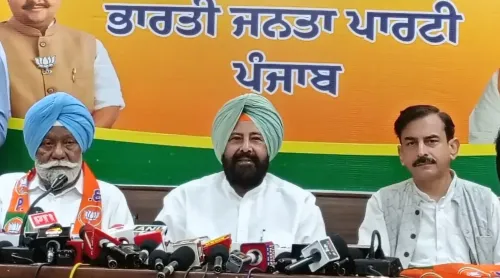
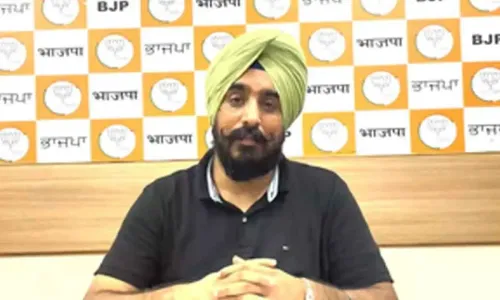
Punjab BJP spokesperson Pritpal Singh Baliawal attacked the Congress leadership on 4 July over growing dissent following a state organisational revamp.
Baliawal demanded Rahul Gandhi clarify whether those defying the high command would face disciplinary action.
He alleged the Congress applies disciplinary standards selectively — strictly for ordinary workers, leniently for influential factions.
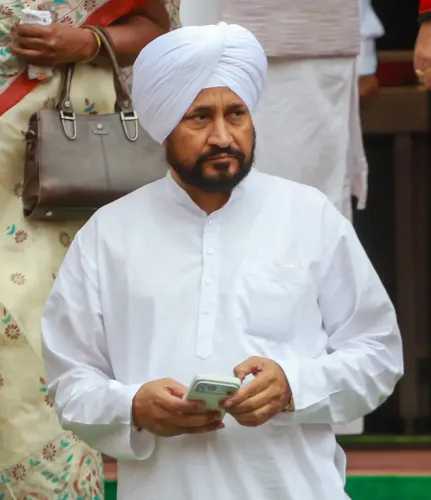
Punjab Congress President Amarinder Singh Raja Warring denied factionalism, defending a meeting of senior leaders at former CM Charanjit Singh Channi ’s residence.
Channi serves as Chairman of the Congress’s Campaign Committee in Punjab.
Punjab Bharatiya Janata Party (BJP) spokesperson Pritpal Singh Baliawal on Saturday, 4 July launched a pointed attack on the Indian National Congress leadership, questioning its commitment to internal discipline following open dissent within the party after a revamp of its Punjab organisational unit. The remarks come as senior Congress figures have publicly voiced opposition to decisions made by the party high command.
BJP's Challenge to Congress Leadership
Baliawal directly questioned Congress leader Rahul Gandhi's handling of the internal rebellion, demanding clarity on whether the party would act against those openly defying its decisions. “Rahul-ji must answer a simple question: Are those openly challenging the high command patriots or rebels? If party discipline is supreme, will action be taken against those publicly defying the leadership’s decision, or will this rebellion be conveniently ignored?” Baliawal said.
He argued that the Congress has long projected itself as a champion of organisational discipline, yet the unfolding situation in Punjab has exposed what he described as deep divisions and contradictions within the party's ranks.
Double Standards Alleged
Baliawal alleged that the Congress applies disciplinary standards selectively. “Whenever it suits the Congress leadership, disciplinary action is threatened against party workers and leaders. But when influential factions openly challenge a decision of the high command, the leadership appears reluctant to act. Punjab deserves to know whether the Congress follows one rule for all or different rules for different leaders,” he said.
He added that the public disagreement over the organisational appointment has laid bare an internal power struggle and raised serious questions about the effective authority of the party's central leadership.
Congress Denies Factionalism
Responding to the controversy, Punjab Congress President Amarinder Singh Raja Warring categorically ruled out any factionalism within the state unit. Warring defended a gathering of senior party leaders at the residence of former Punjab Chief Minister Charanjit Singh Channi, dismissing suggestions that the meeting signalled internal discord.
“What is wrong or factional in his holding the meeting of the party leaders?” Warring said, pointing out that Channi serves as Chairman of the party’s Campaign Committee. He noted that all senior leaders present at the meeting had spoken in favour of the party.
What This Signals for Punjab Politics
The exchange reflects the heightened political temperature in Punjab ahead of future electoral cycles, with the BJP keen to capitalise on any visible fractures within the ruling Congress organisation. Notably, post-revamp dissent in state Congress units is not a new phenomenon — similar tensions have surfaced in other states following high-command-driven reorganisations.
Baliawal concluded by pressing the Congress to clarify whether the authority of its high command is genuine or merely symbolic when confronted with open internal dissent. How the Congress leadership responds — or chooses not to — will be closely watched across Punjab's political landscape in the days ahead.
Point of View
And the party looks autocratic; ignore them, and the high command’s writ looks hollow. What mainstream coverage underplays is that this kind of post-revamp friction is structurally embedded in the Congress’s top-down reorganisation model. The deeper question is whether Punjab Congress’s internal tensions are a temporary adjustment or a sign that the high command’s grip on state units is weakening at precisely the wrong moment for the party.
NationPress
3 Oct 2026
Frequently Asked Questions
Why is the Punjab BJP attacking the Congress over its organisational revamp?
The Punjab BJP is targeting the Congress after several senior party leaders openly expressed dissent following a revamp of the Congress’s state organisational unit. BJP spokesperson Pritpal Singh Baliawal used the internal friction to question Rahul Gandhi’s authority and the Congress’s commitment to party discipline.
What did BJP spokesperson Baliawal specifically demand from Rahul Gandhi?
Baliawal demanded Rahul Gandhi clarify whether leaders openly defying the high command’s decisions would face disciplinary action or be allowed to continue without consequence. He framed it as a test of whether the Congress applies one standard for all or different rules for influential factions.
What was the Charanjit Singh Channi meeting about?
Former Punjab Chief Minister Charanjit Singh Channi hosted a meeting of senior Congress leaders at his residence, which critics interpreted as a sign of internal dissent. Punjab Congress President Amarinder Singh Raja Warring defended the meeting, noting that Channi is the Chairman of the party’s Campaign Committee and that all leaders present spoke in favour of the party.
Has the Punjab Congress denied factionalism?
Yes. Punjab Congress President Amarinder Singh Raja Warring categorically ruled out factionalism in the state unit, dismissing suggestions that the meeting at Channi’s residence indicated any internal split.
Why does post-revamp dissent matter in Punjab politics?
Organisational revamps often reshuffle influence and positions, triggering friction among senior leaders who feel sidelined. In Punjab, with electoral cycles approaching, visible internal divisions can weaken the Congress’s ground organisation and hand political ammunition to rivals like the BJP and the Aam Aadmi Party.