BJP accuses Punjab's Bhagwant Mann govt of IAS, IPS transfer racket via 'rate cards'
Synopsis
The BJP has accused Punjab Chief Minister Bhagwant Mann's government of running a systematic transfer-posting racket for IAS and IPS officers through middlemen operating on fixed 'rate cards' — allegations anchored by an Enforcement Directorate submission before the Punjab and Haryana High Court naming an OSD in Mann's own office as the alleged ringleader.
Key Takeaways
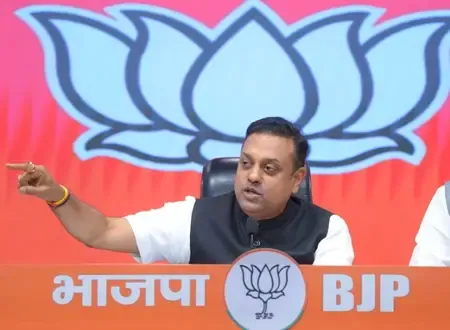
BJP national spokesperson Gaurav Bhatia on 2 September accused the Bhagwant Mann government of facilitating a transfer-posting racket for IAS and IPS officers via 'rate cards'.
The Enforcement Directorate (ED) has filed a submission before the Punjab and Haryana High Court naming Rajbir Singh Gautam , an OSD in Mann's office, as the alleged operator of the racket.
The ED reportedly wrote seven letters to Punjab Police seeking an FIR, but no case was registered, according to BJP.
Bhatia alleged brokers influenced postings of more than 20 senior bureaucrats and that classified government data allegedly reached middlemen's phones.
BJP drew a parallel with the Delhi liquor policy case , calling Arvind Kejriwal the 'kingpin' of the alleged scandal.
The AAP government in Punjab had not issued an official response at the time of this report.
The Bharatiya Janata Party (BJP) on 2 September launched a sharp attack on the Bhagwant Mann government in Punjab, alleging that transfers and postings of senior bureaucrats — including IAS and IPS officers — were being orchestrated by middlemen and brokers operating on a 'rate card' system, with the purported backing of Aam Aadmi Party (AAP) national convenor Arvind Kejriwal.
BJP's Core Allegations
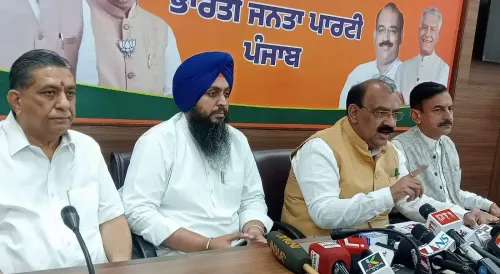
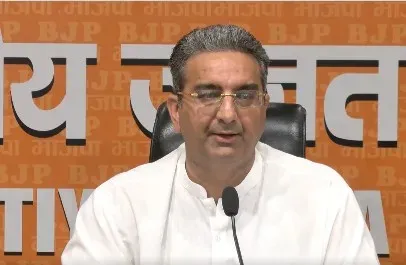
Addressing a press conference at the party headquarters in New Delhi, BJP national spokesperson Gaurav Bhatia claimed the racket was running under the watch of Chief Minister Bhagwant Mann and was allegedly being coordinated through the Chief Minister's own office. Bhatia described Kejriwal as the 'kingpin' of the scandal, drawing a direct line between the Punjab transfer controversy and the earlier Delhi liquor policy case.
'Punjab, known the world over for its honesty and hard work, has been turned into a brokerage and commission hub because of the corrupt and dishonest Bhagwant Mann government. The transfer and postings of IAS and IPS officers is being done as per their rate card, and it is being done on the directions of OSD,' Bhatia claimed at the press conference.
Enforcement Directorate Filing in High Court
The BJP's offensive follows a recent submission by the Enforcement Directorate (ED) before the Punjab and Haryana High Court, in which the agency reportedly alleged that Rajbir Singh Gautam, an Officer of Special Duty (OSD) in Mann's office and said to be a close associate of the Chief Minister, was allegedly leading the transfer-posting racket. The ED also placed on record a series of letters, reminders, and supporting documents that it had sent to Punjab authorities regarding the alleged racket.
According to Bhatia, the ED wrote seven letters to the Punjab Police seeking registration of a First Information Report (FIR), but the state police allegedly refused to act despite the offence being cognizable in nature. 'The administration's reluctance in lodging an FIR only raises suspicion about the Chief Minister,' he said.
Key Claims About the Alleged Racket
Bhatia further alleged that brokers had established direct communication channels with the Chief Minister's office and were influencing postings of officers on the basis of fixed 'rate cards'. He also alleged that classified state government information had allegedly reached the mobile phones of these middlemen — a claim he did not substantiate with documentary evidence at the press conference.
The BJP spokesperson demanded answers on how an OSD could reportedly facilitate the transfer and posting of more than 20 senior bureaucrats without the Chief Minister's knowledge, suggesting either complicity or a serious breakdown of administrative oversight.
Political Context and Demands
Bhatia linked the alleged Punjab racket to the model he said existed under the AAP government in Delhi during the liquor policy controversy, arguing that voters in the capital had already delivered a verdict against such practices. He demanded that the Bhagwant Mann government come clean on the allegations or, failing that, tender its resignation.
'Today, people of Punjab are asking the Chief Minister — Are you not shielding the corrupt middlemen and undermining the Constitutional values that you are meant to uphold?' Bhatia said. The AAP government in Punjab had not issued an official response to the BJP's allegations at the time of this report. With Punjab assembly elections still years away, the BJP appears to be laying the groundwork for a sustained accountability campaign against the Mann administration.
Point of View
A corruption allegation, and a reference to the Delhi liquor case all in one breath. But the ED's court filing lends the charge more than mere political noise: a named OSD, seven unanswered letters to state police, and a High Court paper trail are harder to dismiss than a party briefing alone. The more pointed question is why Punjab Police has not registered an FIR if the offence is cognizable — silence on that front does more damage to the Mann government than any BJP press conference. For AAP, which built its identity on anti-corruption politics, the optics of an alleged brokerage network operating from within the Chief Minister's office are particularly corrosive.
NationPress
17 Oct 2026
Frequently Asked Questions
What is the Punjab IAS/IPS transfer-posting racket alleged by the BJP?
The BJP alleges that transfers and postings of senior IAS and IPS officers in Punjab are being decided by middlemen and brokers operating on fixed 'rate cards', with coordination allegedly running through an Officer of Special Duty (OSD) in Chief Minister Bhagwant Mann's office. The party made these claims citing an Enforcement Directorate submission before the Punjab and Haryana High Court.
What has the Enforcement Directorate filed in the Punjab and Haryana High Court?
The ED has reportedly submitted documents before the Punjab and Haryana High Court alleging that Rajbir Singh Gautam, an OSD in Chief Minister Bhagwant Mann's office, was allegedly leading the transfer-posting racket. The agency also placed on record seven letters it had sent to Punjab Police requesting registration of an FIR, which the state police allegedly did not act upon.
Who is Rajbir Singh Gautam and what is his alleged role?
Rajbir Singh Gautam is an Officer of Special Duty (OSD) in the Punjab Chief Minister's office, described as a close associate of Chief Minister Bhagwant Mann. The Enforcement Directorate has allegedly named him in its High Court submission as the person leading the transfer-posting racket, though these are allegations yet to be proven in court.
How has the Bhagwant Mann government responded to the BJP's allegations?
The AAP government in Punjab had not issued an official response to the BJP's allegations at the time of this report. Chief Minister Bhagwant Mann and his office had not publicly commented on the BJP press conference or the ED's court filing.
Why is the BJP linking this to the Delhi liquor policy case?
BJP spokesperson Gaurav Bhatia argued that a similar model of middlemen-facilitated corruption existed under the AAP government in Delhi during the liquor policy controversy. He contended that Delhi voters had already punished AAP for that episode and suggested Punjab could follow suit, framing both cases as part of a pattern under AAP leadership.