BJP's Trivedi Blasts TMC: Corruption, Fear & Bengal's Lost Glory
Synopsis
BJP MP Sudhanshu Trivedi delivered a sweeping indictment of TMC's rule in West Bengal — attacking the party's manifesto language, fielding of non-Bengali candidates, women's safety record, and budget priorities — while promising 1 crore jobs, Rs 3,000 monthly aid for women, and a dedicated women's police battalion if BJP comes to power.
Key Takeaways
BJP MP Sudhanshu Trivedi accused the Trinamool Congress of "institutional corruption, criminality, and appeasement politics" during a press conference in Kolkata on April 26, 2025 .
BJP promised to generate one crore employment opportunities over five years and provide Rs 3,000 per month in direct financial assistance to women in West Bengal .
Trivedi criticised TMC's election manifesto titled "Ishtehar" — an Urdu-origin term — for not reflecting the Bengali language , calling it indicative of a "particular mindset" .
Former cricketer-turned-politician Yusuf Pathan was called out by Trivedi for winning elections in Bengal while being unable to speak Bengali , contradicting TMC's Bengali identity narrative.
BJP announced plans to establish a dedicated women's police battalion in West Bengal to improve security for women in the state.
Trivedi expressed confidence in the Election Commission of India , noting that central security forces are under its supervision under the Model Code of Conduct to ensure free and fair elections.
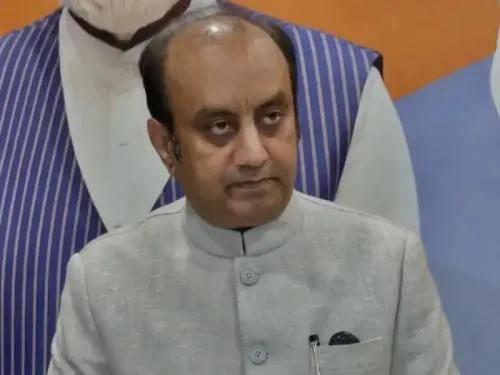
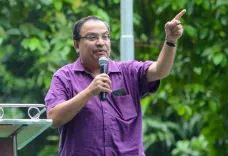
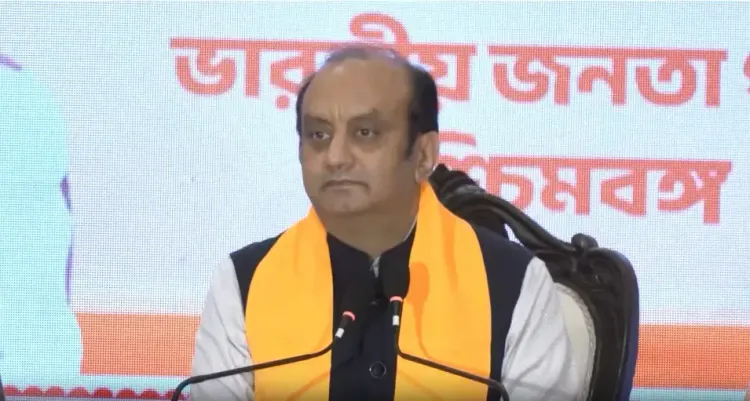
Kolkata, April 26: BJP Rajya Sabha MP Sudhanshu Trivedi launched a scathing political offensive against the ruling Trinamool Congress (TMC) in West Bengal on Sunday, accusing the party of entrenching "institutional corruption, criminality, and appeasement politics" that have systematically stalled the state's growth and bred a pervasive culture of fear among ordinary citizens. Speaking directly to the media in Kolkata, Trivedi argued that Chief Minister Mamata Banerjee's governance has pushed West Bengal into a prolonged developmental decline — and that voters are now ready to break free.
Bengal's Fallen Industrial Legacy
Trivedi invoked a powerful historical contrast to make his case. "There was a time when Kolkata was considered a hub of industry, employment and economic opportunity. People across the country looked towards the city for progress," he said, lamenting how decades of political misgovernance have eroded that legacy.
This is not merely rhetoric. West Bengal, once home to the largest concentration of industries in post-Independence India, has seen its share of national industrial output shrink dramatically over the past five decades — first under Left rule and, critics argue, continuing under TMC. According to publicly available data, the state's contribution to India's GDP has steadily declined, while states like Gujarat, Tamil Nadu, and Maharashtra surged ahead.
Trivedi asserted that Prime Minister Narendra Modi and the BJP are committed to reviving this industrial legacy if voted to power in the state.
Women's Safety & Welfare: BJP's Counter-Narrative
A significant portion of Trivedi's address focused on women's empowerment and safety — a politically charged issue in West Bengal following the RG Kar Medical College rape-murder case in August 2024, which triggered nationwide outrage and massive protests in Kolkata.
Trivedi alleged that the TMC government had effectively advised women against stepping out at night — a statement he cited as emblematic of the administration's failure to ensure basic security for half the population. He contrasted this with Central government schemes including Pradhan Mantri Mudra Yojana, Pradhan Mantri Ujjwala Yojana, and Pradhan Mantri Awas Yojana, which he credited with meaningfully advancing women's economic independence across India.
He also referenced Prime Minister Modi's landmark "Beti Bachao, Beti Padhao" initiative, launched in 2014, claiming it has produced measurable improvements in sex ratio and female literacy indicators nationally.
As part of BJP's electoral promises, Trivedi announced that the party would establish a dedicated women's police battalion in West Bengal and provide direct financial assistance of Rs 3,000 per month to women — a promise clearly designed to counter TMC's own welfare outreach programmes.
The 'Ishtehar' Controversy & Bengali Identity Politics
In one of his sharpest rhetorical strikes, Trivedi questioned the TMC's decision to title its election manifesto "Ishtehar" — an Urdu-origin word — rather than using a term rooted in the Bengali language. He argued this choice reflects a "particular mindset" that contradicts the party's frequent invocations of Bengali pride and identity.
He extended this critique to former cricketer-turned-politician Yusuf Pathan, saying: "Those who talk about Bengali identity, first I want to ask a question: they did not even name their manifesto in the Bengali language. Yusuf Pathan comes from outside, wins elections, and leaves, and cannot speak a single word of Bengali. This is something to think about."
This line of attack targets a long-standing vulnerability for the TMC — the perception that the party uses identity politics selectively while fielding candidates with limited organic connection to Bengal's culture and language.
BJP's Five-Year Blueprint for Bengal
Beyond criticism, Trivedi outlined a concrete electoral agenda. He promised that a BJP government in West Bengal would generate one crore employment opportunities over five years, accelerate industrialisation, and rebalance state budget priorities — taking a pointed dig at what he described as disproportionate state allocations to religious institutions compared to industrial development and scientific research.
Drawing on a symbolic geographic metaphor, Trivedi invoked the flow of the Ganga River, saying the "current of nationalism and development" had already transformed Uttarakhand, Uttar Pradesh, and Bihar under BJP rule, and that this wave would inevitably reach West Bengal.
He also expressed full confidence in the Election Commission of India, noting that with the Model Code of Conduct in effect, central security forces remain under its direct supervision — a subtle signal to voters concerned about electoral violence, which has historically marred polling in Bengal.
Broader Political Context & What Comes Next
Trivedi's remarks come as political temperature in West Bengal rises sharply ahead of the next state assembly elections. Both the BJP and TMC are intensifying their ground campaigns, with the saffron party seeking to build on its strong performance in the 2021 assembly elections — where it won 77 seats — and its subsequent gains in the 2024 Lok Sabha elections, where it secured 12 of 42 parliamentary seats in the state.
Notably, the BJP has also alleged that opposition parties share a coordinated agenda of opposing Sanatan Dharma and enabling illegal cross-border infiltration — issues that resonate strongly in border districts of West Bengal and are likely to feature prominently in campaign messaging.
As both parties sharpen their pitches to Bengal's 10 crore-plus voters, the battle over women's safety, economic revival, and cultural identity is set to define the contest. With the Election Commission closely monitoring the situation, all eyes will be on whether the BJP can convert its narrative momentum into actual electoral gains in a state that has historically resisted saffron dominance.
Point of View
Identity, and women's safety simultaneously, the BJP is attempting to fracture TMC's core coalition of Bengali pride voters and women beneficiaries. The 'Ishtehar' critique is particularly sharp: it exposes the contradiction between TMC's cultural nationalism and its operational choices. However, the BJP must reckon with its own track record — it has governed at the Centre for over a decade, yet West Bengal's industrial revival remains elusive despite central schemes. Promises of one crore jobs will face scrutiny in a state where even BJP-governed states have struggled to meet employment targets. The real test is not the narrative — it's delivery.
NationPress
18 Sept 2026
Frequently Asked Questions
What did BJP's Sudhanshu Trivedi say about TMC in West Bengal?
BJP MP Sudhanshu Trivedi accused the Trinamool Congress of fostering institutional corruption, criminality, and appeasement politics that have stalled West Bengal's development. He made these remarks during a press conference in Kolkata on April 26, 2025.
What promises did BJP make for West Bengal?
BJP promised to create one crore employment opportunities over five years, provide Rs 3,000 monthly financial assistance to women, boost industrialisation, and establish a dedicated women's police battalion in West Bengal.
Why did Sudhanshu Trivedi criticise TMC's manifesto name 'Ishtehar'?
Trivedi argued that 'Ishtehar' is an Urdu-origin word, not rooted in the Bengali language, which he said contradicts TMC's claims of championing Bengali identity and reflects a 'particular mindset' within the party.
What did Trivedi say about Yusuf Pathan and Bengali identity?
Trivedi criticised TMC for fielding Yusuf Pathan, a former cricketer from outside Bengal, saying he cannot speak a single word of Bengali despite winning elections on a Bengali identity platform. He used this as an example of TMC's alleged hypocrisy on cultural representation.
What is the political significance of BJP's campaign in West Bengal?
West Bengal is a crucial battleground where BJP won 77 assembly seats in 2021 and 12 Lok Sabha seats in 2024, signalling growing saffron influence. The party is now intensifying its campaign on issues of women's safety, economic revival, and identity politics ahead of the next state assembly elections.