Karnataka BJP's R. Ashoka slams Congress over FIR against journalist in Ganesh procession row
Synopsis
A journalist filmed a Karnataka police inspector advising Ganesh procession organisers to avoid a mosque — and ended up with an FIR. Now BJP's R. Ashoka has turned the tables on the Congress government: if the inspector's remarks were legal, why is the journalist in trouble for reporting them? The contradiction is fuelling a sharp debate over press freedom, Hindu festival rights, and Dalit representation — all in one politically charged case.
Key Takeaways
Ashoka on 18 September 2026 condemned the FIR registered against a journalist who filmed T.
Narasipur Inspector Dhananjaya 's remarks at a Ganesh procession peace meeting.
The inspector had advised organisers to avoid taking the procession near a mosque and not to burst firecrackers there; police say traditional routes remain open.
Ashoka flagged a contradiction: the Karnataka Congress government called the inspector's remarks legally valid, yet an FIR was filed against the journalist who reported them.
The journalist is a Dalit ; Ashoka challenged Congress to reconcile the FIR with its stated commitment to Dalit rights.
After a BJP protest outside the T.
Narasipur police station, the government allowed the procession to proceed in front of the mosque.
Ashoka has demanded a transparent inquiry and a public disclosure of the legal basis for the FIR, addressing Chief Minister D.K.
Shivakumar and Home Minister Priyank Kharge directly.
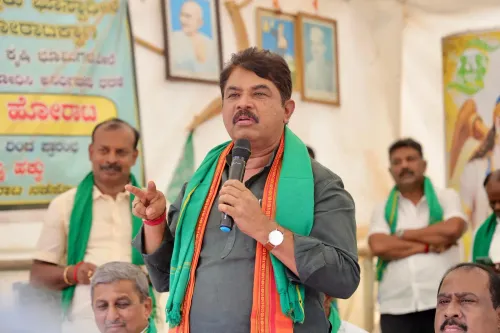
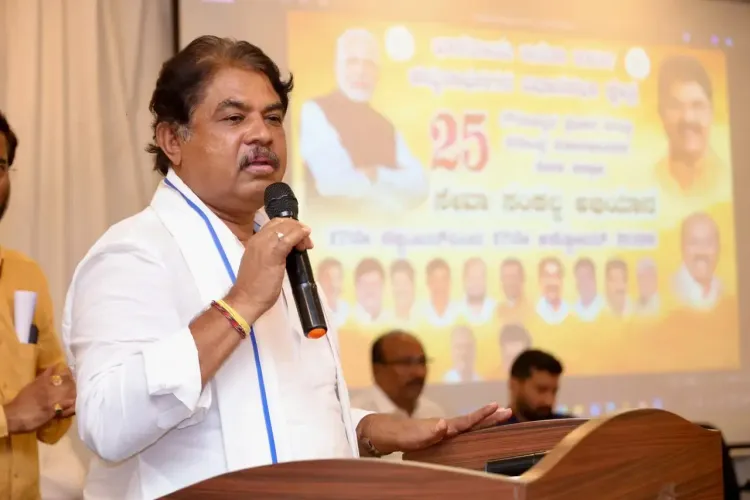
Bharatiya Janata Party (BJP) leader and Leader of the Opposition in the Karnataka Assembly, R. Ashoka, on Friday, 18 September 2026, sharply criticised the state's Congress government over the registration of a First Information Report (FIR) against a journalist who recorded and broadcast controversial remarks made by the T. Narasipur police inspector during a Ganesh procession peace meeting. Ashoka termed the FIR a direct assault on press freedom and demanded a transparent explanation from Home Minister Priyank Kharge.
What Triggered the Row
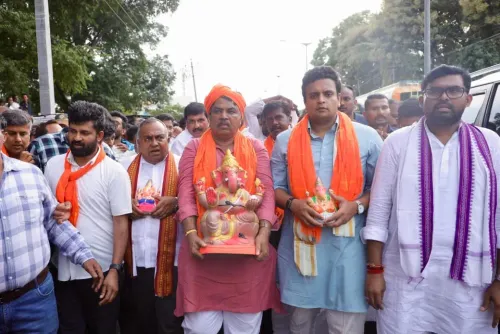
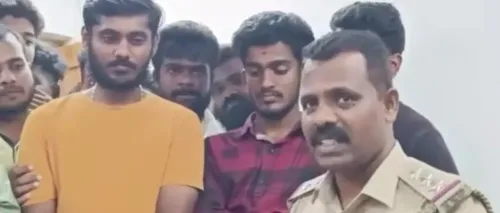
The controversy began after T. Narasipur Inspector Dhananjaya — speaking at a peace meeting convened with Ganeshotsava organisers — advised participants to adhere to the approved procession route and cautioned against taking the procession near a mosque and bursting firecrackers there. A local journalist who had been called to the police station to cover the meeting subsequently filmed and broadcast the inspector's remarks. The video drew immediate political backlash, prompting the BJP to stage a large-scale protest in front of the T. Narasipur police station, led by Ashoka himself. Following the demonstration, the Congress government reportedly allowed the procession to pass in front of the mosque.
BJP's Case Against the FIR
Ashoka raised a pointed legal contradiction at the heart of the case: the Congress government had publicly defended the inspector's statement as correct and legally valid, yet an FIR was simultaneously registered against the journalist who reported those very remarks. 'The journalist recorded and broadcast what was said at the meeting. If the police officer's statement was correct and legal, on what basis has an FIR been registered against the journalist who reported it?' Ashoka asked.
He alleged that the FIR amounted to an attempt to silence the media. 'This is not merely an issue concerning one journalist. It is a question of freedom of expression guaranteed by the Constitution. Where is media freedom? Where is the right to question? Where is the freedom to report the actions of the government? Is this an Emergency-era situation?' Ashoka said.
The Dalit Journalist Dimension
Ashoka added a caste dimension to the debate, noting that the journalist in question is a Dalit. He questioned the Congress's positioning: 'Does the Congress, which tries to gain political mileage in the name of Dalits, not see the freedom of expression of a Dalit journalist?' He also referenced the earlier controversy surrounding former minister B. Nagendra, alleging that the Congress had previously invoked caste when Ashoka demanded Nagendra's resignation — making the FIR against a Dalit journalist, in his view, a glaring inconsistency.
Ganesh Festival Restrictions Under Scrutiny
Beyond the FIR, Ashoka criticised what he described as a pattern of restrictions on Hindu festival celebrations under the current government. He questioned whether citizens should be required to seek multiple layers of permission — from the government, officials, and police — merely to celebrate their festivals. Police officials, for their part, have maintained that traditional procession routes remain open and that organisers were only asked to inform authorities about the route and comply with safety and law-and-order requirements.
Demands and What Comes Next
Addressing Chief Minister D.K. Shivakumar directly, Ashoka said the law must apply equally to everyone. 'But making a journalist an accused merely for recording and reporting the statement of an official is extremely dangerous for the health of democracy,' he said. He pledged to stand with journalists if media freedom continues to be threatened through FIRs, and demanded that the state government publicly disclose the legal basis on which the case was registered. The Karnataka Congress government is yet to formally respond to Ashoka's specific questions about the FIR's legal grounds.
Point of View
Which would clarify whether this is a case of genuine legal interpretation or political pressure. Until that is disclosed, the opacity itself becomes the story.
NationPress
18 Sept 2026
Frequently Asked Questions
Why was an FIR registered against the journalist in the Karnataka Ganesh procession case?
An FIR was registered against a journalist who filmed and broadcast remarks made by T. Narasipur Inspector Dhananjaya at a peace meeting with Ganeshotsava organisers. The specific legal provision cited in the FIR has not been publicly disclosed by the Karnataka government. The BJP has questioned the basis of the FIR, noting that the Congress government itself had described the inspector's statement as correct and legally valid.
What did the T. Narasipur police inspector say that sparked the controversy?
Inspector Dhananjaya of T. Narasipur advised Ganeshotsava organisers to follow the approved procession route and warned against taking the procession near a mosque and bursting firecrackers there. Police officials later clarified that traditional routes remain open and that organisers were only asked to inform authorities and comply with safety requirements.
What is R. Ashoka demanding from the Karnataka government?
BJP Leader of the Opposition R. Ashoka has demanded a transparent investigation and a public explanation from the Congress government on the legal grounds for the FIR. He has also asked Home Minister Priyank Kharge to clarify why a journalist was charged for reporting remarks that the government itself defended as legally valid.
How does the Dalit angle factor into this controversy?
Ashoka has pointed out that the journalist facing the FIR is a Dalit , challenging the Congress government — which frequently invokes Dalit rights as a political platform — to explain why the press freedom of a Dalit journalist is being curtailed. He drew a parallel to the earlier controversy involving former minister B. Nagendra , where caste was cited by the Congress.
What happened with the Ganesh procession after the BJP protest?
Following a large-scale BJP protest led by R. Ashoka outside the T. Narasipur police station, the Karnataka Congress government reportedly allowed the Ganesh procession to pass in front of the mosque in the town, de-escalating the immediate standoff over the procession route.