Antony Blinken: US Risks Strategic Setback in Iran
Synopsis
Former Secretary of State Antony Blinken emphasizes that the US risks turning military successes against Iran into strategic failures. He advocates for renewed diplomatic efforts and restraint as tensions continue, underscoring that key Iranian capabilities remain intact.
Key Takeaways
Antony Blinken warns of potential strategic setbacks for the US regarding Iran.
He calls for diplomatic engagement rather than military escalation.
Key Iranian capabilities such as highly enriched uranium remain intact.
The Strait of Hormuz is a crucial leverage point for Iran.
Negotiating with Iran presents unique challenges due to internal divisions.
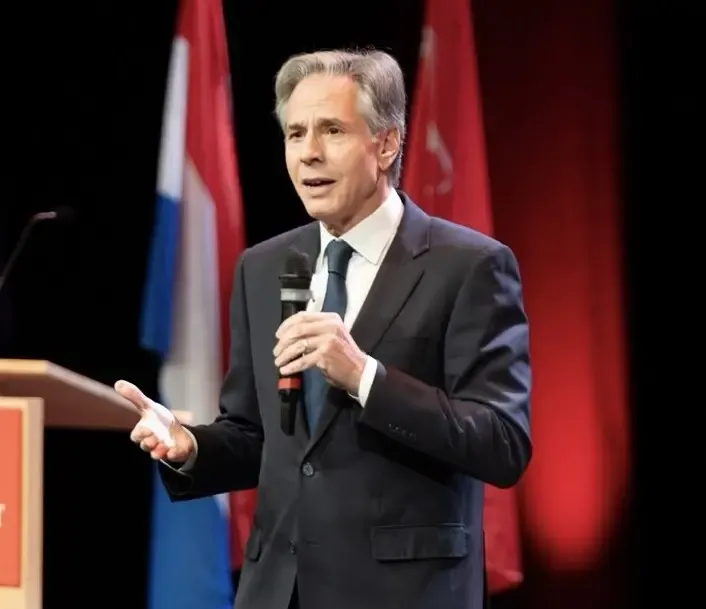
Washington, April 13 (NationPress) Former US Secretary of State Antony Blinken cautioned that the United States may risk converting its military achievements against Iran into a significant strategic disadvantage. He called for restraint and a revival of diplomatic efforts as a fragile ceasefire remains in effect.
During an interview with CNN’s Fareed Zakaria, Blinken expressed that the recent events might represent a "tactical success... but a strategic failure," highlighting that Iran still possesses crucial capabilities despite military pressures.
"Tactical successes are achievable... but... what do we have at the end of this?" he stated, emphasizing that Iran continues to have access to "highly enriched uranium, centrifuges, and missiles."
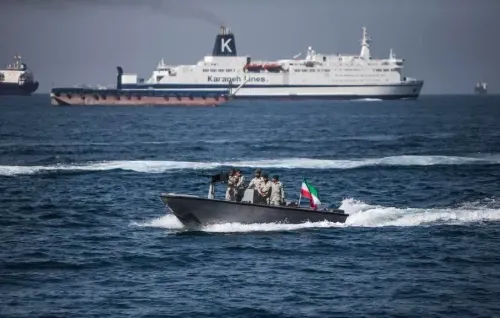
He pointed out that Tehran has gained "a new, substantial advantage, the Strait of Hormuz," describing the current circumstances as a pivotal moment that enhances Iran’s negotiating power.
These remarks follow 21 hours of discussions between the US and Iran in Islamabad, which did not lead to a lasting agreement, thereby only establishing a fragile ceasefire.
Blinken remarked that President Donald Trump is faced with a tough decision if the negotiations do not produce favorable outcomes: either escalation or compromise.
"Restarting the conflict is a possibility," he acknowledged but cautioned that such an approach would be "extremely risky and costly."
He urged the administration to refrain from further military engagements. "Avoid resuming hostilities... Maintain pressure on the Iranians through other means... and pursue diplomacy for as long as necessary to finalize a deal," he recommended.
Blinken indicated that any potential agreement would necessitate concessions. "A deal will involve some compromises. Determine where you are willing to yield," he noted, underlining that control over the Strait of Hormuz should be a focal point of the negotiations.
Reflecting on his involvement with the 2015 nuclear deal, Blinken remarked that achieving an agreement with Iran is a slow and intricate process.
"In the entire timeline of the Revolutionary Republic, fundamental compromises have only occurred twice," he pointed out, referencing the end of the Iran-Iraq war and the nuclear agreement.
He also identified internal discord within Iran as a significant challenge. "One of the biggest mistakes... is to perceive it as a political monolith. It is not," he stated.
Simultaneously, Blinken portrayed Iranian negotiators as exceptionally adept. "These are master negotiators... incredibly challenging to negotiate with," he noted, recalling instances when discussions continued even after agreements seemed to be in place.
He suggested that there might still be potential for compromise regarding uranium enrichment, proposing that a deal could permit Iran to enrich "at very low levels with a minimal stockpile," presenting a face-saving solution without officially acknowledging a right.
Blinken also reflected on the Biden administration's attempts to revive the nuclear agreement following the US withdrawal under Trump. He mentioned that discussions stalled partly because Iran demanded assurances that future administrations would not abandon the agreement again.
"This is incredibly difficult to achieve given our political landscape," he said.
He added that the negotiations were further complicated by Iran’s expanded nuclear program and the domestic political pressures in both nations.
Blinken concluded by affirming that diplomacy remains the only feasible route. "We must exercise strategic patience... the evidence suggests that this is achievable," he stated.
Point of View
The commentary by Blinken highlights the complexities of US-Iran relations. It underscores the necessity for strategic patience and diplomatic engagement to navigate the evolving geopolitical landscape, aiming for a sustainable resolution rather than temporary military successes.
NationPress
19 Sept 2026
Frequently Asked Questions
What did Antony Blinken say about US strategy towards Iran?
Antony Blinken warned that the US could turn tactical military successes against Iran into long-term strategic failures, emphasizing the need for renewed diplomacy.
Why does Blinken emphasize the Strait of Hormuz?
Blinken highlighted the Strait of Hormuz as a significant advantage for Iran, increasing their leverage in negotiations.
What challenges does Blinken identify in negotiating with Iran?
Blinken noted Iran's internal divisions and the skill of their negotiators as significant challenges in reaching a comprehensive agreement.
What is the stance on restarting conflict with Iran?
Blinken acknowledged that restarting military conflict is an option but warned it would be highly risky and costly.
What does Blinken suggest regarding uranium enrichment?
Blinken suggested that a potential deal could allow Iran to enrich uranium at very low levels with a minimal stockpile.