Naregal violence: Bommai demands SIT probe, slams law and order collapse in Haveri
Synopsis
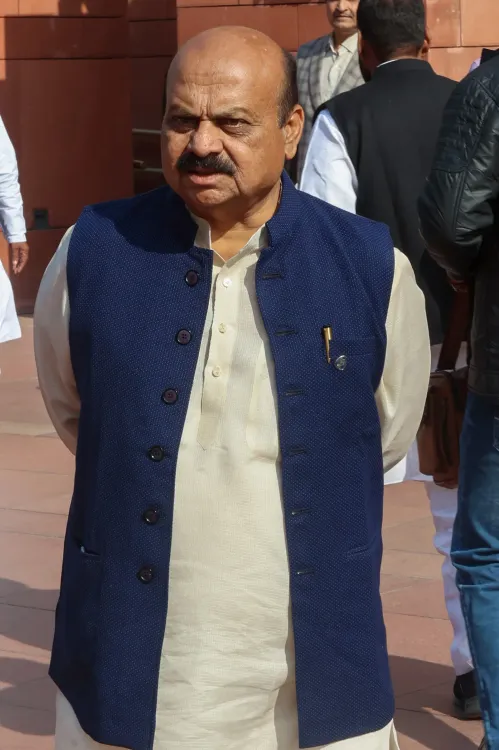
BJP MP and former Karnataka CM Basavaraj Bommai has demanded an SIT probe into communal violence in Naregal village, Haveri—calling it the seventh or eighth such incident in the district within a year. His demand for police suspensions and a direct challenge to the SP’s ‘personal dispute’ framing puts the Congress government in Karnataka under fresh pressure over law and order.
Key Takeaways
Basavaraj Bommai , BJP MP from Haveri , demanded an SIT probe into communal violence in Naregal village , Hangal taluk, on 3 July .
He called for the suspension of the Hangal CPI and SI and disciplinary action against the Haveri SP .
Bommai alleged this was the seventh or eighth communal incident in Haveri district within a year.
He challenged the SP’s reported framing of the violence as a ‘personal dispute’ , calling it an attempt to mislead the public.
Bommai accused the Congress government of appeasement politics and said he would raise the matter with the Chief Minister, Home Minister, and DGP.
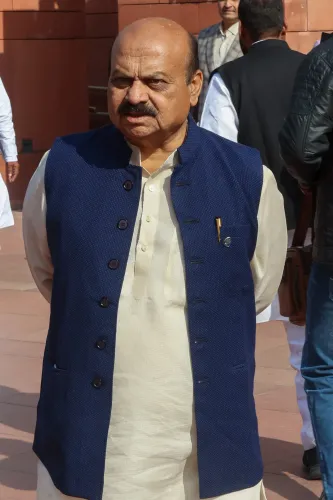
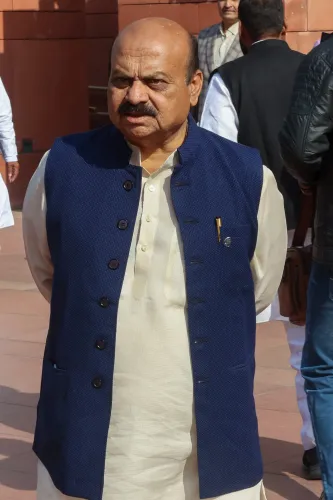
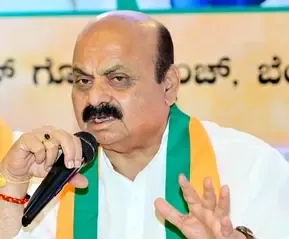
Former Karnataka Chief Minister and Bharatiya Janata Party (BJP) Member of Parliament Basavaraj Bommai on Friday, 3 July demanded the constitution of a Special Investigation Team (SIT) to probe the recent communal violence in Naregal village of Hangal taluk, Haveri district, alleging a complete breakdown of law and order. Bommai, who represents the Haveri Lok Sabha seat in North Karnataka, made the demand while speaking to reporters in Haveri.
Key Demands and Allegations
Bommai called for disciplinary action against the Haveri Superintendent of Police (SP) and the suspension of the Hangal Circle Police Inspector (CPI) and Sub-Inspector (SI), holding the district police leadership directly responsible for the deterioration of the situation. He argued that an SIT was the only credible path to justice, alleging that the local police could not be trusted to investigate themselves.
“Those entrusted with maintaining law and order have themselves become responsible for its deterioration. No preventive measures were taken despite Naregal, Bommanahalli and Bankapur being identified as sensitive areas. Sending a ‘112’ police response vehicle with just two personnel is inadequate to control such situations,” Bommai said.
A Recurring Flash Point
Bommai alleged this was not an isolated incident, describing it as “perhaps the seventh or eighth communal incident in the district within a year.” He noted that Naregal has witnessed communal tensions on several occasions over the past three decades. During his own tenure as Chief Minister, he said, steps had been taken to permanently resolve the issue—including allocating additional land to the local mosque and creating a separate entrance for devotees—and that the then Deputy Commissioner had issued proceedings directing the main road remain open to all. He alleged those directions were never implemented by the police.
Bommai Challenges SP’s ‘Personal Dispute’ Framing
Bommai sharply questioned the Haveri SP’s reported characterisation of the violence as a “personal dispute,” arguing the description was an attempt to trivialise and suppress the truth. “Was there any land dispute or any other private dispute between the parties? By calling it personal, the police are trivialising the incident, attempting to mislead the public and trying to suppress the truth,” he said, demanding the SP face disciplinary action.
He also criticised the police for registering cases against members of both communities, alleging that even those who were assaulted had been named as accused. “The usual practice is to register cases against 20 people from one side and 20 from the other and close the matter. That is not justice,” he alleged.
Broader Political Context
Bommai accused the ruling Congress government of pursuing what he called “appeasement politics,” alleging it had encouraged a culture of lawlessness. He cited previous incidents in Hangal where persons accused in serious criminal cases—including those allegedly linked to terror activities and a gang rape case—had reportedly taken out public processions after securing bail, under police protection.
“As a result of appeasement politics, those who indulge in violence receive protection, while those who become victims face criminal cases,” he alleged. He said he would raise the matter with the Chief Minister, the Home Minister, and the Director General of Police (DGP). Responding to the Hangal MLA’s charge that the BJP was politicising the incident, Bommai defended his stand, saying that when two communities clash in a village, the SP’s “personal dispute” label could only serve to cover up official failures.
What Happens Next
Bommai has stated he will take up the matter with the state’s top political and police leadership. He reiterated that the suspension of the two local officers and the constitution of an SIT are non-negotiable preconditions for justice. Whether the Congress government in Bengaluru responds to these demands will be closely watched, given the district’s history of communal sensitivity.
Point of View
And the SP’s reported ‘personal dispute’ framing of an inter-community clash, are details that deserve scrutiny regardless of who raises them. The Congress government’s response will be the real test: if it dismisses the SIT demand without addressing the pattern of incidents in Haveri, it risks validating exactly the narrative Bommai is pushing. The allegation that assault victims were named as accused alongside alleged aggressors is a specific, verifiable claim that investigators and the judiciary should examine on its merits.
NationPress
2 Oct 2026
Frequently Asked Questions
What happened in Naregal village in Haveri district?
Communal violence broke out in Naregal village of Hangal taluk, Haveri district, Karnataka, prompting BJP MP Basavaraj Bommai to demand an SIT probe. Bommai alleged it was the seventh or eighth such incident in the district within a year, pointing to a pattern of recurring communal tensions in the area.
What has Basavaraj Bommai demanded following the Naregal violence?
Bommai has demanded the constitution of a Special Investigation Team (SIT) to probe the violence, disciplinary action against the Haveri SP, and the suspension of the Hangal Circle Police Inspector and Sub-Inspector. He said he would raise the matter with the Chief Minister, Home Minister, and DGP.
Why did Bommai question the Haveri SP’s description of the incident?
The Haveri SP reportedly described the violence as a ‘personal dispute,’ a characterisation Bommai rejected as an attempt to trivialise and suppress the truth. He argued that a clash between two communities in a village cannot be reduced to a personal matter, and demanded the SP face disciplinary action for the framing.
What is the history of communal tension in Naregal?
According to Bommai, Naregal has witnessed communal tensions on several occasions over the past three decades. During his tenure as Chief Minister, steps were reportedly taken to resolve the issue—including allocating land to the local mosque and creating a separate entrance—but he alleged these decisions were never implemented by the police.
What action has the Karnataka government taken so far?
No official government response to Bommai’s demands has been reported as of 3 July. The Hangal MLA has reportedly accused the BJP of politicising the incident, a charge Bommai rejected. Bommai has stated he will escalate the matter to the Chief Minister, Home Minister, and Director General of Police.