Is Canada Intensifying Its Crackdown on Extortion Cases in British Columbia's Lower Mainland?

Synopsis
Canada is ramping up its measures against extortion in British Columbia, probing over one hundred foreign nationals linked to these crimes. With the involvement of various communities, the focus remains on dismantling organized crime networks and ensuring that no one is above the law. Discover how the situation is evolving and its implications for the Sikh community.
Key Takeaways
Canada is increasing efforts against extortion.
111 foreign nationals are under investigation.
The task force emphasizes that no one is above the law.
Evidence is guiding the investigation, not community affiliation.
Connections between organized crime and Khalistani extremism are being explored.
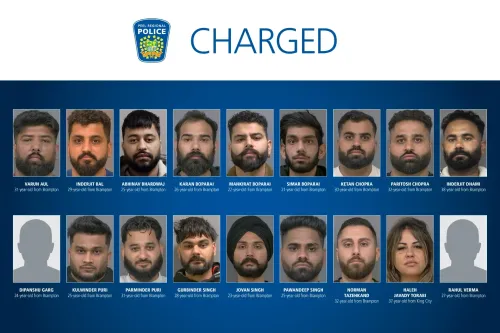
Ottawa, Jan 23 (NationPress) Canadian authorities have significantly increased efforts to combat a wave of extortion incidents occurring in British Columbia’s Lower Mainland. A report reveals that investigators are probing the involvement of over one hundred foreign nationals.
Established in 2025, the British Columbia Extortion Task Force is led by the Royal Canadian Mounted Police (RCMP) and has flagged 111 foreign nationals as part of their investigation.
Officials indicate that several individuals under scrutiny are suspected to belong to the Punjabi community. However, they clarified that the investigation is based on evidence rather than community affiliation, as reported by Khalsa Vox.
Authorities are scrutinizing CCTV footage and gathering digital and forensic evidence to uncover networks thought to be operating across various jurisdictions. The incidents involve threats and monetary demands directed at both individuals and businesses, instilling fear in numerous neighborhoods.
Earlier this week, the task force issued a statement asserting that neither immigration nor refugee status would shield individuals engaged in criminal behavior. The statement emphasized, "No one is above the law,” highlighting that asylum claims or refugee protections would not prevent legal action or repercussions from immigration authorities.
Since its inception in September of last year, the task force has taken on over 32 extortion-related cases from various police agencies within British Columbia. The RCMP reported efforts made in the last four months aimed at connecting isolated incidents, dismantling organized crime groups, and preventing further offenses.
A report from last month indicated that Canada is at a pivotal moment, facing a choice: to treat Khalistani extremism and Punjabi-Canadian gang violence as separate issues or to acknowledge their growing interconnections.
The report suggested that enhanced border security, improved financial intelligence collaboration with reliable partners, and a zero-tolerance stance on laundering drug money through political or charitable organizations would be crucial initial steps.
According to Vikram Zutshi, a cultural critic and filmmaker, "Canada hosts one of the world’s largest Sikh diasporas—approximately 800,000 strong. Most are law-abiding citizens contributing positively to the country through various sectors like trucking, farming, and small businesses. Yet, a small violent faction within the Punjabi-Canadian community has become increasingly entwined with transnational organized crime over the past two decades."
Zutshi further noted, "The profits from cocaine, methamphetamine, and fentanyl trafficking are not just funding firearms and luxury vehicles; growing evidence indicates they are also financing pro-Khalistan demonstrations, referendums, and legal defenses for extremists. This troubling connection is well-known to Canadian law enforcement. Since 2007, over 200 gang-related homicides in British Columbia have been traced back to rival Punjabi-Canadian gangs vying for dominance in the lucrative cross-border drug trade."
According to law enforcement sources from both nations, a substantial portion of the cocaine and fentanyl entering Western Canada is now funneled through networks overseen by certain Punjabi-Canadian organized crime groups.
Disturbingly, some Indian diplomats and even certain Canadian police circles allege that part of this illicit revenue is redirected to finance Khalistani separatist endeavors within the diaspora.
The report also pointed out that the majority of Canadian Sikhs disavow both violence and separatism. Influential community leaders, including former British Columbia Premier Ujjal Dosanjh and the World Sikh Organization of Canada, have consistently condemned the misuse of gurdwaras for political extremism, calling for stronger measures against gang recruitment of Sikh youth.
Nonetheless, the issue persists, partly due to the hesitancy of political parties in vote-rich areas like Brampton and Surrey to address it directly.
For the vast majority of Canadian Sikhs, who aspire to work, nurture their families, and practice their faith peacefully, dismantling this criminal-extremist nexus is not merely a concern for law enforcement—it's vital to eliminating the negative stigma that a tiny minority has cast upon the entire community.
Point of View
It's essential to acknowledge the ongoing efforts of Canadian authorities to address serious extortion issues while remaining unbiased. The complexities surrounding community dynamics and organized crime are intricate and should be reported with integrity and respect for all affected.
NationPress
20 Sept 2026
Frequently Asked Questions
What is the British Columbia Extortion Task Force?
The British Columbia Extortion Task Force was established by the RCMP in 2025 to address rising extortion cases in the region.
How many foreign nationals are being investigated?
Investigators are currently looking into the involvement of over 111 foreign nationals linked to extortion cases.
Are the investigations community-specific?
No, the investigations are driven by evidence and not specific to any community.
What actions is the RCMP taking?
The RCMP is analyzing CCTV footage and digital forensic materials to uncover extortion networks and associated organized crime.
What is the stance on immigration status for those involved in crime?
The task force has stated that immigration or refugee status will not protect individuals involved in criminal activities.