Why Does Silencing Guns Remain a Challenge in Africa?
Synopsis
The African Union Commission's Chairperson, Mahmoud Ali Youssouf, raised significant concerns about Africa's ongoing struggles with peace and security during the AU's 39th Ordinary Session. As political instability rises, leaders must unify to tackle these pressing issues and work towards a more peaceful continent. The summit highlights Africa's unique challenges and potential.
Key Takeaways
Political instability poses significant challenges to peace in Africa.
The AUC emphasizes the need for continental unity to tackle external pressures.
Agenda 2063 is crucial for guiding Africa's development.
Leaders must harness the potential of Africa's demographic dividend .
Ongoing conflicts continue to affect the lives of millions.
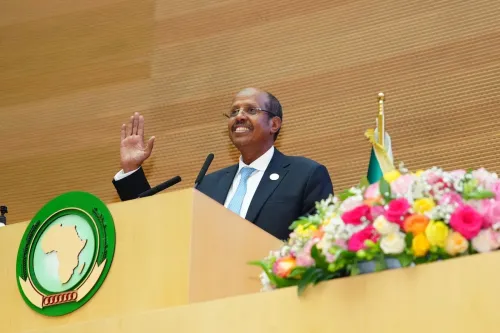
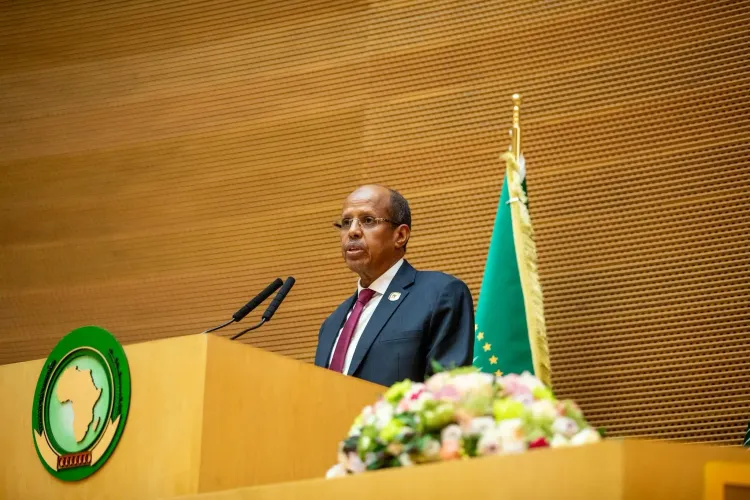
Addis Ababa, Feb 14 (NationPress) The Chairperson of the African Union Commission (AUC), Mahmoud Ali Youssouf, expressed grave concerns on Saturday regarding Africa's ongoing struggles to tackle peace and security threats across various regions of the continent.
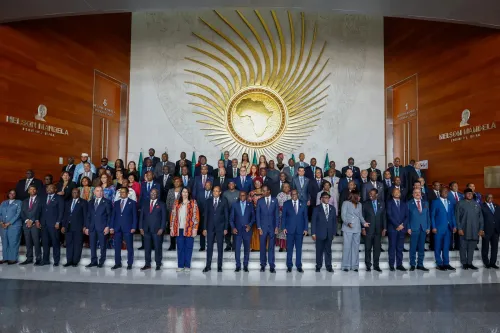
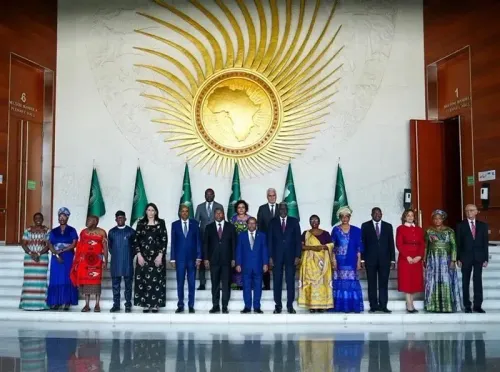
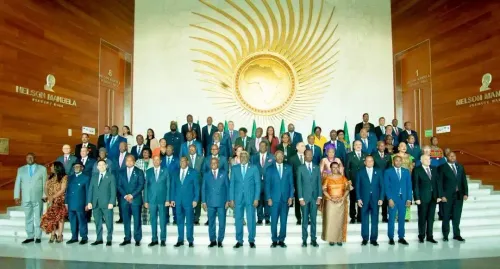
The AUC leader conveyed these thoughts during the inaugural session of the 39th Ordinary Session of the Assembly of Heads of State and Government of the AU, which is being held this weekend at the AU headquarters in Addis Ababa, Ethiopia.
Youssouf remarked, "Our summit is occurring amidst a challenging geopolitical landscape, both within Africa and globally. Silencing the Guns on our continent continues to be a significant challenge," as he addressed the gathered African leaders.
He acknowledged the political and institutional instability afflicting several African nations as a pressing continental issue, stating that "open and latent conflicts are increasingly becoming chronic."
"Instances of unconstitutional government changes are re-emerging, reminiscent of the tumultuous times post-independence," he noted, as reported by Xinhua news agency. He highlighted distressing situations in Sudan, the eastern Democratic Republic of the Congo, and Somalia, noting that "our populations are enduring a heavy toll due to instability."
Additionally, the chairperson of the 55-member continental body pointed out that the recent upheaval in international relations is profoundly affecting the continent's affairs.
He emphasized that multilateralism is currently under significant strain due to the rise of unilateralism and protectionism, advocating for Africa to bolster its continental unity to better withstand external pressures.
"Major political and economic alliances are gearing up for this global division. While Africa is undoubtedly a part of the Global South, it possesses its own unique identity and characteristics," he stated.
In light of these challenges, Youssouf urged Africa to fortify itself by hastening its political and economic integration initiatives. He called for Pan-African institutions to amplify their efforts and commitment, asserting that the Agenda 2063 and its flagship programs should steer the continent towards a vision of a strong, independent, and prosperous Africa.
This two-day summit convenes leaders from AU member states, launched under the AU's 2026 theme: 'Ensuring Sustainable Water Availability and Safe Sanitation Systems for Achieving the Goals of Agenda 2063.'
Ethiopian Prime Minister Abiy Ahmed emphasized the necessity of leveraging Africa's demographic dividend as a critical factor for comprehensive development.
"Currently, numerous African economies rank among the fastest-growing globally," Abiy stated. "However, mere growth is insufficient. Our most valuable asset is our people. By 2035, Africa will contribute more young individuals to the global workforce than the rest of the world combined. This demographic reality must be harnessed effectively; numbers alone will not yield prosperity."
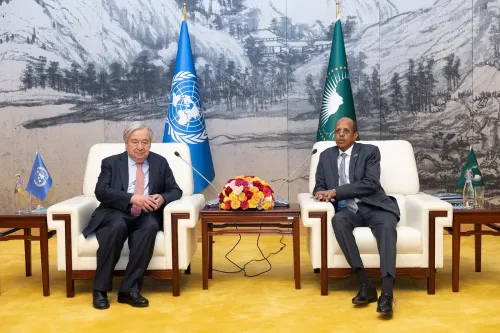
The opening session attracted African heads of state and government, along with leaders from continental and international organizations, including UN Secretary-General Antonio Guterres.
Point of View
It is crucial to recognize the importance of the African Union's efforts in addressing peace and security issues. The challenges faced by various nations underscore the need for collaborative action and steadfast commitment to stability. Our nation, along with others, must support initiatives that promote unity and peace across the continent.
NationPress
19 Sept 2026
Frequently Asked Questions
What is the main concern raised by the AUC Chairperson?
Mahmoud Ali Youssouf expressed concern about Africa's ongoing challenges in addressing peace and security threats across the continent.
What significant themes were discussed at the AU summit?
The summit focused on silencing guns in Africa, the impact of geopolitical crises, and the need for stronger continental unity.
How does the demographic dividend affect African development?
Prime Minister Abiy Ahmed emphasized that leveraging Africa's young population is essential for holistic economic growth.