India's biogas opportunity: ₹1 lakh crore potential, output below 1% of capacity
Synopsis
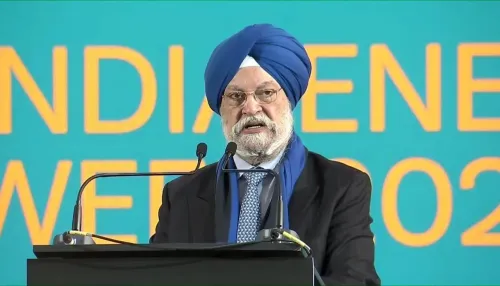
Jonagadla said, adding that as demand visibility improves, infrastructure developers, technology providers, and institutional investors can participate with greater confidence.
The shift from voluntary adoption to mandatory blending is widely seen as a turning point for the sector because it creates predictable demand and improves commercial viability. Notably, this structural change mirrors similar inflection points seen in India's solar and wind sectors, where policy mandates unlocked private capital at scale.
Additional Policy Measures Boosting Viability
Recent policy interventions — including excise duty waivers on CBG blended with CNG and upward revisions in procurement pricing — are also expected to improve project economics and accelerate private-sector participation. These measures address a long-standing concern among investors: that biogas projects, while environmentally compelling, lacked the financial returns to attract institutional capital.
Who Stands to Benefit
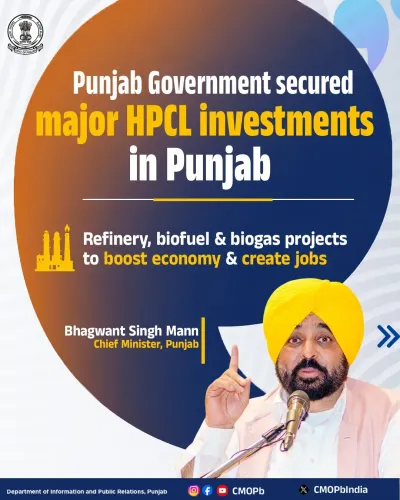
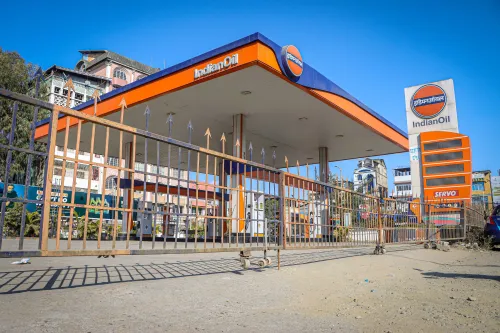
The emerging opportunity extends well beyond standalone biogas producers. Oil Marketing Companies (OMCs) are expected to play a central role as both offtakers and developers of CBG infrastructure. Indian Oil Corporation Limited (IOCL), Hindustan Petroleum Corporation Limited (HPCL), and Bharat Petroleum Corporation Limited (BPCL) are reportedly increasing investments in biogas projects and long-term supply networks.
Gas utilities and city gas distribution (CGD) companies are also likely to benefit as blending requirements expand and pipeline integration improves. The report suggests the value chain spans multiple segments of the energy and infrastructure ecosystem — from feedstock aggregation and plant development to gas distribution and retail.
With mandatory blending timelines firming up and procurement pricing improving, the sector's next phase will test whether India can convert a vast theoretical resource base into a commercially scaled domestic energy industry.
Key Takeaways
India's theoretical CBG production capacity is 62 million metric tonnes annually , but current output is below 1% of that potential.
The untapped biogas opportunity could attract nearly ₹1 lakh crore in investments, according to the smallcase report.
Over 130 CBG plants have been commissioned under the government's SATAT initiative, with more than 1,000 projects in the pipeline.
Mandatory CBG blending obligations are set to rise gradually, creating long-term demand visibility for producers and developers.
IOCL , HPCL , and BPCL are investing in biogas projects and long-term supply networks as the sector scales.
Excise duty waivers on CBG blended with CNG and higher procurement pricing are expected to improve project viability.
India's theoretical compressed biogas (CBG) production capacity stands at 62 million metric tonnes annually, yet current output remains below 1% of that potential — leaving a massive untapped domestic energy opportunity that could attract nearly ₹1 lakh crore in investments, according to a report released on Tuesday, 12 May. The findings underscore a widening gap between policy ambition and on-ground execution in India's clean fuel transition.
Scale of the Opportunity
The report, published by fintech platform smallcase, identified agricultural residue, cattle waste, municipal solid waste, and industrial byproducts as increasingly being viewed as strategic energy assets. These feedstocks, the report argues, are capable of materially reducing India's dependence on imported hydrocarbons — one of the country's biggest structural economic vulnerabilities.
Despite possessing one of the world's largest agricultural and organic waste bases, India has only begun to scratch the surface of its biogas potential, the report noted. The scale of the untapped resource makes it one of the more consequential clean energy gaps in the country's energy transition story.
Policy Catalysts: SATAT and Mandatory Blending
Karthick Jonagadla, smallcase Manager and MD & CEO of Quantace Research, pointed to the government's SATAT (Sustainable Alternative Towards Affordable Transportation) initiative and a mandatory CBG blending roadmap as the two most significant demand-side catalysts. Over 130 CBG plants have already been commissioned under SATAT, while more than 1,000 projects remain in the pipeline.
Mandatory blending obligations are set to rise gradually over the next few years, creating long-term demand visibility for producers and infrastructure developers.
Point of View
Negligible actual output, and a policy framework that has spent years nudging rather than mandating. The shift to mandatory blending is the real news here — it is the same lever that turned India's solar sector from a niche into a global story. But execution risk is real: over 1,000 SATAT projects remain in the pipeline precisely because financing, feedstock logistics, and offtake certainty have not aligned. The ₹1 lakh crore investment figure is a ceiling, not a forecast. Whether India closes the gap between 62 million metric tonnes of capacity and its current sub-1% utilisation will depend less on further policy announcements and more on whether OMCs and city gas distributors can operationalise the supply chain at speed.
NationPress
26 Sept 2026
Frequently Asked Questions
What is India's compressed biogas (CBG) production potential?
India's theoretical CBG production capacity is estimated at 62 million metric tonnes annually, according to a report by fintech platform smallcase. However, current output remains below 1% of that potential, representing one of the largest untapped domestic energy opportunities in the country.
How much investment could India's biogas sector attract?
The biogas and CBG sector could attract nearly ₹1 lakh crore in investments, according to the smallcase report released on 12 May. This includes opportunities across feedstock aggregation, plant development, gas distribution, and retail infrastructure.
What is the SATAT initiative and how does it support biogas?
SATAT (Sustainable Alternative Towards Affordable Transportation) is a government initiative designed to promote compressed biogas as a transport fuel. Over 130 CBG plants have been commissioned under SATAT, with more than 1,000 projects in the pipeline, supported by mandatory blending roadmaps and procurement pricing revisions.
Which companies are investing in India's biogas sector?
Indian Oil Corporation Limited (IOCL), Hindustan Petroleum Corporation Limited (HPCL), and Bharat Petroleum Corporation Limited (BPCL) are among the key players increasing investments in biogas projects and long-term supply networks. City gas distribution companies are also expected to benefit as blending requirements expand.
Why is mandatory CBG blending considered a turning point for the sector?
Mandatory blending creates predictable demand and improves the commercial viability of biogas projects — unlike voluntary adoption, which left producers exposed to offtake uncertainty. Analysts say this structural shift mirrors inflection points seen in India's solar and wind energy sectors, where policy mandates unlocked large-scale private investment.