Is a Flood Alert Issued as Discharge from TN's Chembarambakkam and Poondi Dams Increases?
Synopsis
Residents of Chennai are on high alert as heavy rainfall causes increased discharge from Chembarambakkam and Poondi reservoirs. The Water Resources Department has urged those near the Adyar and Kosasthalaiyar rivers to take precautions, ensuring dam safety. With rising water levels, communities are advised to stay vigilant and prepared for potential flooding.
Key Takeaways
Chembarambakkam and Poondi reservoirs are experiencing increased discharge due to heavy rainfall.
The Adyar and Kosasthalaiyar Rivers are under high alert for potential flooding.
Residents are urged to take precautions and seek higher ground if located in low-lying areas.
WRD is following established flood management protocols to ensure safety.
Continuous monitoring and coordination are in place for public safety.
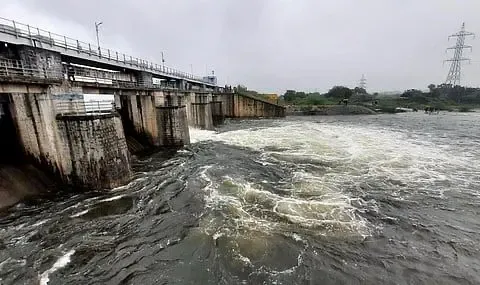
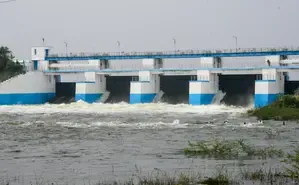
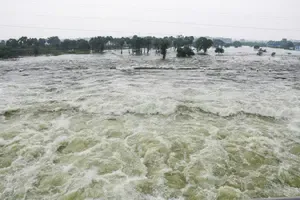
Chennai, Oct 22 (NationPress) As heavy rainfall continues to impact the Chennai area, the Water Resources Department (WRD) has issued urgent alerts for residents near the Adyar and Kosasthalaiyar Rivers. This action comes as the discharge rates from both Chembarambakkam and Poondi reservoirs have been significantly raised to ensure the safety of these dams.
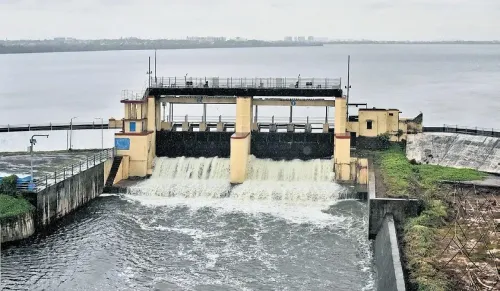
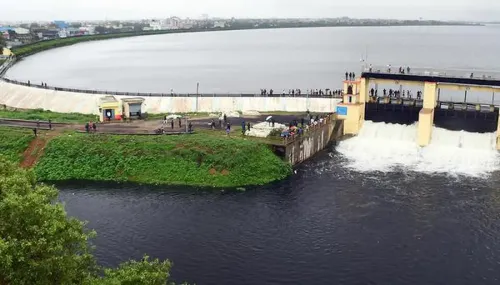
At Chembarambakkam Lake in the Kancheepuram district, the outflow has been escalated to 500 cubic feet per second (cusecs), a substantial increase from the earlier precautionary release of 100 cusecs initiated on October 21. Officials reported that the inflow to the reservoir reached 2,170 cusecs by 6 a.m., significantly rising after overnight rains.
This lake, which has a total capacity of 3,645 million cubic feet (mcft) and a maximum depth of 24 feet, recorded a storage level of 20.84 feet (2,815 mcft), up from 18.52 feet the previous week.
The WRD engineers stated that this release is in line with standard flood management practices to keep water levels within the safe 21-foot limit. Residents in low-lying areas downstream, such as Sirukalathur, Kavanur, Kundrathur, Tirumudivakkam, Vazhudiyampedu, and Tiruneermalai, have been advised to remain vigilant and seek higher ground as the Adyar River levels are predicted to rise.
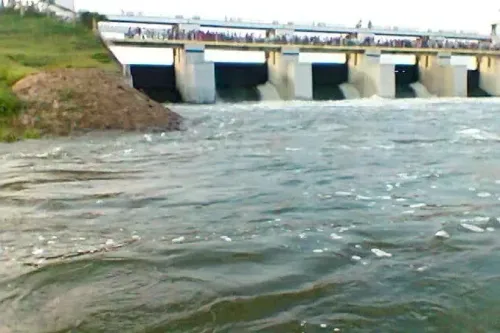
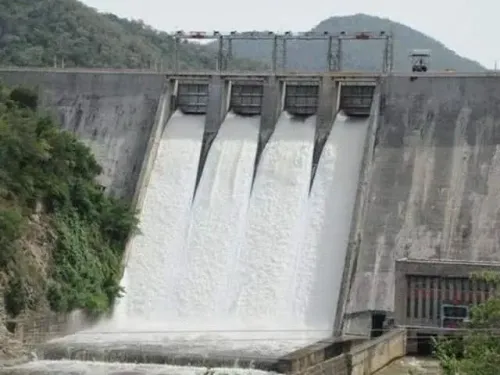
In parallel, the WRD has amplified flood warnings for communities along the Kosasthalaiyar River as discharge from the Poondi Reservoir (also known as Sathyamoorthy Sagar) increased from 2,000 to 4,500 cusecs starting Wednesday morning.
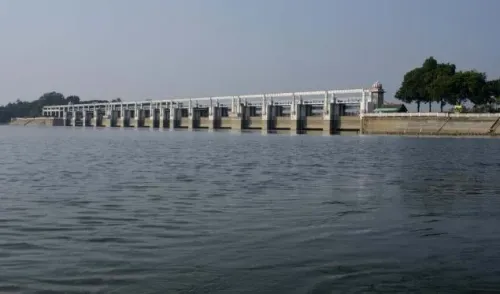
The current storage in the Poondi reservoir has reached 2,536 mcft (33.05 feet) against a maximum capacity of 3,231 mcft (35 feet), with inflow from catchment areas and feeder canals, such as Kesavaram Dam and Kandaleru Canal, hitting 2,910 cusecs.
Villages including Nambakkam, Thamaraipakkam, Thirukandalam, Athur, Pandikkavanur, and Jagannathapuram, along with Manali New Town and Sadayankuppam in the Manali zone, are on high alert.
The WRD assured the public that these precautionary releases are made proactively to maintain sufficient buffer capacity in the city's major reservoirs—Chembarambakkam, Puzhal, and Poondi—ensuring that even extensive rainfall will not lead to uncontrolled flooding.
“The public need not panic; all flood regulation protocols are being adhered to,” stated the Chief Engineer of the Chennai Region.
Efforts are being coordinated among the WRD, district administrations, and disaster response teams to guarantee public safety and the ongoing monitoring of river flows.
Point of View
The recent flood alerts in Chennai highlight the importance of proactive measures in disaster management. The Water Resources Department's quick response exemplifies the need for preparedness and community awareness. The safety of residents must remain the top priority as we navigate these climate-related challenges.
NationPress
27 Sept 2026
Frequently Asked Questions
What caused the flood alert in Chennai?
The flood alert in Chennai was triggered by significant rainfall leading to increased water discharge from the Chembarambakkam and Poondi reservoirs.
What should residents do in response to the flood alert?
Residents are advised to stay alert, monitor updates from the Water Resources Department, and relocate to higher ground if necessary.
How much has the discharge from the Chembarambakkam Lake increased?
The discharge from Chembarambakkam Lake has increased from 100 cusecs to 500 cusecs to maintain safety levels.
What is the current storage level of the Poondi reservoir?
The current storage level of Poondi reservoir stands at 2,536 mcft, which is below its maximum capacity.
How is the Water Resources Department ensuring public safety?
The Water Resources Department is coordinating with district administrations and disaster response teams to monitor river flows and implement flood management strategies.