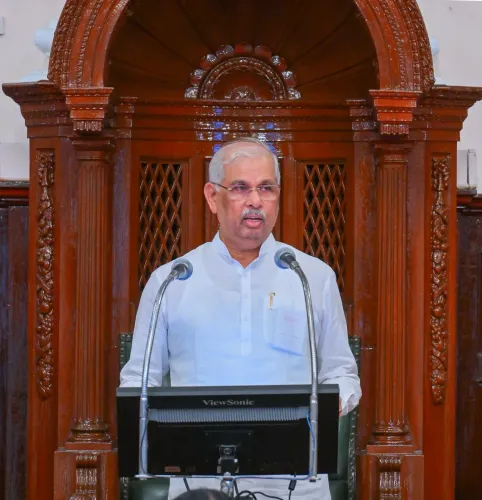
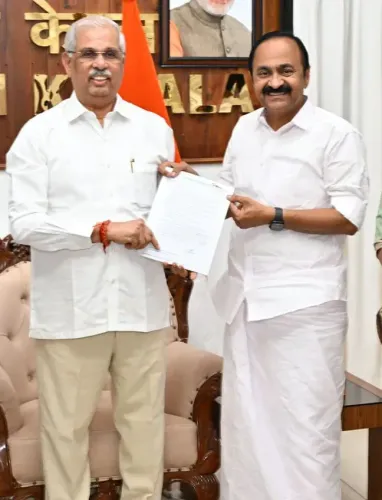
Governor Arlekar's twin mandate: Kerala clarity vs Tamil Nadu complexity after May 4 results
Synopsis
One Governor, two states, two very different mandates. While Kerala's UDF win gives Rajendra Arlekar a straightforward procedural role, Tamil Nadu's murkier verdict puts his constitutional discretion under the spotlight — an extraordinary convergence that is rare even by Indian political standards.
Key Takeaways
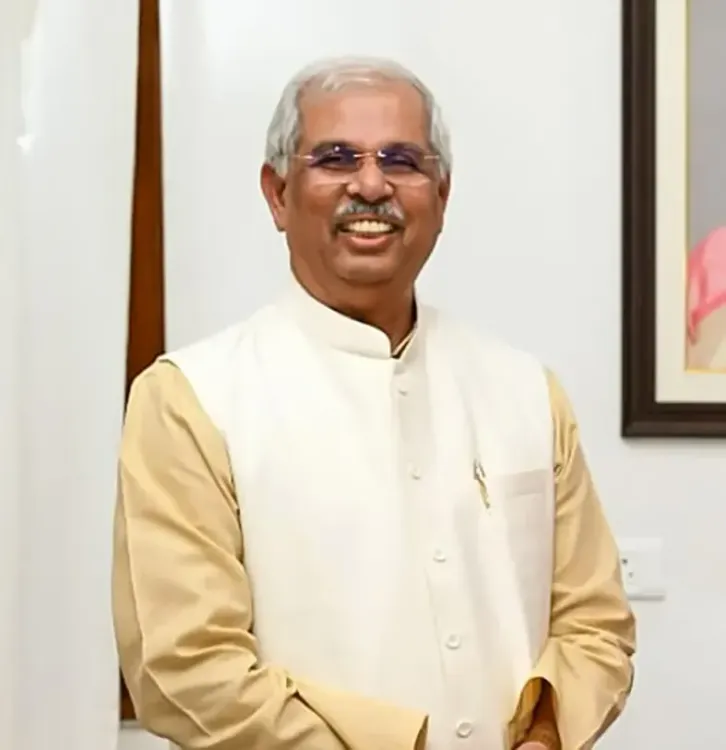
Governor Rajendra V.
Arlekar holds additional charge of Tamil Nadu while serving as Kerala's Governor following the May 4 Assembly election results .
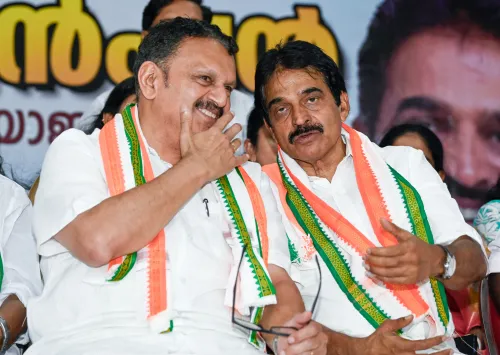
In Kerala , the Congress -led United Democratic Front (UDF) secured a clear majority, making the Governor's role largely procedural.
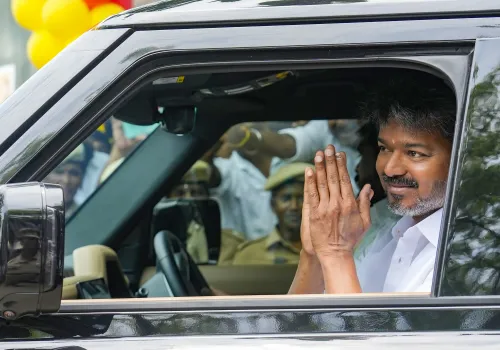
In Tamil Nadu , the mandate is less decisive, placing Arlekar's constitutional discretion under greater political and legal scrutiny.
Arlekar is set to travel to Chennai on Wednesday to assess the government formation situation firsthand.
The dual oversight of two major southern state transitions by a single Governor is an unusual constitutional convergence in Indian political history.
Governor Rajendra V. Arlekar is navigating an unusual constitutional balancing act after the May 4 Assembly election results, simultaneously overseeing government formation in both Kerala and Tamil Nadu — two politically distinct southern states with sharply contrasting electoral outcomes. Holding additional charge of Tamil Nadu while serving as Kerala's Governor, Arlekar finds himself at the centre of two transitions that demand fundamentally different responses.
Kerala: A Clear Mandate, A Procedural Role
In Kerala, the path to government formation is relatively unambiguous. The Congress-led United Democratic Front (UDF) has secured a clear majority, leaving little room for constitutional interpretation. Arlekar's role here is largely procedural — ensuring a smooth, timely, and convention-compliant transfer of power. A swearing-in ceremony is expected to follow without significant delay, reflecting the decisiveness of the electoral verdict.
Tamil Nadu: A Murkier Mandate, Greater Scrutiny
The situation in Tamil Nadu is considerably more complex. Unlike Kerala's decisive outcome, the mandate there is less clear-cut, raising questions around alliance arithmetic, competing claims to legislative support, and the order in which parties are invited to prove their majority. It is precisely in such scenarios that a Governor's constitutional discretion faces its sharpest test — often under intense political scrutiny and legal challenge. Arlekar is scheduled to travel to Chennai on Wednesday to assess the evolving situation firsthand. The visit signals the beginning of a careful evaluation process that could shape Tamil Nadu's political trajectory for the coming weeks.
An Unusual Constitutional Convergence
That a single constitutional authority is simultaneously overseeing government formation in two politically significant southern states is, by any measure, an extraordinary circumstance. Arlekar's dual role places him in a uniquely demanding position — one that requires both strict adherence to established constitutional conventions and the ability to navigate layered political complexity without overstepping the bounds of the Governor's office. Notably, such instances of Governors holding additional charge of multiple states are rare but not unprecedented under Indian constitutional practice.
What Happens Next
As Kerala moves swiftly toward a new government, attention in Tamil Nadu will remain fixed on which party or alliance can demonstrate a credible majority and how the Governor's office exercises its discretion in inviting a claimant. Political observers note that any misstep — real or perceived — in Tamil Nadu could invite judicial review, adding another layer of pressure on Arlekar's office. The coming days are expected to be defining ones for both states, and for the Governor caught between two very different electoral verdicts.
Point of View
Convention practically writes the script; in Tamil Nadu, the Governor's judgment call could invite litigation or political backlash regardless of which way it goes. India's constitutional design assumes Governors act as neutral arbiters, but the history of government formation in hung or contested assemblies tells a different story. The real question is not whether Arlekar can manage two states at once — it is whether the institution of the Governor, already under scrutiny in multiple states, can demonstrate that its discretion is principled rather than political.
NationPress
22 Sept 2026
Frequently Asked Questions
Why is Governor Rajendra V. Arlekar overseeing both Kerala and Tamil Nadu?
Arlekar holds additional charge of Tamil Nadu while serving as Kerala's Governor, a constitutional arrangement that placed him at the centre of government formation in both states following the May 4 Assembly election results. Such dual-charge arrangements are uncommon but permissible under Indian constitutional practice.
What is the situation in Kerala after the May 4 results?
The Congress-led United Democratic Front (UDF) secured a clear majority in Kerala, making government formation relatively straightforward. The Governor's role is largely procedural, and a swearing-in ceremony is expected without significant delay.
Why is Tamil Nadu's government formation more complicated?
Unlike Kerala, Tamil Nadu's electoral mandate is less decisive, raising questions around alliance support, competing claims, and the order of invitation to form a government. This places greater constitutional discretion on the Governor, which is subject to intense political and potential judicial scrutiny.
Why is Governor Arlekar travelling to Chennai?
Arlekar is scheduled to visit Chennai on Wednesday to assess the evolving political situation in Tamil Nadu firsthand. The visit signals the start of a formal evaluation process to determine who commands sufficient legislative support to form the government.
What are the constitutional risks in a contested government formation?
When a mandate is unclear, a Governor's decision on whom to invite to form the government can be challenged in court. Any perceived bias or procedural lapse could invite judicial review, making the exercise of discretion both constitutionally critical and politically sensitive.