Is Violence in Congo's Ituri Province Disrupting Humanitarian Aid?
Synopsis
The UN has issued a critical warning regarding escalating violence in Ituri province, eastern DRC. This turmoil is severely affecting humanitarian efforts, leaving thousands in dire need of assistance. With ongoing conflicts leading to civilian casualties and displacements, the call for urgent intervention grows stronger.
Key Takeaways
Escalating violence in Ituri province is disrupting humanitarian operations.
Over 87,000 displaced individuals are facing critical shortages.
The UN emphasizes the need for safe humanitarian access .
More than 1,500 civilians have died in South Kivu since December.
The DRC government is committed to restoring state authority .
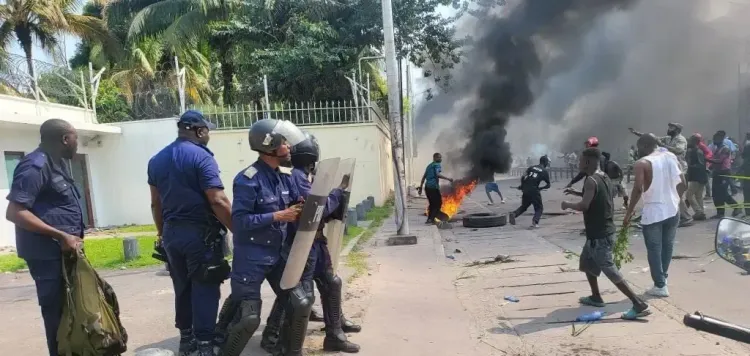
United Nations, Jan 7 (NationPress) The UN Office for the Coordination of Humanitarian Affairs (OCHA) has raised concerns about an alarming increase in violence within Ituri province, located in the eastern region of the Democratic Republic of the Congo (DRC), which is severely impacting critical humanitarian operations, according to a UN spokesperson.
The town of Bule and its surrounding areas have witnessed persistent hostilities since early December, leading local authorities to report at least 25 civilian fatalities and over 40 injuries in the past month, as stated by Stephane Dujarric, spokesperson for the UN Secretary-General, during a daily briefing on Tuesday.
OCHA highlighted that the prevailing insecurity has effectively cut off assistance to more than 87,000 displaced individuals residing in and around Bule, leaving these families in dire need of food, healthcare, and clean water, according to Dujarric.
Due to the unstable security conditions, no humanitarian organization has been able to operate in the impacted areas for over a month. He emphasized, "The UN urges all parties involved in the conflict to uphold their obligations under international humanitarian law to protect civilians and ensure the safety of humanitarian workers wherever they may be." He stressed the need for safe, reliable, and uninterrupted humanitarian access to provide essential assistance and avert further deterioration of the situation, as reported by the Xinhua news agency.
Earlier, on January 1, the DRC government revealed that more than 1,500 civilians have lost their lives due to escalating violence in the eastern province of South Kivu since early December 2025.
In a statement, the government indicated that fighting has intensified in various areas of the province, particularly along the Kamanyola-Uvira axis, where armed operations have resulted in large-scale displacement. Furthermore, over 500,000 individuals have been forced to flee their homes amid ongoing insecurity.
The government reported that the front lines have progressively shifted southward, affecting multiple regions in South Kivu, including Uvira, Fizi, and Mwenga.
Authorities attributed the escalation to armed groups operating in the region and accused them of breaching existing commitments and international humanitarian law.
The government reaffirmed its commitment to restore state authority across the nation and pursue accountability for those responsible through diplomatic and judicial means.
The eastern DRC has been plagued by decades of instability, a situation that has worsened since the resurgence of the March 23 Movement rebel group in late 2021. Kinshasa has consistently accused neighboring Rwanda of supporting the group, an assertion that Kigali has denied.
Point of View
It is essential to acknowledge the urgent humanitarian crisis unfolding in Ituri province. The escalating violence poses a significant threat to civilians and humanitarian efforts, necessitating immediate international attention. The situation calls for accountability and a unified response to restore peace and support those in distress.
NationPress
29 Sept 2026
Frequently Asked Questions
What is causing the violence in Ituri province?
The violence in Ituri province is primarily attributed to armed groups operating in the region, leading to civilian casualties and displacements.
How many people are affected by the violence?
Over 87,000 individuals are currently displaced and facing critical shortages of food, healthcare, and clean water due to the ongoing violence.
What has the UN recommended?
The UN has urged all parties involved in the conflict to uphold their obligations under international humanitarian law to protect civilians and ensure the safety of humanitarian workers.
What is the current situation in South Kivu?
In South Kivu, more than 1,500 civilians have lost their lives due to escalating violence, with over 500,000 individuals forced to flee their homes.
What has the DRC government said about the violence?
The DRC government has condemned the violence, attributing it to armed groups and has committed to restoring state authority and pursuing accountability.