Article 370 restoration: Cong's Saifuddin Soz demands J&K autonomy be revived
Synopsis
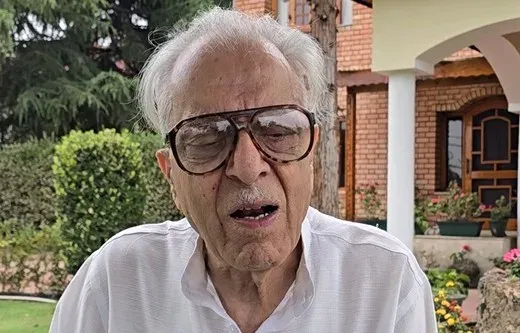
Veteran Congress leader Saifuddin Soz has called for the restoration of Article 370, framing J&K's 2019 abrogation as a breach of the trust underpinning the region's accession to India. His demand for cross-party unity — spanning the National Conference, PDP, Apni Party, and Congress — signals growing political pressure on the Centre, even after the Supreme Court upheld the abrogation in 2023.
Key Takeaways
Saifuddin Soz , veteran Congress leader and former Union Minister, demanded restoration of Article 370 in Jammu and Kashmir on 2 July .
Soz called on the National Conference , PDP , Apni Party , and Congress to launch a joint, peaceful movement for J&K's internal autonomy.
He argued the Centre lacked the constitutional authority to abrogate Article 370 in August 2019 .
Soz was one of 117 signatories to a letter urging PM Modi and Pakistan's Shehbaz Sharif to resume dialogue and end hostilities.
The Supreme Court upheld the abrogation in December 2023 but directed restoration of J&K's statehood.
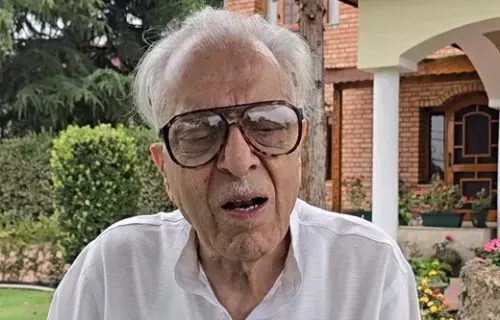
Veteran Congress leader and former Union Minister Saifuddin Soz on Thursday, 2 July called for the restoration of Article 370 in Jammu and Kashmir, urging regional parties and his own party to collectively press the Bharatiya Janata Party (BJP)-led Centre to honour the trust that, in his words, 'a Muslim-majority state had placed while joining a Hindu-majority country.' The demand comes amid ongoing political debate over J&K's constitutional status following the Centre's 2019 abrogation.
Soz's Core Argument on Article 370
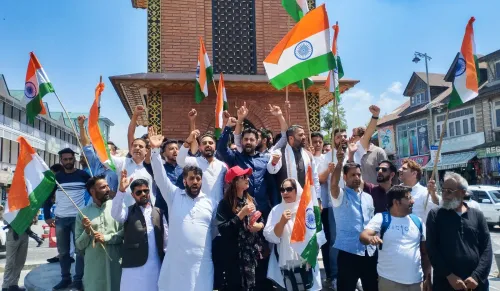
Soz maintained that the Union government did not have the authority to abrogate Article 370, describing it as the bedrock of Jammu and Kashmir's internal autonomy. 'Article 370 represents our internal autonomy,' he said, calling on the National Conference — the largest political party in the region — the Peoples Democratic Party (PDP), the Apni Party, and the Congress to unite around a 'peaceful movement' for its reinstatement.
He argued that J&K's accession to India was grounded in the country's secular character and its tradition of tolerance. 'A Muslim-majority state accepted accession to a Hindu-majority country based on trust which has been broken by the Centre,' Soz said, warning that attempting to 'forcefully silence' the people through military and paramilitary deployment would be, in his words, 'ignorance and wrong.'
Call for Cross-Party Unity in J&K
Soz specifically urged the J&K Assembly and all major regional parties to jointly approach the Centre and make the constitutional and moral case for restoring autonomy. He stopped short of outlining a legislative mechanism but stressed the importance of a coordinated, non-confrontational approach. 'They should not impose their decision on us,' he said.
Notably, this is not the first time Soz has broken ranks with the dominant national narrative on J&K. His consistent advocacy for dialogue and autonomy has often placed him at odds with the Congress's more cautious national leadership on the issue.
India-Pakistan Dialogue: Soz Among 117 Signatories
Soz also referenced his decision to co-sign a letter addressed to Prime Minister Narendra Modi and his Pakistani counterpart Shehbaz Sharif, calling for an end to hostilities between the two nations. He was one of 117 signatories to that letter. 'Conflicts can be solved only through dialogue and not with war,' he asserted, drawing a parallel with European nations that eventually reached agreements after prolonged conflicts.
'Dialogue cannot take place in an atmosphere of war,' he added, emphasising that Pakistan remains India's neighbour and that resuming talks is both necessary and inevitable. The letter has drawn attention given the heightened India-Pakistan tensions in recent months.
Political and Constitutional Context
The Centre abrogated Article 370 in August 2019, bifurcating the erstwhile state of Jammu and Kashmir into two Union Territories — J&K and Ladakh. The Supreme Court of India upheld the abrogation in December 2023, though it directed the restoration of statehood for J&K at the earliest. The National Conference, which leads the current elected government in J&K, has passed a resolution in the Assembly seeking restoration of the special status — a demand the Centre has so far declined to act upon.
Soz's remarks add fresh pressure on the Congress to articulate a clearer position on Article 370, a subject the party has navigated cautiously at the national level ahead of future electoral contests.
Point of View
At least for now. His call for cross-party unity in J&K exposes the Congress's unresolved tension: the party's national leadership has been deliberately ambiguous on Article 370 for electoral reasons, while its J&K voices remain unambiguously pro-restoration. That gap is a political liability. Meanwhile, framing the abrogation as a breach of accession trust rather than a purely legal dispute is a sharper, more durable argument — one that regional parties will likely amplify as statehood restoration talks inch forward.
NationPress
1 Oct 2026
Frequently Asked Questions
What has Saifuddin Soz demanded regarding Article 370?
Saifuddin Soz has demanded the restoration of Article 370 in Jammu and Kashmir, calling it the foundation of the region's internal autonomy. He urged the National Conference, PDP, Apni Party, and Congress to jointly press the Centre for reinstatement through a peaceful movement.
Why does Soz say Article 370's abrogation was wrong?
Soz argues that the Union government did not have the constitutional authority to abrogate Article 370, and that doing so broke the trust on which J&K — a Muslim-majority region — chose to accede to India, a Hindu-majority but secular country. He contends that this trust is not the Centre's to unilaterally revoke.
What is the current legal status of Article 370?
The Supreme Court of India upheld the abrogation of Article 370 in December 2023, ruling it constitutionally valid. However, the court also directed the Centre to restore statehood to Jammu and Kashmir at the earliest, a step that remains pending.
What is the letter Soz co-signed about India and Pakistan?
Soz was one of 117 signatories to a letter addressed to Prime Minister Narendra Modi and Pakistan's Prime Minister Shehbaz Sharif, urging both governments to end hostilities and resume bilateral dialogue. He has consistently maintained that conflicts are resolved through negotiation, not war.
Which parties has Soz called upon to seek Article 370's restoration?
Soz specifically named the National Conference — the largest party in J&K's current elected government — the Peoples Democratic Party (PDP), the Apni Party, and the Congress as parties that should collectively approach the Centre to make the case for restoring J&K's special status.