Article 370 abrogation turns 7: BJP hails J&K development, NC calls it 'black day'
Synopsis
Seven years on, the abrogation of Article 370 is still a live fault line — BJP ministers claim J&K has never seen faster development, while the region's own elected government and opposition parties mark the day with protests and unmet statehood demands. The Centre's silence on a restoration timeline is the real story.
Key Takeaways
The seventh anniversary of the abrogation of Article 370 was marked on 5 August 2025 amid sharply divided political reactions.
Union Ministers Arjun Ram Meghwal and Giriraj Singh hailed the move as historic, citing accelerated development and national integration.
JKNC leaders protested in Srinagar and Parliament, with Rajya Sabha MP Chowdhary Mohammad Ramzan calling it a 'black day'.
PDP president Mehbooba Mufti led a candlelight march in Srinagar; party members alleged her daughter Iltija Mufti was detained.
The Omar Abdullah government's Cabinet and Assembly resolutions seeking statehood restoration remain unaddressed by the Centre.
Assembly elections were held in September 2024 , but no timeline for statehood restoration has been announced.
Seven years after the abrogation of Article 370, which stripped Jammu and Kashmir of its special autonomous status, Union Ministers and Bharatiya Janata Party (BJP) leaders on 5 August 2025 marked the anniversary as a watershed moment for national integration, while the ruling Jammu and Kashmir National Conference (JKNC) and the Peoples Democratic Party (PDP) observed it as a day of loss.
Union Ministers Hail the Decision
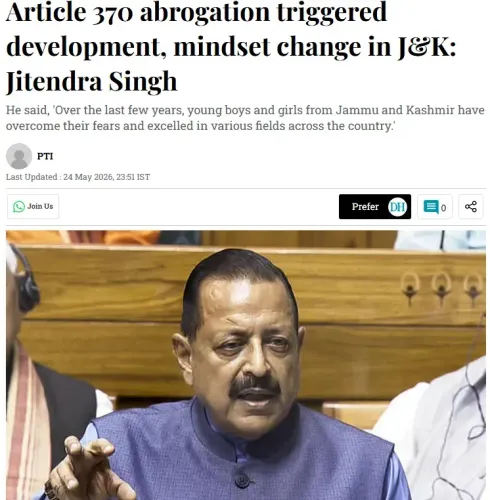
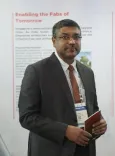
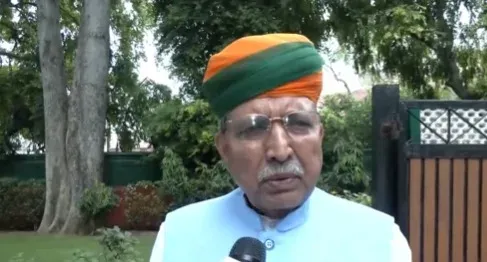
Union Minister Arjun Ram Meghwal described Articles 370 and 35A as discriminatory provisions that had long held back the region's progress. 'Article 370 and Article 35A were discriminatory and unjust provisions. Prime Minister Narendra Modi abolished them on August 5, 2019. After that, the pace of development in Jammu and Kashmir accelerated. Both heritage and development received a boost. People got employment, and for the first time, they witnessed such extensive infrastructure development. Most people there are happy. Only some political parties pursuing their own political agenda have a problem,' Meghwal said.
Union Minister Giriraj Singh, speaking outside Parliament, called 5 August a historic day comparable to Independence Day and Republic Day. 'This is a historic day for India. Just as we celebrate August 15th and January 26th, this is a similarly momentous day, one that realised the dreams of Sardar Patel and the aspirations of countless Indians… Now, there is one nation, one flag, one prime minister, and one Constitution,' Singh said. Singh also made a sharp personal remark about Mehbooba Mufti, calling her a 'terrorist' — a claim that is contested and attributed solely to the minister.
BJP MP Damodar Aggarwal echoed the sentiment, stating that the removal of Article 370 was a major step towards strengthening national unity. 'Despite being an integral part of India, Jammu and Kashmir remained isolated because of Article 370. Today, we can proudly and confidently say that the removal of Article 370 is a significant achievement for the country's national integration,' he said.
Protests in Srinagar and Parliament
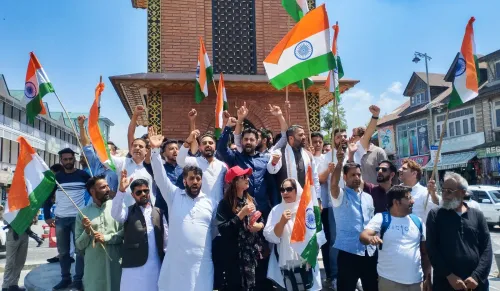
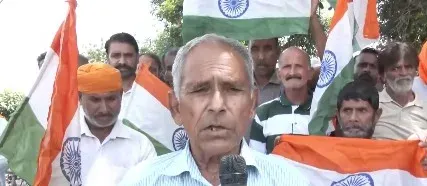
In Srinagar, JKNC leaders and workers, led by Cabinet Minister Sakina Itoo, staged a protest at the party office demanding the restoration of Article 370 and the region's special status. Police prevented protesters from moving beyond the office premises to maintain law and order.
In New Delhi, National Conference MPs also held a demonstration inside Parliament, pressing for the restoration of Jammu and Kashmir's statehood. JKNC Rajya Sabha MP Chowdhary Mohammad Ramzan termed the day a 'black day'. 'Today is a black day for us. Seven years ago, on this day, our statehood was taken away from us,' he said.
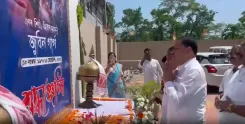
On the eve of the anniversary, PDP leaders led by party president Mehbooba Mufti held a candlelight march in Srinagar. Party members alleged that Mufti's daughter, Iltija Mufti, was detained during the protest.
What Happened on 5 August 2019
5 August 2019 marked the revocation of Article 370 through a Presidential Order, ending the special autonomous status that Jammu and Kashmir had held since 1949. The move also reorganised the erstwhile state into two Union Territories — Jammu and Kashmir and Ladakh. The decision was among the most consequential constitutional changes in post-independence India and remains deeply contested across political lines.
Statehood Question Remains Unresolved
Although Assembly elections were held in Jammu and Kashmir in September 2024, the Centre has not announced any timeline for restoring statehood. Shortly after taking office, the Omar Abdullah-led government passed a Cabinet resolution seeking statehood restoration, followed by a resolution in the Jammu and Kashmir Assembly calling for the reinstatement of the region's special status. Both resolutions remain unaddressed by the Centre. The statehood question is expected to remain a flashpoint in the region's politics heading into the next electoral cycle.
Point of View
The abrogation of Article 370 has produced two parallel narratives — a BJP account of infrastructure and employment gains, and a regional political account of democratic rollback and unresolved statehood. What is notable is that the loudest demand for restoration now comes not from street protests alone but from J&K's own elected Assembly, making the Centre's silence on statehood increasingly difficult to frame as a law-and-order question. The government's reluctance to set a timeline — even after elections it championed as proof of normalcy — suggests the constitutional question is far from settled. How long New Delhi can hold that silence while J&K's elected representatives pass formal resolutions will define the next phase of this story.
NationPress
19 Sept 2026
Frequently Asked Questions
What is the seventh anniversary of Article 370 abrogation?
It marks seven years since 5 August 2019, when the Indian government revoked Article 370 through a Presidential Order, ending Jammu and Kashmir's special autonomous status and reorganising it into two Union Territories — Jammu and Kashmir, and Ladakh. The anniversary is observed as a milestone by the BJP and as a 'black day' by parties like the JKNC and PDP.
Why are JKNC and PDP protesting on this anniversary?
Both parties oppose the abrogation and demand the restoration of Article 370 and Jammu and Kashmir's statehood. On 5 August 2025, JKNC leaders protested in Srinagar and Parliament, while PDP president Mehbooba Mufti led a candlelight march in Srinagar the previous evening.
Has Jammu and Kashmir's statehood been restored?
No. Although Assembly elections were held in September 2024 and the Omar Abdullah-led government passed both a Cabinet resolution and an Assembly resolution seeking statehood restoration, the Centre has not announced any timeline for doing so.
What did Union Minister Giriraj Singh say about the abrogation?
Speaking outside Parliament, Singh called 5 August a day as momentous as Independence Day and Republic Day, saying it fulfilled the vision of Sardar Patel. He also made a contested personal remark about PDP president Mehbooba Mufti, calling her a 'terrorist' — a claim attributed solely to him.
Was anyone detained during the anniversary protests?
PDP members alleged that Iltija Mufti, daughter of party president Mehbooba Mufti, was detained during the candlelight march in Srinagar. In Srinagar, police also prevented JKNC protesters from moving outside the party office premises to maintain law and order.