India holds 20% of global semiconductor design workforce: IT Secretary

Synopsis
India already commands nearly one in five semiconductor design roles globally — and the government is doubling down, training 85,000 more engineers while carefully vetting every investment proposal at SEMICON India 2026. With Asia's top chip nations flocking to the event and student enthusiasm surging, India's play for a central role in the global chip supply chain is no longer aspirational — it is operational.
Key Takeaways
India accounts for nearly 20 per cent of the world's semiconductor design workforce, according to IT Secretary S.
The government is running an ongoing programme to train approximately 85,000 semiconductor design engineers .
Every investment proposal at SEMICON India 2026 will be individually evaluated before public incentives are committed, Krishnan said.
SEMICON India 2026 drew 12,000 visitors on day one and 16,000 on day two , including a large student contingent.
Delegations from Japan, Korea, Taiwan, Singapore, Malaysia, Philippines, Vietnam and Thailand participated, signalling strong regional interest in India collaboration.
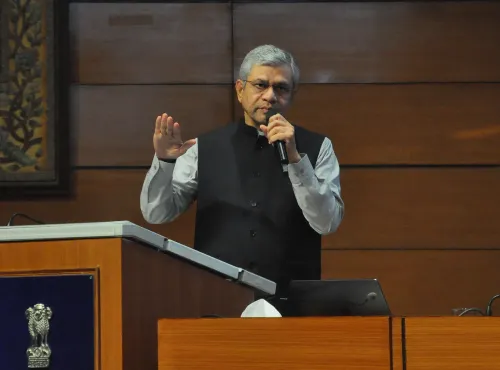
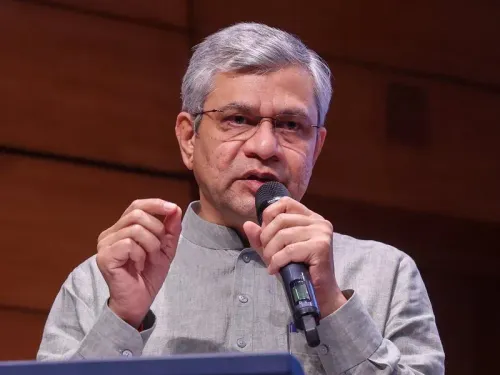
India currently accounts for nearly 20 per cent of the world's semiconductor design workforce, IT Secretary S. Krishnan said on Saturday, 19 September 2026, at the sidelines of SEMICON India 2026 in New Delhi. The government has also launched an ongoing programme to train approximately 85,000 design engineers, signalling a strong policy push to deepen the country's position in the global chip ecosystem.
India's Semiconductor Design Edge
Speaking at the event, Krishnan noted that India's chip design talent base is already substantial. 'In the chip design domain, a massive talent pool is already skilled,' he said. The government's strategy spans all dimensions of skill development, with particular emphasis on semiconductor manufacturing as the next frontier to conquer alongside design.
India's outsized share of global design engineers — nearly one in five worldwide — reflects decades of investment in engineering education and the organic growth of R&D centres by global chipmakers in cities like Bengaluru, Hyderabad, and Pune. This latest government push seeks to formalise and scale that advantage.
Investment Scrutiny and Policy Stability
On the investment front, Krishnan struck a note of careful optimism. He said every proposal received at SEMICON India would be analysed thoroughly because significant public funds are at stake. 'Since public money is involved, we can commit incentives only after properly evaluating every proposal,' he said.
He added that confidence in India's talent pool, combined with the stability and predictability of policy support, is drawing a large number of domestic and multinational companies. 'Because of these reasons, a large number of companies and investors want to enter India and invest here. We will actively encourage them and work closely alongside them,' Krishnan said.
SEMICON India 2026: Record Footfall
Ashok Chandak, President of SEMI India-IESA, reported strong visitor numbers: 12,000 on day one and 16,000 on day two, with momentum continuing. Notably, a large proportion of day-one visitors were students, which Chandak described as a clear indicator of growing awareness and ambition within the early-career engineering community.
'This clearly indicates a strong desire to gain knowledge and understanding about the semiconductor sector in the student community,' Chandak said.
Strong Asian Participation
The event also drew significant international attention, particularly from Asia. Countries including Japan, Korea, Taiwan, Singapore, and Malaysia were represented, with additional visitors from the Philippines, Vietnam, and Thailand. Chandak said this reflects a genuine interest among regional players to collaborate with Indian counterparts — a development that aligns with India's ambition to become a central node in the global semiconductor supply chain.
As the India Semiconductor Mission gathers pace, the combination of a large existing design talent base, government incentives under active evaluation, and rising international interest positions SEMICON India 2026 as a pivotal moment in the country's chip ambitions.
Point of View
Not just more design centres. Krishnan's insistence on rigorous proposal evaluation before committing public incentives is prudent, but it must not become bureaucratic drag in a sector where geopolitical windows open and close quickly. The student surge at the event is encouraging, yet training 85,000 engineers means little without a domestic industry pipeline to absorb them. India's semiconductor moment requires manufacturing ambition to match its design pedigree.
NationPress
19 Sept 2026
Frequently Asked Questions
What share of the global semiconductor design workforce does India hold?
India accounts for nearly 20 per cent of the world's semiconductor design workforce, according to IT Secretary S. Krishnan, who made the statement at SEMICON India 2026 on 19 September 2026. The government is also training approximately 85,000 additional design engineers through an ongoing programme.
What is SEMICON India 2026?
SEMICON India 2026 is a major semiconductor industry event held in New Delhi, bringing together domestic and international companies, investors, and academics. The 2026 edition drew 12,000 visitors on its first day and 16,000 on its second, with strong participation from Asian countries including Japan, Korea, Taiwan, Singapore, and Malaysia.
How will the government evaluate semiconductor investment proposals?
IT Secretary S. Krishnan said every proposal presented at SEMICON India 2026 will be analysed thoroughly before any government incentive is committed, given that public funds are involved. The government aims to encourage both domestic and multinational companies while ensuring due diligence on each application.
Which countries participated in SEMICON India 2026?
Significant international participation came from Japan, Korea, Taiwan, Singapore, and Malaysia, with additional visitors from the Philippines, Vietnam, and Thailand. SEMI India-IESA President Ashok Chandak described this as a strong signal of regional interest in collaborating with Indian counterparts.
Why are companies keen to invest in India's semiconductor sector?
According to IT Secretary Krishnan, two key factors are driving investor interest: confidence in India's large and skilled talent pool, and the stability and strong policy support provided by the government. He said the government will actively encourage and work alongside companies seeking to enter the Indian semiconductor market.