Semicon India 2026: Global confidence in India's semiconductor ecosystem grows, experts say
Synopsis
Semicon India 2026 sent a clear message: global firms are no longer just watching India's semiconductor ambitions — they are showing up. First-time participation by companies like Teledyne FLIR, steady growth in exhibitor counts since 2023, and PM Modi's AI-semiconductor-energy vision have combined to give the ecosystem a credibility it lacked even three years ago.
Key Takeaways
Industry leaders at Semicon India 2026 on 17 September highlighted India's rapid progress in semiconductor manufacturing and chip design .
Sandeep Kumar , CEO of L&T Semiconductor Technologies Limited , said PM Modi's address provided clear direction, linking AI, semiconductors and energy in a unified vision.
Teledyne FLIR participated in Semicon India for the first time , reflecting growing international interest in India's semiconductor ecosystem.
Srinivasan Raviprasad of Park Systems India noted a steady rise in participation at every edition since 2023 , with new companies joining each year.
Experts said India's expanding capabilities present a strategically important opportunity to deepen its role in global semiconductor supply chains .
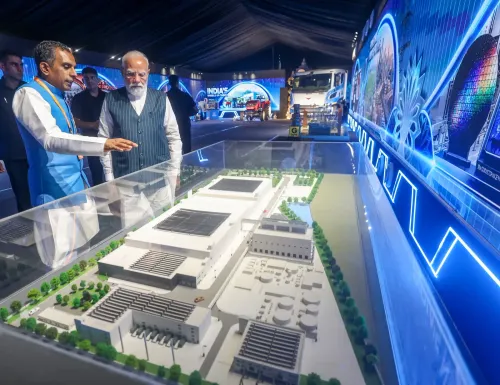
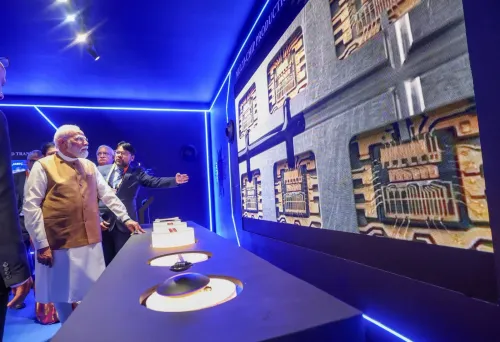
Industry leaders at Semicon India 2026 on Thursday, 17 September underscored India's accelerating momentum in semiconductor manufacturing, chip design, and technological innovation, asserting that the country's expanding capabilities are drawing global confidence and positioning it for a larger role in the worldwide semiconductor supply chain.
PM Modi's Address Sets the Tone
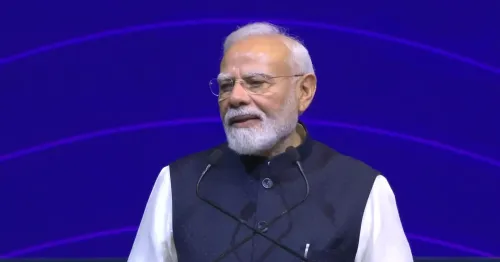
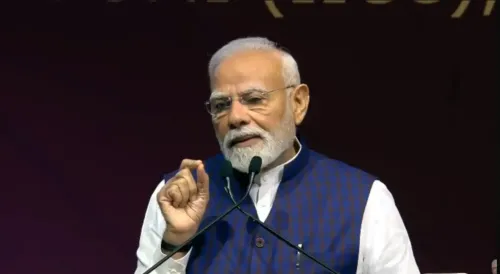
Sandeep Kumar, Chief Executive Officer of L&T Semiconductor Technologies Limited, said Prime Minister Narendra Modi's address at the event provided clear direction for India's technology sector. He noted that Modi's framing of artificial intelligence, semiconductors, energy, and technological development together reflected a cohesive vision for the country's growth. Kumar added that the Prime Minister demonstrated an ability to distil complex technological subjects into accessible language, giving industry stakeholders a sharper perspective on opportunities ahead.
Global Technology Firms Take Notice
T.P. Singh, Vice President of Sales for the Asia-Pacific Instrumentation Division at Teledyne FLIR, described Semicon India as an increasingly influential global platform. Singh noted that his company was participating in the event for the first time and had come away with a positive experience — a signal, he said, of growing interest among international technology companies in India's semiconductor ecosystem. This first-time participation by global firms is being read by observers as a concrete indicator of rising external confidence, beyond diplomatic statements.
Five Years of Rapid Expansion
Srinivasan Raviprasad, Sales Director at Park Systems India, said India's semiconductor sector had undergone rapid development over the past five years. Raviprasad, who has attended Semicon India since 2023, said each successive edition has recorded a measurable increase in participation and industry interest. He pointed to the growing number of new companies joining the platform as evidence that the ecosystem is not just growing but deepening. According to Raviprasad, this trajectory presents a strategically important opportunity as India seeks to expand its footprint in global supply chains.
India's Supply Chain Ambitions
The consensus at Semicon India 2026 reflects a broader national push to establish India as a credible node in the global semiconductor supply chain — a supply chain that has been actively restructured since the post-pandemic chip shortage exposed the world's dependence on a handful of geographies. India's government has backed this ambition with incentive schemes and infrastructure commitments, and industry leaders at the event suggested that global partners are increasingly responding in kind. Notably, the convergence of chip design talent, manufacturing investments, and policy support is creating a foundation that earlier editions of Semicon India lacked.
What Comes Next
The trajectory indicated at Semicon India 2026 suggests that New Delhi is no longer just an aspirant in the semiconductor race — it is increasingly being treated as a partner of choice. Whether that confidence translates into firm investment commitments and supply chain integration over the next 12 to 24 months will be the real measure of progress.
Point of View
But it is still largely sentiment-driven. First-time participation by a firm like Teledyne FLIR is a data point, not a supply chain commitment. India's semiconductor ambitions hinge on whether design talent and policy incentives can be converted into wafer-level manufacturing at scale — something that requires years of capital expenditure and ecosystem depth that China and Taiwan built over decades. The government's ability to link AI, energy, and chip policy in a single narrative is politically savvy, but the industry will ultimately be judged on fab output, not conference keynotes.
NationPress
17 Sept 2026
Frequently Asked Questions
What is Semicon India 2026?
Semicon India 2026 is a major industry event held in New Delhi that brings together global and domestic semiconductor companies, policymakers, and technology leaders to showcase India's capabilities in chip design, semiconductor manufacturing, and related innovation. The 2026 edition on 17 September saw participation from companies including L&T Semiconductor Technologies, Teledyne FLIR, and Park Systems India.
Why is global confidence in India's semiconductor ecosystem growing?
Industry experts at Semicon India 2026 attributed growing global confidence to India's rapid progress in semiconductor manufacturing and chip design over the past five years, strong government policy support, and a convergence of AI and energy development under a unified technology vision. First-time participation by international firms like Teledyne FLIR is seen as a concrete indicator of this rising interest.
What did PM Modi say at Semicon India 2026?
According to L&T Semiconductor Technologies CEO Sandeep Kumar, PM Modi's address linked artificial intelligence, semiconductors, energy, and technological development into a broader vision for India's tech-driven growth. Kumar noted that Modi explained complex technological subjects in a clear manner, giving the industry a sharper view of opportunities ahead.
How has Semicon India grown since 2023?
Park Systems India's Sales Director Srinivasan Raviprasad, who has attended Semicon India since 2023, said participation and industry interest have increased at every edition, with a growing number of new companies joining the platform each year — signalling that India's semiconductor ecosystem is both expanding and deepening.
What opportunity does this present for India?
Industry leaders said India's expanding semiconductor capabilities offer a strategically important opportunity to increase its role in global supply chains, which have been actively restructured since the post-pandemic chip shortage. With government incentives, design talent, and growing international interest aligning, India is increasingly being positioned as a partner of choice rather than just an aspirant.