Semicon India 2026: Global leaders back India's rise as semiconductor hub
Synopsis
At Semicon India 2026, the message from global chip industry leaders was unusually direct: India's combination of political will, a young talent pool, and accelerating bilateral partnerships is making it a credible — not merely aspirational — semiconductor destination. The presence of PM Modi at the summit, flagged by ASML's top procurement chief as a decisive signal, underlines how much India's semiconductor play has shifted from policy paper to boardroom priority.
Key Takeaways
Senior executives from ASML , Yamaha Robotics , UST , and others converged at Semicon India 2026 in New Delhi on 17 September 2026 .
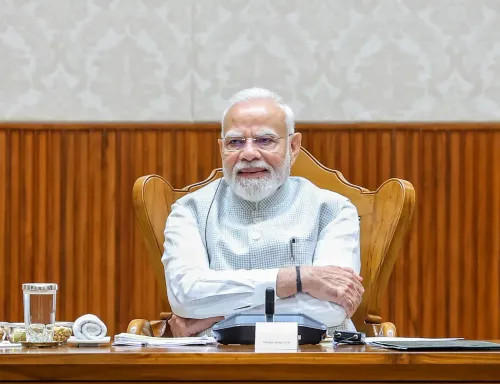
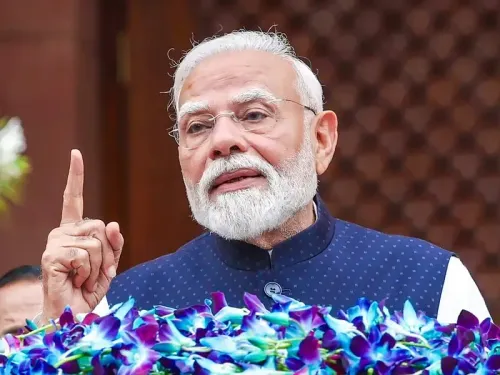
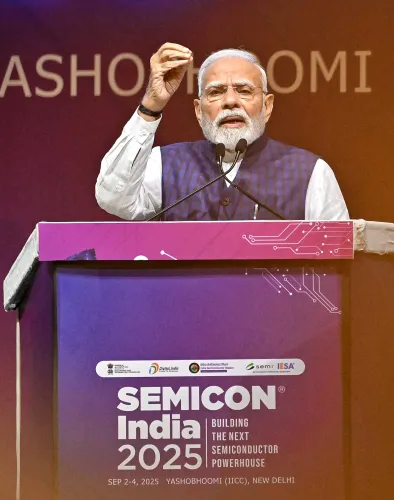
Wayne Allen of ASML said PM Modi 's presence at the event sends a significant signal to the global semiconductor industry.
Peter Chew of Yamaha Robotics called for hands-on training and modern equipment access beyond academic education to build India's semiconductor workforce.
India–Sweden semiconductor cooperation is deepening, with discussions accelerated following PM Modi's visit to Sweden in 2026 .
Gilroy Mathew of UST highlighted the convergence of semiconductor investment and artificial intelligence as a key opportunity for India's youth.
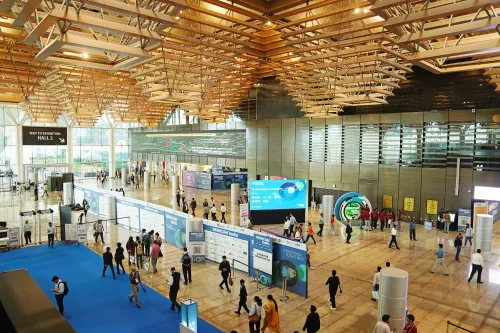
India is cementing its position as a pivotal destination for the global semiconductor industry, with senior executives from major technology and chip companies converging at Semicon India 2026 in New Delhi on 17 September 2026 to spotlight the country's expanding capabilities, vast talent pipeline, and deepening investment prospects. The event drew high-level industry representation and drew pointed attention to the role of government policy in accelerating India's semiconductor ambitions.
High-Level Government Signal
Wayne Allen, Executive Vice President and Chief Strategic Sourcing and Procurement Officer at ASML, said Prime Minister Narendra Modi's presence at Semicon India carries a powerful signal for the global chip industry. Allen noted that when leadership at the highest level demonstrates direct and visible support for a sector, it draws international attention and affirms that the country is pursuing a clear, credible strategy. ASML is the world's sole manufacturer of extreme ultraviolet (EUV) lithography machines, making its executive's endorsement particularly significant for India's semiconductor ambitions.
Talent Pool and Hands-On Training
Peter Chew of Yamaha Robotics pointed to India's young population as one of its defining competitive strengths as the semiconductor value chain globalises. He cautioned, however, that academic education alone would not be enough — the next generation of semiconductor professionals would require access to modern equipment and hands-on, industry-aligned training to be workforce-ready. This concern echoes a broader debate in India's STEM ecosystem about bridging the gap between classroom learning and industrial application.
India-Sweden Semiconductor Cooperation
The event also highlighted an emerging bilateral dimension. Eric Odar, Trade Commissioner and Country Manager at Business Sweden India, said semiconductors were becoming a meaningful area of strategic cooperation between India and Sweden. He noted that discussions following Prime Minister Modi's visit to Sweden this year had created a foundation for deeper collaboration. Joakim Tolostoy of Swedish firm Texic added that both countries had maintained strong business ties over several years, suggesting an existing commercial base on which deeper semiconductor partnerships could be built.
Innovation Capabilities and AI Opportunity
Gerard F. Hamilton, Managing Director of Patina Lighting, highlighted India's established strengths in knowledge, innovation, and technology, arguing the country has the potential to emerge as a major global technology player in the years ahead. Separately, Gilroy Mathew, Chief Operating Officer at UST, urged students to think ambitiously as semiconductor investment into India accelerates. Mathew said the rapid expansion of the semiconductor sector, combined with the growing influence of artificial intelligence, was creating an outsized opportunity for young Indians entering the workforce. This comes amid a broader national push — backed by government incentives and global supply chain realignment — to position India as a credible alternative to established chip manufacturing hubs in East Asia.
What to Watch
Semicon India 2026 arrives at a pivotal moment: India's semiconductor policy architecture, including production-linked incentives and design-linked schemes, is still maturing, and industry voices at the event consistently emphasised execution — training, equipment access, and bilateral partnerships — as the deciding variables. Whether the momentum translates into fabrication capacity and not just design or packaging activity will be the real measure of India's semiconductor ambitions in the years ahead.
Point of View
But endorsements are not fabs. India's semiconductor story has long been strong on narrative and weak on fabrication — the country remains predominantly a design and packaging play, while the capital-intensive front-end manufacturing that defines true semiconductor sovereignty remains elusive. The ASML executive's praise for Modi's presence is telling: it reflects the importance of political signalling at this stage, but the industry knows that signals must eventually give way to silicon. The talent gap flagged by Yamaha Robotics is the most actionable near-term challenge — India cannot absorb semiconductor investment without a workforce trained on real equipment, not just curricula.
NationPress
17 Sept 2026
Frequently Asked Questions
What is Semicon India 2026?
Semicon India 2026 is a major industry summit held in New Delhi on 17 September 2026, bringing together senior executives from global semiconductor and technology companies to discuss India's growing role in the global chip value chain. The event has drawn participation from firms including ASML, Yamaha Robotics, UST, and Business Sweden India.
Why is India considered a rising semiconductor hub?
Industry leaders at Semicon India 2026 cited India's strong policy support, high-level government engagement, large young talent pool, and expanding bilateral partnerships as key factors. PM Modi's presence at the summit was highlighted by ASML's Wayne Allen as a credible signal to the global industry of India's strategic intent.
What did ASML's executive say about India at Semicon India 2026?
Wayne Allen, Executive Vice President and Chief Strategic Sourcing and Procurement Officer at ASML, said PM Modi's attendance at Semicon India sends a significant message to the global industry. He noted that direct leadership support draws international attention and signals a clear national strategy for semiconductor development.
How is India-Sweden cooperation in semiconductors developing?
Eric Odar of Business Sweden India said semiconductors are emerging as a key area of strategic bilateral cooperation, with momentum building after PM Modi's visit to Sweden in 2026. Joakim Tolostoy of Swedish firm Texic noted that the two countries have maintained strong business ties for several years, providing a commercial foundation for deeper semiconductor partnerships.
What challenges did industry leaders flag for India's semiconductor ambitions?
Peter Chew of Yamaha Robotics cautioned that academic education alone is insufficient and called for greater access to modern equipment and hands-on training for the next generation of semiconductor professionals. This skills gap was identified as a critical execution challenge as India looks to attract and absorb large-scale semiconductor investment.