Dr. Jitendra Singh: Art. 370 abrogation changed J&K mindset
Synopsis
Union Minister Dr. Jitendra Singh has amplified the central government's position that the 2019 abrogation of Article 370 has driven development and a fundamental mindset shift in Jammu and Kashmir, nearly seven years after Parliament reorganised the former state into two Union Territories.
Key Takeaways
Jitendra Singh shared an article on 25 May 2026 asserting that the abrogation of Article 370 triggered development and a mindset change in Jammu and Kashmir .
Article 370 was abrogated on 5 August 2019 , and J&K was bifurcated into two Union Territories — Jammu and Kashmir and Ladakh .
Post-abrogation, over 900 central laws and schemes were extended to J&K that had previously been inapplicable.
Singh holds charge of the Prime Minister's Office portfolio and has been among the most consistent voices on J&K 's post-2019 trajectory.
Statehood restoration for Jammu and Kashmir and upcoming UT administration data on investment and employment remain key markers to watch.
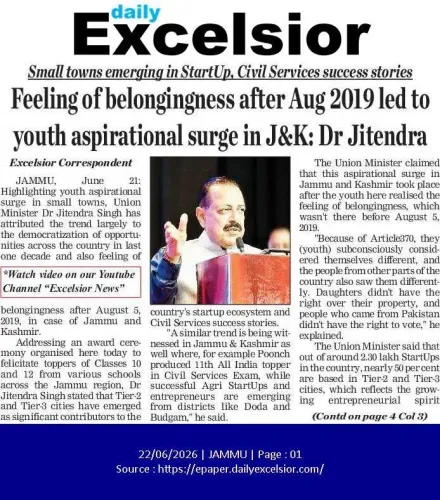
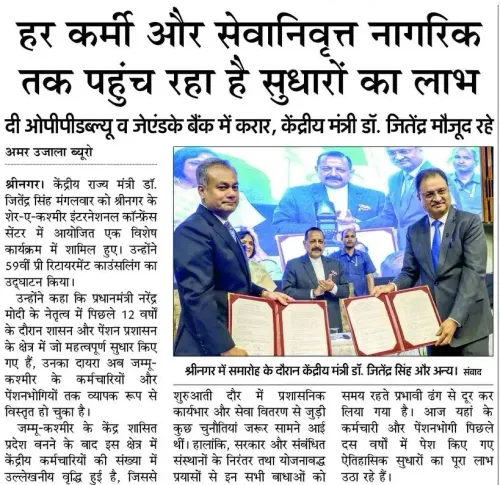
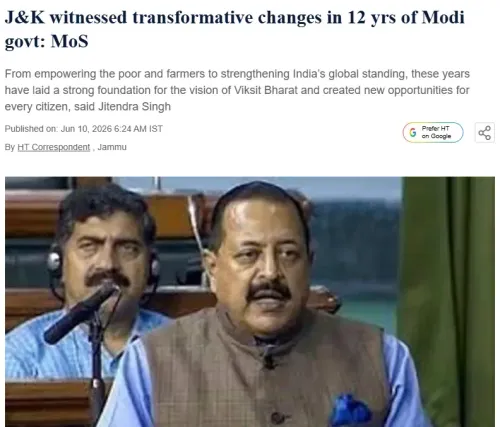
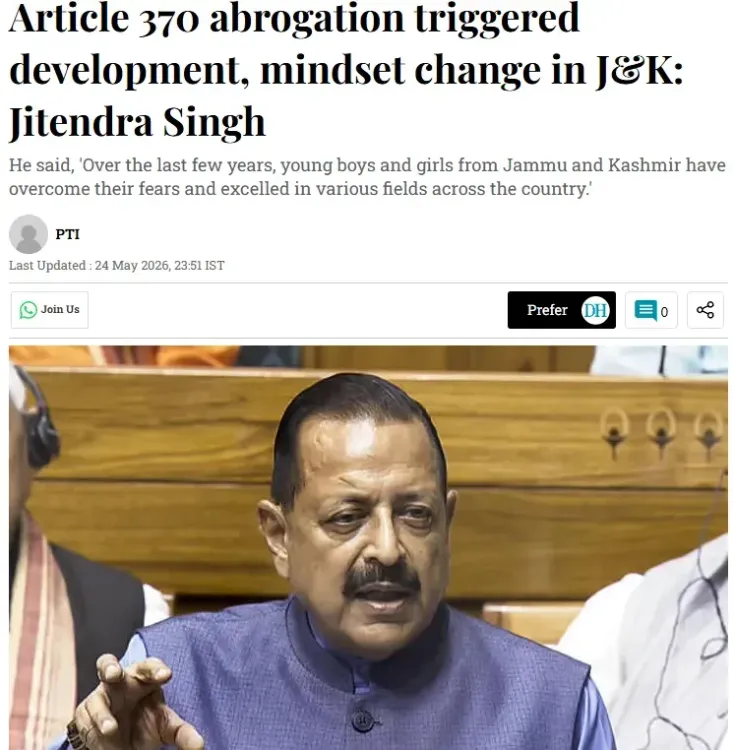
Union Science and Technology Minister Dr. Jitendra Singh on Monday, 25 May 2026, shared an article arguing that the abrogation of Article 370 in 2019 has triggered both tangible development and a fundamental shift in mindset across Jammu and Kashmir.
Context
The minister shared the piece under the headline 'Article 370 abrogation triggered development, mindset change in Jammu and Kashmir', amplifying the central government's longstanding position that constitutional integration has been transformative for the former state. Dr. Singh, who represents a constituency in Jammu and Kashmir and holds charge of the Prime Minister's Office portfolio, has been among the most vocal Union ministers on the region's post-2019 trajectory.
The share comes nearly seven years after Parliament passed resolutions on 5 August 2019 abrogating Article 370 and enacting the Jammu and Kashmir Reorganisation Act, 2019, which bifurcated the former state into two Union Territories — Jammu and Kashmir and Ladakh.
Policy Backdrop
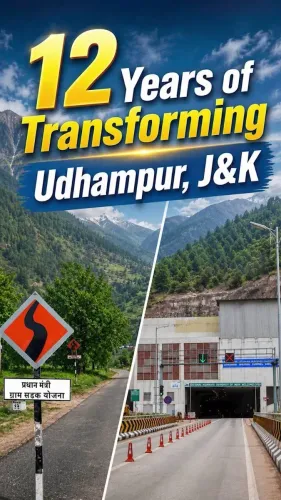
Following the abrogation, the central government extended over 900 central laws and schemes to Jammu and Kashmir that had previously been inapplicable under the special-status framework. Targeted infrastructure programmes covering roads, power supply and industrial estates were also launched as part of the post-reorganisation push.
The administrative integration was intended to bring J&K in line with the rest of India on matters ranging from property rights and domicile rules to the applicability of anti-corruption statutes. Successive rounds of investment summits and tourism promotion drives have since been cited by the government as evidence of growing investor and visitor confidence in the region.
Stakeholders and Impact
The primary stakeholders in this narrative are the residents of Jammu and Kashmir — particularly the youth, who stand to benefit from expanded employment and entrepreneurship opportunities if the development claims hold. Investors, both domestic and foreign, have been a key audience for the government's messaging around stability and administrative predictability in the Union Territory.
Critics and opposition voices have consistently contested the government's development framing, pointing to questions around civil liberties, statehood restoration and the pace of ground-level change. The debate over J&K's status and progress remains one of the most politically charged in Indian public life.
What's Next
The next Jammu and Kashmir Legislative Assembly elections and periodic official data releases on investment inflows, tourism arrivals and unemployment figures from the UT administration will be closely watched as benchmarks against which the government's development claims are measured. Statehood restoration for Jammu and Kashmir — promised by the central government and pending before the Supreme Court — remains an outstanding political and constitutional question that will shape the region's governance trajectory.
Point of View
With the minister's dual role in the PMO and Science Ministry lending institutional weight to the messaging. By amplifying the 'mindset change' framing alongside development metrics, the government is attempting to shift the discourse from constitutional and civil-liberties concerns — which dominate opposition and international commentary — toward ground-level outcomes. This approach is particularly significant as the region awaits statehood restoration and a fresh electoral cycle, both of which will test whether the development narrative translates into popular endorsement. The pattern also signals that J&K governance will remain a centrepiece of the BJP's political communication well into 2026.
NationPress
9 Oct 2026
Frequently Asked Questions
What did Dr. Jitendra Singh say about Article 370 abrogation?
Dr. Jitendra Singh shared an article on 25 May 2026 asserting that the abrogation of Article 370 has triggered both development and a fundamental mindset change in Jammu and Kashmir.
When was Article 370 abrogated?
Article 370 was abrogated on 5 August 2019, when Parliament passed resolutions removing Jammu and Kashmir's special status and enacted the Jammu and Kashmir Reorganisation Act, 2019.
What changes happened in J&K after Article 370 was removed?
After abrogation, over 900 central laws and schemes were extended to J&K, the region was bifurcated into two Union Territories — Jammu and Kashmir and Ladakh — and targeted infrastructure programmes covering roads, power and industrial estates were launched.
Who is Dr. Jitendra Singh and what is his connection to J&K?
Dr. Jitendra Singh is Union Minister of State (Independent Charge) for Science and Technology and Earth Sciences, and also holds charge in the Prime Minister's Office. He represents a constituency in Jammu and Kashmir and has been a prominent government voice on the region's post-2019 development.
Will Jammu and Kashmir get statehood back?
The central government has promised statehood restoration for Jammu and Kashmir, and the matter is pending before the Supreme Court. No date has been officially announced as of May 2026.