Will the Delhi High Court Halt the Trial Against Lalu and Tejashwi in the IRCTC Scam?
Synopsis
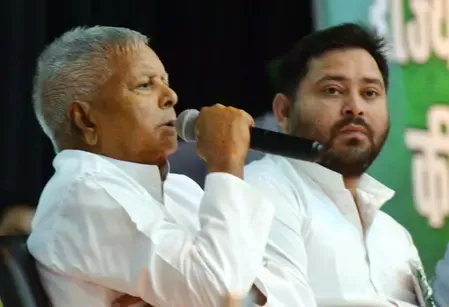
In a significant legal development, the Delhi High Court has decided not to pause the trial against prominent political figures Lalu Prasad Yadav and his son Tejashwi Yadav in the IRCTC scam case. This ruling allows the trial to proceed, with witness cross-examinations scheduled soon.
Key Takeaways
The Delhi High Court has refused to stay the trial against Lalu Prasad Yadav and Tejashwi Yadav.
Cross-examinations of witnesses are scheduled to begin shortly.
Charges include cheating and criminal conspiracy under the Prevention of Corruption Act.
The trial court has indicated a serious view on allegations of corruption.
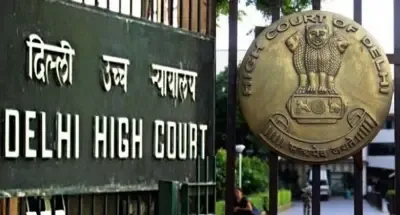
New Delhi, Jan 14 (NationPress) The Delhi High Court has on Wednesday declined to pause the ongoing trial involving RJD leader Lalu Prasad Yadav and his son Tejashwi Yadav related to the IRCTC scam case.
A bench led by Justice Swarna Kanta Sharma noted that while the trial is set to proceed, witness cross-examinations are planned for the “next-to-next” week. During this period, the court is anticipated to rule on petitions submitted by the father-son duo contesting the charge framing.
Senior advocate Kapil Sibal, representing Lalu Prasad, asserted that the case was scheduled for a hearing to determine if the trial should be suspended while these petitions are under consideration. He emphasized that the cross-examination would commence following the completion of the examination-in-chief of the witnesses.
The judge, however, clarified: “Let examination-in-chief be conducted. I am not granting a stay.” She added that the petitions would be reviewed next week and instructed the CBI not to insist on immediate cross-examination.
On October 13, 2025, the trial court imposed charges against Lalu, his spouse Rabri Devi, Tejashwi Yadav, and 11 others for supposed offenses of cheating, criminal conspiracy under the Indian Penal Code, and infringements of the Prevention of Corruption Act. The court remarked that the transactions regarding land and shares appeared to be “potentially an instance of crony capitalism” disguised as private involvement in railway hotels located in Ranchi and Puri.
Lalu contended in his petition that the chargesheet lacked compelling evidence. He argued that the CBI had not produced any documentary or testimonial evidence, witness accounts, or circumstantial proof of conspiracy.
Besides the Yadav family, charges were also leveled against Pradeep Kumar Goel, Rakesh Saksena, Bhupendra Kumar Agarwal, Rakesh Kumar Gogia, and Vinod Kumar Asthana under Section 13(2) in conjunction with Section 13(1)(d)(ii) and (iii) of the Prevention of Corruption Act, which address misconduct and abuse of power by public officials.
The trial court also initiated charges under IPC Section 420 (cheating) against Lalu, Rabri Devi, Tejashwi, M/s LARA Projects LLP, Vijay Kochhar, Vinay Kochhar, Sarla Gupta, and Prem Chand Gupta. A collective charge of criminal conspiracy under Section 120B IPC was established against all 14 defendants. The Prevention of Corruption Act stipulates a maximum penalty of 10 years for criminal misconduct, while cheating under the IPC can lead to a sentence of up to seven years.
Point of View
This development highlights the ongoing scrutiny of influential political figures in India. The court's decision to continue the trial underscores the importance of accountability in governance and the legal processes that seek to address corruption allegations. As the trial unfolds, it reflects the broader narrative of political integrity in the country.
NationPress
23 Sept 2026
Frequently Asked Questions
What is the IRCTC scam?
The IRCTC scam involves allegations of corruption and misconduct related to railway hotel contracts, implicating several political figures, including Lalu Prasad Yadav.
What charges have been framed against Lalu Prasad?
Lalu Prasad and others face charges of cheating, criminal conspiracy, and violations under the Prevention of Corruption Act.
What is the significance of the Delhi High Court's ruling?
The ruling allows the trial to proceed without a stay, indicating the court's commitment to addressing the allegations against the accused.