Major Drug Bust in Delhi: 475gm Heroin Seized, Inter-State Syndicate Smashed
Synopsis
Delhi's East District Police dismantled an inter-state heroin syndicate on April 2, arresting three traffickers — including two suppliers from Shahjahanpur, UP — and seizing 475 grams of smack worth Rs 80 lakh. The bust reveals how personal addiction can evolve into organised cross-border drug trafficking targeting Delhi-NCR.
Key Takeaways
475 grams of heroin — a commercial quantity under the NDPS Act — worth Rs 80 lakh was seized by Delhi's East District Anti-Narcotics Squad on April 2, 2025 .
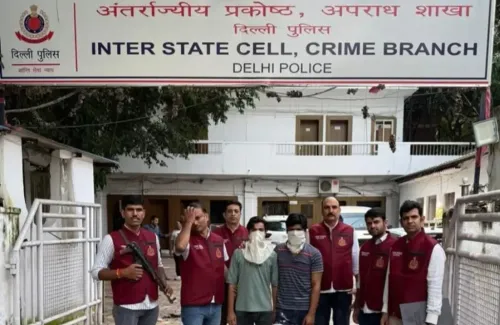
Three accused — Mohd Arif (40), Amit (22), and Vikas (28) , all residents of Shahjahanpur, Uttar Pradesh — were formally arrested.
The first seizure of 270 grams was made from Mohd Arif near Ghazipur Road, Delhi ; an additional 205 grams was recovered from the two UP-based suppliers.
A case has been registered at Patparganj Industrial Area Police Station under the NDPS Act , with strict legal action being pursued.
The operation was led by Inspector Arun Kumar under the guidance of ACP Pawan Kumar as part of Delhi Police's ongoing zero-tolerance anti-narcotics campaign.
Investigations revealed that Mohd Arif evolved from a personal drug addict into a bulk distributor, forming part of an organised inter-state narcotics network targeting urban Delhi-NCR.
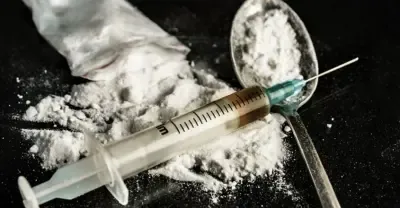
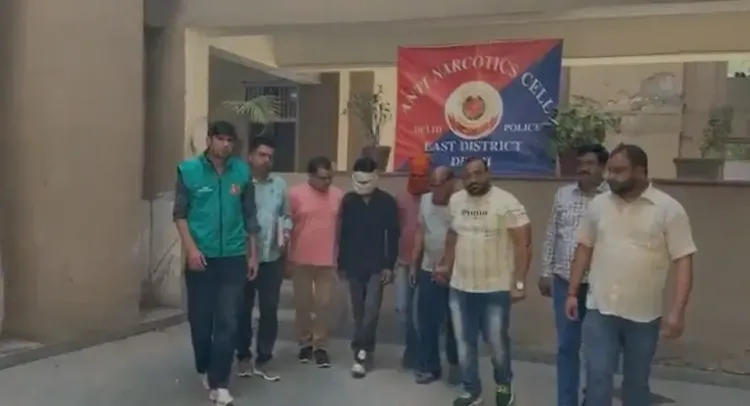
New Delhi's East District Police dismantled a dangerous inter-state drug syndicate on April 2, 2025, arresting three heroin traffickers and recovering 475 grams of smack — classified as a commercial quantity under the NDPS Act — valued at approximately Rs 80 lakh in the international illicit drug market. Two of the accused were key suppliers operating from Shahjahanpur, Uttar Pradesh, exposing a well-organised cross-border narcotics pipeline feeding Delhi-NCR.
Operation Details: How the Trap Was Laid
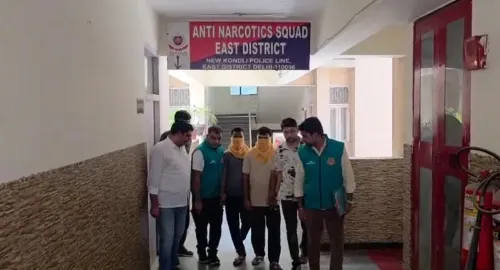
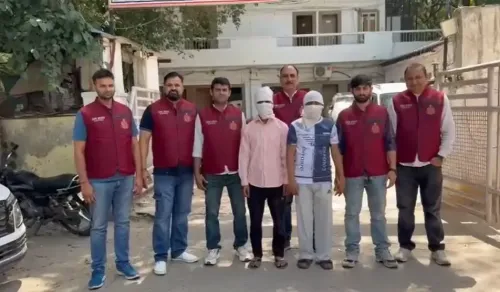
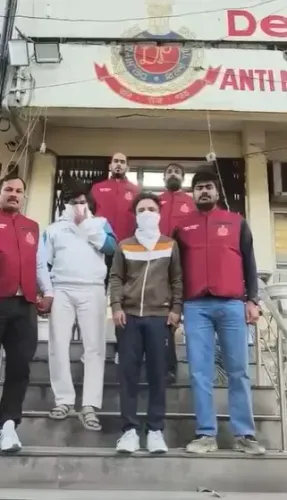
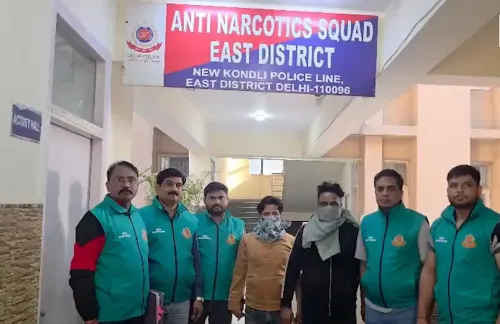
The breakthrough was achieved by a dedicated team from the Anti-Narcotics Squad (ANS), East District, operating under the supervision of Inspector Arun Kumar and the overall command of Assistant Commissioner of Police Pawan Kumar. The team included Sub-Inspectors Rahul and Vikas, Assistant Sub-Inspectors Amit and Arun, Head Constables Pradeep Sharma, Amit Kasana, and Harendra, Woman Head Constable Anamika, and Constable Kaushal.
The squad intensified intelligence operations by activating local informers and conducting surveillance on suspected narcotics movement across the capital. On April 2, credible intelligence was received that a suspect named Mohd Arif would be transporting smack near Ghazipur Road, adjacent to the old Regional Rapid Transit System (RRTS) site in Delhi.
Police swiftly established a strategic trap at the location and apprehended Mohd Arif (40), a native of Shahjahanpur, Uttar Pradesh, currently residing in Delhi. A search of his person yielded 270 grams of heroin. A case was immediately registered at Patparganj Industrial Area Police Station under the NDPS Act.
Supply Chain Exposed: UP Suppliers Nabbed
During sustained interrogation, Mohd Arif disclosed that he procured narcotics from two Shahjahanpur-based suppliers — Amit (22) and Vikas (28). This intelligence triggered a series of coordinated raids spanning Delhi-NCR and Uttar Pradesh.
Leveraging technical surveillance and the primary accused's disclosures, police teams successfully tracked down and arrested both suppliers. An additional 205 grams of heroin was recovered from their possession, bringing the total seizure to 475 grams — well within the threshold of a commercial quantity under Indian law, attracting stringent punishment.
All three accused — Mohd Arif, Amit, and Vikas, all married residents of Shahjahanpur — have been formally arrested. Further investigation is currently underway to identify and neutralise any remaining links in the supply chain.
Profile of the Accused: From Addiction to Organised Crime
Police investigations revealed a troubling trajectory in Mohd Arif's criminal evolution. He reportedly entered drug peddling initially due to his own addiction, purchasing small quantities of smack for personal use before transitioning into retail distribution across Delhi-NCR.
In recent months, Arif escalated his operations significantly — procuring bulk quantities directly from his UP-based suppliers and distributing them at inflated prices, embedding himself into an organised inter-state narcotics network. His suppliers, Amit and Vikas, were the upstream link feeding this pipeline from Shahjahanpur.
Police noted that all three accused were primarily driven by financial gain, deliberately targeting urban communities with high addiction vulnerability to maximise profits.
Broader Context: Delhi's Escalating Drug Problem
This bust is part of a wider, alarming pattern of heroin trafficking networks operating between Uttar Pradesh and Delhi. Shahjahanpur has previously featured in multiple drug-related cases as a transit and supply point for narcotics entering the national capital. The NDPS Act mandates a minimum of 10 years' rigorous imprisonment — extendable to 20 years — for commercial quantity drug trafficking, underscoring the severity of the charges these three accused now face.
Delhi Police's zero-tolerance policy on narcotics has seen a surge in ANS operations in recent months, reflecting growing pressure on law enforcement agencies to address the capital's substance abuse crisis. According to available data, drug seizures in Delhi have risen consistently over the past two years, with heroin emerging as one of the most frequently intercepted substances.
Critically, cases like this highlight how addiction itself becomes a recruitment mechanism for organised crime — individuals like Arif begin as consumers and are gradually absorbed into distribution networks, blurring the line between victim and perpetrator. This systemic pattern demands not just enforcement action but parallel rehabilitation infrastructure.
What Happens Next
With all three accused in custody, investigators are expected to pursue further leads to identify higher-level financiers and distributors within the supply network. Police have confirmed that strict legal action under the NDPS Act is being pursued, and the case file is being built for prosecution. The 475-gram commercial-quantity seizure ensures that bail for the accused will be legally difficult to secure, keeping them in custody during the trial process.
As Delhi Police continue their anti-narcotics campaign, more inter-state syndicate busts are anticipated in the coming weeks, particularly targeting supply routes from western Uttar Pradesh into the capital.
Point of View
Mohd Arif, began as an addict before becoming a distributor — a trajectory that law enforcement repeatedly encounters but rehabilitation policy consistently fails to address. Delhi Police's zero-tolerance posture is producing results on paper, but without dismantling the financial architecture behind these syndicates and investing in demand-side intervention, the supply chain will simply regenerate with new faces. The real question is not how many grams were seized, but how many more Arifs are already in the pipeline.
NationPress
16 Sept 2026
Frequently Asked Questions
What was seized in the Delhi inter-state drug syndicate bust?
Delhi Police seized a total of 475 grams of heroin (smack) , classified as a commercial quantity under the NDPS Act and valued at approximately Rs 80 lakh in the international illicit market. The seizure was made in two parts — 270 grams from the primary accused and 205 grams from two UP-based suppliers.
Who were the three drug traffickers arrested in Delhi?
Mohd Arif (40) , a Shahjahanpur native residing in Delhi, and two Shahjahanpur-based suppliers — Amit (22) and Vikas (28) — were arrested. All three are married residents of Uttar Pradesh's Shahjahanpur district.
Which police unit conducted the Delhi heroin bust operation?
The operation was conducted by the Anti-Narcotics Squad (ANS) of East District, Delhi Police , under the supervision of Inspector Arun Kumar and guided by ACP Pawan Kumar . The team acted on specific intelligence received on April 2, 2025.
What punishment do the accused face under the NDPS Act for commercial quantity heroin?
Under the NDPS Act , trafficking in a commercial quantity of heroin carries a minimum sentence of 10 years' rigorous imprisonment , extendable up to 20 years, along with heavy fines. The 475-gram seizure qualifies as a commercial quantity, making bail legally difficult for the accused.
How did Mohd Arif get involved in drug trafficking in Delhi?
Mohd Arif initially became involved in drug peddling due to personal addiction, purchasing small quantities for his own use before transitioning to retail distribution. Over time, he escalated to procuring bulk heroin from Shahjahanpur-based suppliers and distributing it across Delhi-NCR at higher prices as part of an organised inter-state network.