Breaking: Delhi Police Nab Fugitive in Rs 18 Lakh Blackmail-Extortion Case

Synopsis
A fugitive who extorted Rs 18 lakh from a woman using secretly recorded objectionable videos — after befriending her during pandemic-era yoga classes — was finally nabbed by Delhi Police Crime Branch near Patiala House Courts. The accused, who has a murder case history and served nearly a decade in jail, had sent the videos to the victim's husband to force a larger payment.
Key Takeaways
Delhi Police Crime Branch's ISC arrested a wanted blackmail-extortion accused from Tilak Marg, New Delhi on April 23, 2025 .
The accused allegedly extorted Rs 18 lakh total — Rs 3 lakh initially and Rs 15 lakh more — from a Palam Vihar, Gurugram resident using secretly recorded objectionable videos.
The accused first met the victim during yoga classes conducted during the COVID-19 pandemic and secretly recorded their interactions over time.
His wife, Nitu Sharma , was arrested on March 21 while collecting extortion money; the main accused evaded capture and remained absconding for weeks.
The accused has a prior murder case in Sahibabad, Uttar Pradesh , and served approximately 8–9 years in judicial custody before being granted bail in 2018 .
Investigators are now examining whether additional victims were targeted through a similar pattern of exploitation using wellness and yoga networks.
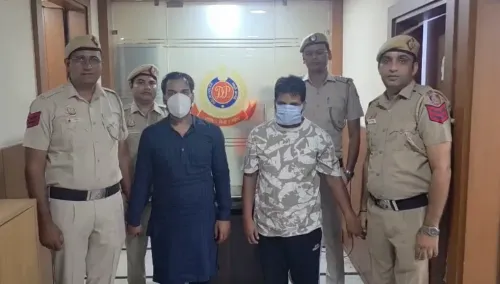
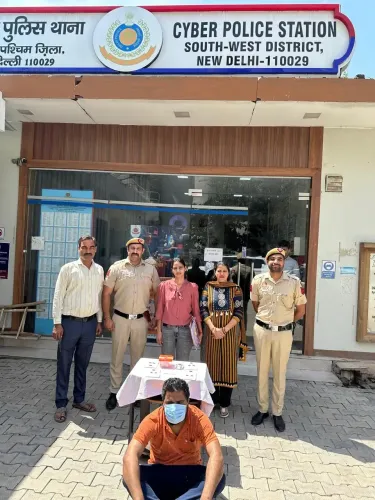
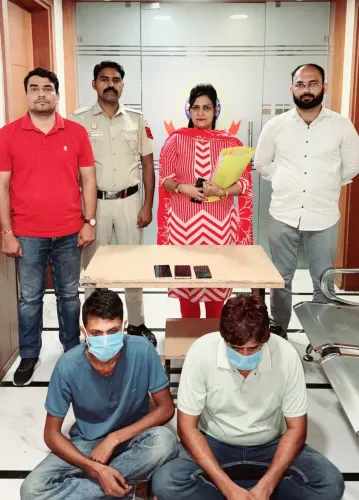
New Delhi, April 24: The Inter-State Cell (ISC) of the Delhi Police Crime Branch arrested a long-absconding accused on April 23 in connection with a high-profile blackmail and extortion case originating from Palam Vihar, Gurugram, Haryana. The accused allegedly extorted a total of Rs 18 lakh from a woman by threatening to circulate secretly recorded objectionable videos. The arrest was made near Tilak Marg, New Delhi, following a precision operation close to the Patiala House Courts complex.
How the Blackmail Racket Unfolded
The accused first came into contact with the victim during yoga classes he conducted during the COVID-19 pandemic. Over time, he allegedly cultivated a close personal relationship with her and, according to police, secretly recorded objectionable videos of their interactions without her knowledge or consent.
He initially used these recordings to extort Rs 3 lakh from the victim, assuring her the videos would be permanently deleted. Investigators revealed, however, that the accused retained copies and continued to misuse them — a calculated move that exposed a premeditated pattern of exploitation.
In March 2026, the accused escalated his demands by sharing the objectionable content directly with the victim's husband and threatening further circulation unless she paid an additional Rs 15 lakh. Cornered and fearing social damage, the victim formally approached police and lodged a complaint at Palam Vihar Police Station, Gurugram, on March 21, under relevant sections of the Bharatiya Nyaya Sanhita (BNS).
Wife Caught Red-Handed, Accused Flees
During a sting operation on March 21, Gurugram Police apprehended the accused's wife, Nitu Sharma, red-handed while she was collecting the extortion money on his behalf. The main accused, however, managed to evade capture and went underground, frequently changing locations to throw investigators off his trail.
His flight triggered the formation of a dedicated multi-officer team within the Delhi Police Crime Branch, tasked with tracking him down using a combination of technical surveillance and human intelligence. The gravity and sensitivity of the case — involving digital blackmail, a vulnerable victim, and a suspect with a prior criminal record — made the operation a priority.
Arrest Near Patiala House Courts
A breakthrough came when the Crime Branch received specific intelligence indicating the accused was likely to visit the Patiala House Courts area in central New Delhi. Officers swiftly set up a trap and successfully apprehended him from Tilak Marg on April 23.
During interrogation, the accused reportedly confessed to deliberately retaining copies of the videos even after receiving the initial payment. He admitted that mounting financial difficulties pushed him to re-establish contact with the victim in March and escalate his demands by sending the content to her husband as a pressure tactic.
Accused Has Serious Criminal History
Investigations revealed that the accused is not a first-time offender. He was previously implicated in a murder case in Sahibabad, Uttar Pradesh, and spent approximately eight to nine years in judicial custody. After being granted bail in 2018, he began conducting yoga classes — the very platform he allegedly used to identify and exploit his victim.
This background raises significant questions about the adequacy of monitoring mechanisms for individuals with violent criminal histories who re-enter society and gain access to vulnerable individuals through trust-based professions such as wellness coaching.
Legal Proceedings and Further Investigation
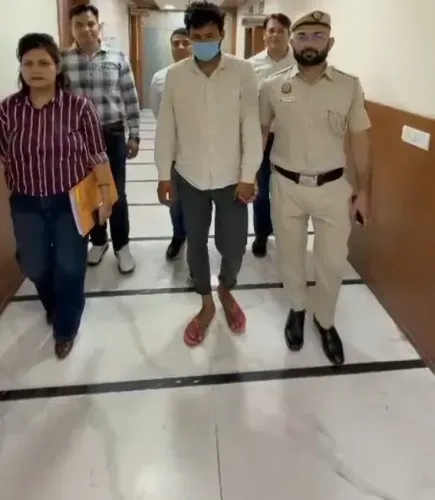
Following his arrest, the accused was produced before the Chief Judicial Magistrate (CJM), New Delhi. The investigating officer from Gurugram Police has since taken custody of the accused for further interrogation and legal proceedings under the BNS.
Police officials confirmed that investigators are now actively probing whether the accused targeted other victims using a similar modus operandi — befriending women through yoga classes, recording objectionable content, and leveraging it for financial gain. This pattern, if confirmed, could point to a serial extortion racket rather than an isolated incident.
This case underscores the growing menace of digital blackmail and non-consensual intimate image (NCII) abuse in India, a category of crime that has seen a sharp rise in recent years, particularly following the pandemic-era boom in online and in-person wellness classes. Legal experts argue that stricter enforcement of digital privacy laws and faster judicial processing of such cases are urgently needed to deter perpetrators and protect victims.
Point of View
And the near-total absence of digital safety nets for victims of non-consensual intimate image abuse. A man with a murder conviction walked free in 2018, reinvented himself as a wellness coach, and used that trust to run a calculated extortion racket — and it took months, a tip-off near a courthouse, and a multi-agency operation to catch him. The victim paid Rs 3 lakh in good faith, only to be extorted again. Until India builds faster, victim-centric legal responses to digital blackmail — not just arrests after the damage is done — cases like these will keep multiplying in silence.
NationPress
20 Sept 2026
Frequently Asked Questions
Who was arrested by Delhi Police in the Gurugram blackmail extortion case?
Delhi Police Crime Branch's Inter-State Cell arrested a fugitive accused linked to a blackmail and extortion case registered at Palam Vihar Police Station, Gurugram. He had been absconding for weeks before being caught near Tilak Marg, New Delhi, on April 23.
How much money was extorted in the Gurugram yoga teacher blackmail case?
The accused allegedly extorted a total of Rs 18 lakh from the victim — Rs 3 lakh initially and a further Rs 15 lakh demanded after he sent objectionable videos to her husband. The victim had first paid Rs 3 lakh after the accused promised to delete the recordings.
What is the criminal background of the accused in the Delhi blackmail arrest?
The accused was previously involved in a murder case in Sahibabad, Uttar Pradesh, and spent approximately eight to nine years in judicial custody. He was granted bail in 2018 and subsequently began conducting yoga classes, through which he met the victim.
What happened to the accused's wife Nitu Sharma in the Gurugram extortion case?
Nitu Sharma, wife of the main accused, was arrested red-handed by Gurugram Police on March 21 while collecting extortion money from the victim. The main accused fled at the time and remained at large until his arrest on April 23 in New Delhi.
Are there more victims in the Delhi-Gurugram yoga teacher blackmail racket?
Delhi Police and Gurugram investigators are actively probing whether the accused targeted other women using the same modus operandi — building trust through yoga classes and then using secretly recorded videos for blackmail. Findings are expected as interrogation continues.