Delhi Police refutes social media claims of assault on female protesters
Synopsis
Delhi Police called social media claims of assault on female protesters ‘baseless’ — but in the same breath confirmed it has sent three women journalists’ sexual misconduct complaints to the Crime Branch. The contradiction at the heart of this story: a blanket denial on one hand, and a formal independent inquiry on the other.
Key Takeaways
Delhi Police on 5 October 2026 dismissed social media claims of physical assault on female protesters at Jantar Mantar as ‘baseless and misleading.’ Three women journalists separately alleged sexual misconduct by police during their detention on 3 October 2026 ; complaints have been referred to the Crime Branch .
The DCP stated that female protesters are handled exclusively by female staff and treated with dignity in accordance with law.
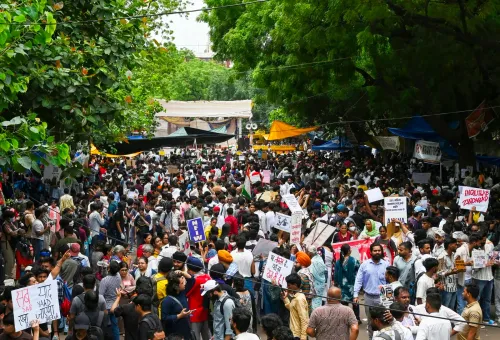
Protests were held at Jantar Mantar despite prohibitory orders under Section 163 of BNSS , demanding the resignation of CEC Gyanesh Kumar over alleged SIR irregularities.
Police have appealed for anyone with video footage of the alleged incident to share it with the Crime Branch.
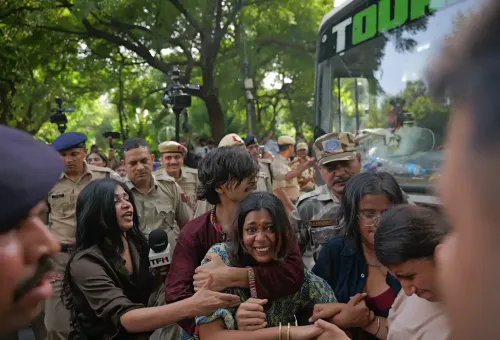
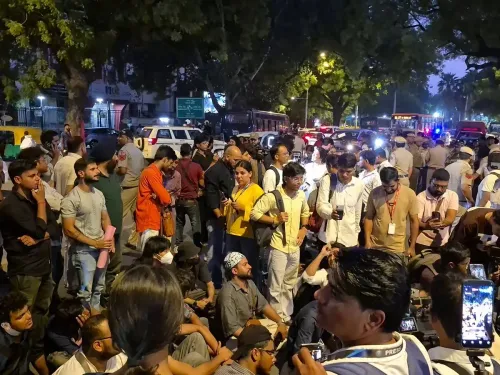
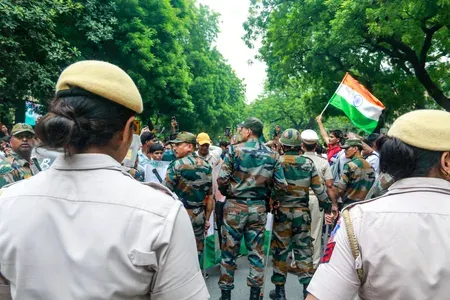
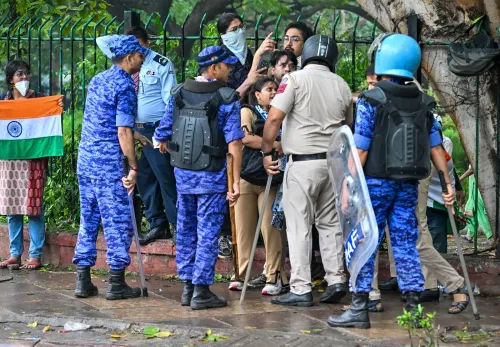
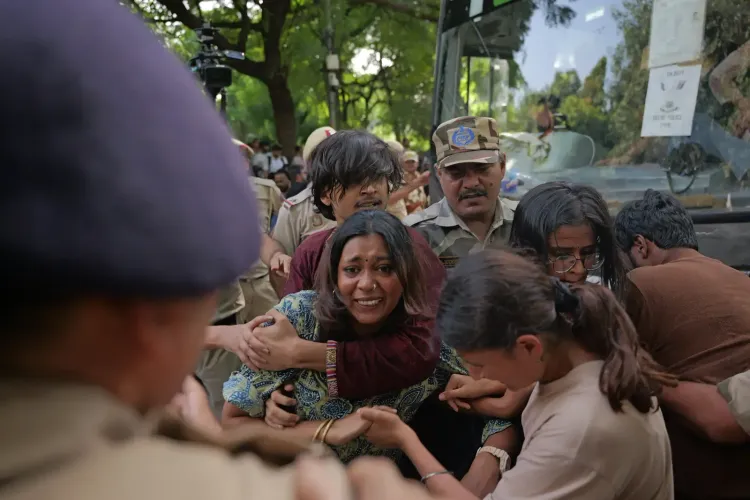
Delhi Police on Monday, 5 October 2026 issued a public clarification dismissing social media claims that female protesters had been physically assaulted during recent demonstrations in New Delhi, calling the allegations “baseless and misleading.” The statement came even as three women journalists who were detained during protests at Jantar Mantar on 3 October 2026 have separately filed complaints of sexual misconduct against police personnel — complaints the force has referred to the Crime Branch for independent inquiry.
What Delhi Police Said
The New Delhi district Deputy Commissioner of Police issued the clarification on X, stating: “Some social media handles are claiming that female protesters were subjected to physical assault. These allegations are baseless and misleading.”
The DCP added that “female protesters are handled by female staff and are treated with dignity and due regard,” and that “detentions and releases are carried out in accordance with the applicable law and prescribed procedures.” The officer further stated that male protesters who were detained were released within the stipulated time, calling any contrary claim “factually incorrect.”
The Journalists’ Complaints and Crime Branch Referral
Separately, three women who identified themselves as journalists alleged sexual misconduct by Delhi Police officers and staff during their detention on the evening of 3 October 2026. According to a senior police officer, the women came forward at around 6 pm, their complaints were accepted, and they were medically examined.
Delhi Police confirmed on Sunday, 4 October 2026 that the complaints had been transferred to the Crime Branch for what it described as a “fair and impartial enquiry.” The senior officer also appealed to anyone with video footage of the alleged incident to share it with the Crime Branch.
Why the Protests Happened
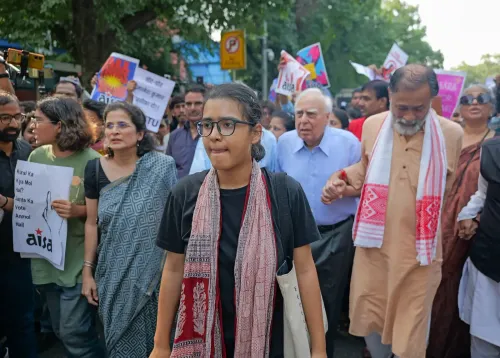
The demonstrations at Jantar Mantar were staged to demand the resignation of Chief Election Commissioner (CEC) Gyanesh Kumar over alleged irregularities in the Special Intensive Revision (SIR) of electoral rolls. The protests took place despite prohibitory orders imposed under Section 163 of the Bharatiya Nagarik Suraksha Sanhita (BNSS) in the New Delhi area.
According to the senior police officer, All India Students’ Association (AISA) and other groups organised the protest on 3 October. Protesters were informed of the prohibitory orders and warned to disperse; when they did not comply, detentions followed.
Context and What Happens Next
The dual narrative — Delhi Police rejecting claims of assault while simultaneously referring separate sexual misconduct complaints to the Crime Branch — places the force in a position where its own institutional inquiry will be watched closely. This is not the first time protests at Jantar Mantar have resulted in allegations of police misconduct during detentions; the pattern has drawn scrutiny from civil liberties groups in earlier incidents as well.
The outcome of the Crime Branch inquiry, and whether any video evidence emerges, will determine how this episode is ultimately characterised. All eyes are now on the investigation.
Point of View
Putting Delhi Police — which answers to the Centre — in a delicate spot. Whether the Crime Branch inquiry produces a credible outcome or a quiet closure will be the real measure of institutional accountability here.
NationPress
5 Oct 2026
Frequently Asked Questions
What did Delhi Police say about claims of assault on female protesters?
Delhi Police’s New Delhi district Deputy Commissioner of Police issued a clarification on X calling the social media claims ‘baseless and misleading,’ stating that female protesters are handled by female staff and detained in accordance with law. The statement was issued on 5 October 2026.
Why have three women journalists filed complaints against Delhi Police?
Three women who identified themselves as journalists alleged sexual misconduct by Delhi Police officers and staff during their detention at Jantar Mantar on 3 October 2026. Their complaints were accepted, they were medically examined, and the cases have been transferred to the Crime Branch for inquiry.
What are the Jantar Mantar protests about?
The protests are demanding the resignation of Chief Election Commissioner Gyanesh Kumar over alleged irregularities in the Special Intensive Revision (SIR) of electoral rolls. They were organised by AISA and other groups despite prohibitory orders under Section 163 of the BNSS.
Who is investigating the journalists’ complaints?
The complaints have been transferred to the Delhi Police Crime Branch for a fair and impartial inquiry, as confirmed on 4 October 2026. Police have also appealed for video footage of the alleged incident to be shared with the Crime Branch.
What legal provision was invoked to restrict the protests?
Section 163 of the Bharatiya Nagarik Suraksha Sanhita (BNSS) was imposed in the New Delhi area, prohibiting the assembly. Protesters were warned to disperse before detentions were carried out.