Delimitation Bill row: Congress alleges conspiracy, BJP cites constitutional process
Synopsis
The proposed Constitution Amendment Bill linking delimitation with women's reservation has cracked open one of India's most combustible political fault lines. Congress is calling it a conspiracy to redraw constituencies for BJP's permanent advantage; BJP says it is merely following the Constitution. With the women's reservation law itself tied to delimitation, neither side can back down easily — and the stakes stretch far beyond the next election.
Key Takeaways
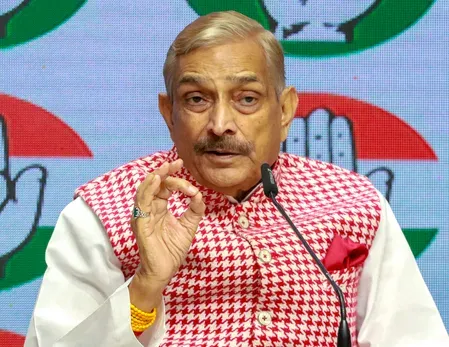
Congress spokesperson Surendra Rajput declared the INDIA Bloc and all major Opposition parties united against what he called a BJP 'conspiracy' on delimitation, speaking in Lucknow on 20 October 2026 .
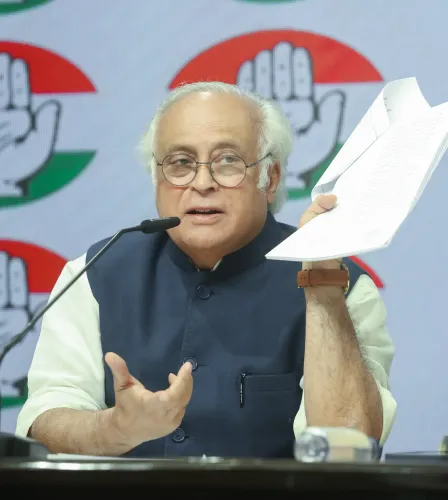
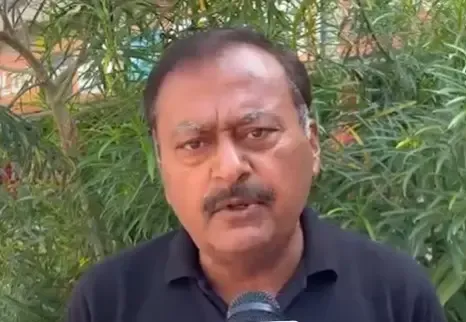
Congress leader Husain Dalwai alleged the delimitation plan is designed to permanently entrench BJP rule by redrawing constituencies to marginalise Muslim, Christian, and Tribal voters.
BJP leader Guru Prakash Paswan defended the move as a constitutionally mandated process for a country of 1.4 billion people, urging constructive dialogue.
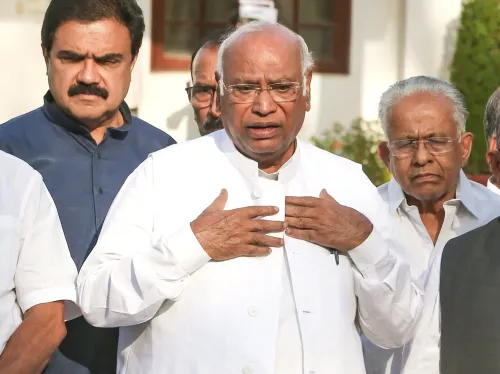
Congress president Mallikarjun Kharge wrote to PM Narendra Modi demanding an all-party consultation before the Bill is tabled in Parliament.
Parliamentary Affairs Minister Kiren Rijiju responded that the government had already pursued sustained consultations and cautioned against repeated demands without acknowledging prior dialogue.
The 2023 women's reservation law is itself linked to delimitation, making the two issues constitutionally inseparable and raising the political stakes for both sides.
A proposed Constitution Amendment Bill linking delimitation with women's reservation has ignited a sharp political clash in New Delhi, with the Indian National Congress (Congress) accusing the Bharatiya Janata Party (BJP) of weaponising women's representation to advance a delimitation agenda, while the ruling party insists it is following due constitutional procedure.
Congress Charges: 'Conspiracy Under the Guise of Reservation'
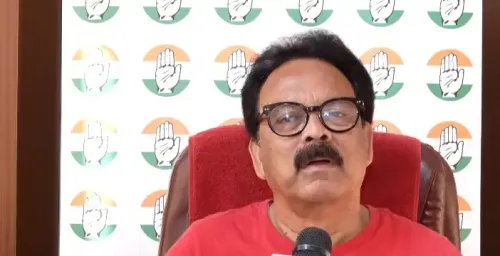
Congress spokesperson Surendra Rajput, speaking in Lucknow, Uttar Pradesh on 20 October 2026, said the INDIA Bloc and all major political parties stood united against what he described as a BJP attempt to use women's reservation as a cover for delimitation. 'If the BJP wants to hatch any conspiracy, the INDIA alliance will not allow that conspiracy to succeed, and neither will the Congress party,' Rajput said.
He added that the Opposition's unity extended beyond formal alliance membership: 'All members of the INDIA Alliance and all major political parties are united on delimitation and women's reservation. The entire Opposition, whether it is part of the INDIA Bloc or no longer part of it, is united on these issues.'
Congress leader Husain Dalwai went further, alleging that the delimitation exercise was designed to entrench BJP's electoral dominance. 'Through delimitation, they intend to shape constituencies in a way that keeps their government in power indefinitely. They want to sideline Muslims, split constituencies where Muslim, Christian, or Tribal communities reside — those who vote against them — and alter the boundaries to their advantage,' Dalwai said. He also claimed the move was being pushed 'under the guise of security' and described the current government as having been 'formed unconstitutionally.'
BJP's Defence: A Constitutional Right, Not a Conspiracy
BJP leader Guru Prakash Paswan rejected the Opposition's framing, arguing the delimitation process is grounded in constitutional provisions and should be resolved through dialogue. 'This is a constitutional process. There are established procedures in Parliament, and India is a country of 1.4 billion people. The Constitution provides an option to change the nature and composition of the House in accordance with changing population patterns, and that provision is being utilised,' Paswan said.
He called on the Opposition to engage constructively: 'Come forward, talk, engage in dialogue with a positive approach, and find a solution.' Shiv Sena leader Anand Dubey echoed that sentiment, signalling the government's willingness to hold discussions with Opposition parties to break the political deadlock.
Rijiju–Kharge Exchange: The All-Party Meeting Dispute
The confrontation deepens a running standoff over consultations on the Bill. Congress president Mallikarjun Kharge had written to Prime Minister Narendra Modi, arguing that constitutional changes of such far-reaching significance should not be pushed through Parliament without meaningful consultations with political parties.
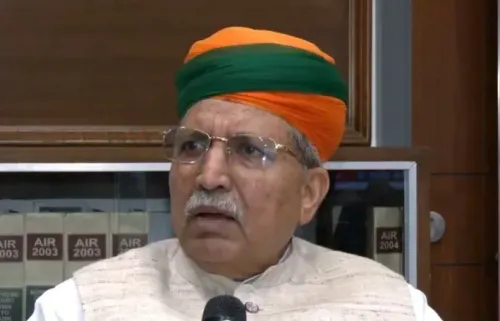
Parliamentary Affairs Minister Kiren Rijiju responded on Monday, writing to Kharge that the government had already made sustained efforts to facilitate dialogue. Rijiju cautioned against 'repeatedly raising the demand for an all-party meeting without adequately considering the consultations that had already taken place,' and stressed that constructive cooperation from the Opposition was necessary for the process to move forward.
Why It Matters: Stakes Beyond the Bill
This comes amid broader anxieties — particularly among southern states and minority communities — that any delimitation exercise based on updated population data could shift political representation significantly, potentially reducing the parliamentary weight of states that have performed better on population control. Notably, the women's reservation law passed in 2023 itself contains a clause deferring implementation until after delimitation, making the two issues constitutionally intertwined. Critics argue this linkage creates an incentive to delay or design delimitation in partisan ways. The BJP's allies and the Opposition are watching closely whether the government tables the Bill in the coming session of Parliament.
Point of View
And this confrontation was predictable the moment the government moved to operationalise it. What Congress and the INDIA Bloc are signalling is that delimitation, if timed to post-census data that favours high-population northern states, could structurally diminish southern and minority representation for decades. The BJP's appeal to constitutional procedure is technically sound but politically tone-deaf to those fears. Rijiju's rebuke of Kharge for 'repeatedly' seeking an all-party meeting — rather than welcoming the consultation — hands the Opposition exactly the optics of exclusion it needs. If the government wants this Bill to carry democratic legitimacy, a credible all-party process is not optional.
NationPress
20 Oct 2026
Frequently Asked Questions
What is the Delimitation Bill row about?
The row concerns a proposed Constitution Amendment Bill that links delimitation — the redrawing of parliamentary constituency boundaries — with the implementation of women's reservation in Parliament. Congress alleges the BJP is using women's reservation as a pretext to advance a delimitation exercise that would benefit the ruling party electorally, while the BJP says it is following a constitutionally mandated process.
Why is Congress opposing the delimitation exercise?
Congress leaders argue that the delimitation, if based on current population data, would redraw constituencies in ways that increase representation for high-population northern states — BJP strongholds — while reducing the weight of southern states and marginalising Muslim, Christian, and Tribal communities. The party has demanded an all-party consultation before the Bill is tabled.
What has the BJP said in defence of the Bill?
BJP leader Guru Prakash Paswan described delimitation as a constitutional provision that allows the composition of Parliament to reflect changing population patterns in a country of 1.4 billion people. The party has called on the Opposition to engage in dialogue rather than block the process outright.
What is the connection between delimitation and women's reservation?
The women's reservation law passed in 2023 contains a clause that defers its implementation until after the next delimitation exercise is completed. This makes the two issues constitutionally intertwined: the reservation cannot take effect without delimitation, giving the government a stated rationale for advancing the delimitation Bill.
Where does the Rijiju–Kharge standoff stand?
Congress president Mallikarjun Kharge wrote to Prime Minister Narendra Modi demanding an all-party meeting before the Bill is advanced. Parliamentary Affairs Minister Kiren Rijiju responded that the government had already made sustained consultation efforts and cautioned Kharge against making repeated demands without acknowledging prior dialogue. No all-party meeting has been scheduled as of 20 October 2026.