EC introduces QR code verification for West Bengal counting centres on May 4
Synopsis
The Election Commission has deployed a three-stage QR code-based verification system for West Bengal counting centres on May 4, following complaints about security. With a record 92.85% voter turnout across two phases, the stakes — and scrutiny — are unusually high.
Key Takeaways
ECI introduces three-stage identity verification , including QR code scanning , for counting centre entry on May 4 .
Rule applies to all returning officers, counting staff, candidates, and election agents.
State Chief Electoral Officer Manoj Kumar Aggarwal cited complaints about counting centre security as the trigger.
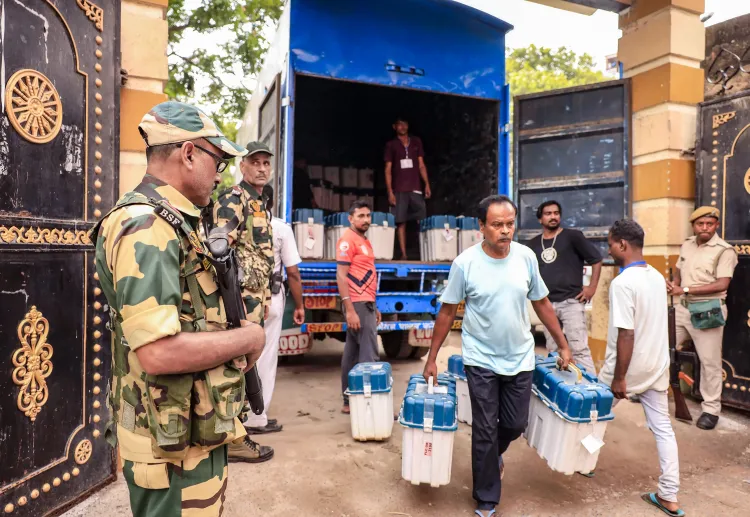
More than 200 companies of Central forces were originally planned for strong room deployment; additional forces are now being added.
West Bengal recorded a record overall voter turnout of 92.85% across two phases.
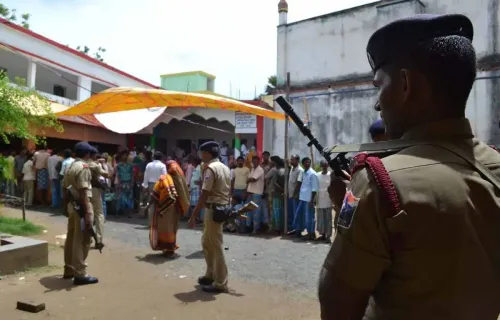
The Election Commission of India (ECI) has introduced a three-stage identity verification process, including QR code scanning, to secure counting centres across West Bengal ahead of the Assembly election results on May 4. The move is aimed at preventing unauthorised entry on counting day and follows complaints about security lapses at counting centres.
Three-Stage Verification Process
Under the new protocol, anyone seeking entry to a counting centre on May 4 must pass through three layers of identity verification. The first and second stages involve manual checking of identity cards. The third and final stage requires a QR code scan, after which a 'green signal' is issued to permit entry.
The rule applies uniformly to all returning officers, assistant returning officers, counting staff, candidates, and election agents — no exemptions have been announced.
Deployment and Implementation Measures
District election officers and returning officers have been instructed to operationalise the system before counting day. The Commission has also ordered the deployment of trained personnel at designated checkpoints to regulate entry flows and prevent bottlenecks or breaches.
State Chief Electoral Officer Manoj Kumar Aggarwal confirmed the rationale behind the heightened measures. Aggarwal said,
Point of View
But its credibility depends entirely on implementation speed and trained manpower at checkpoints — both historically weak links in large-scale Indian election logistics. The fact that complaints about counting centre security preceded this announcement is itself a red flag: ideally, such systems are built in before grievances surface, not after. With a record 92.85% turnout raising the political stakes, any counting-day irregularity — real or perceived — risks becoming a flashpoint. The Commission's decision to personally inspect centres is a welcome signal, but it cannot substitute for systemic readiness.
NationPress
19 Sept 2026
Frequently Asked Questions
What is the QR code verification system introduced by the Election Commission for West Bengal?
The Election Commission has introduced a three-stage identity verification system for entry into counting centres on May 4. The first two stages involve manual identity card checks, while the third stage requires QR code scanning before a 'green signal' is issued for entry.
Who is required to undergo QR code verification on counting day?
All returning officers, assistant returning officers, counting staff, candidates, and election agents must pass through the three-stage verification process. No category of personnel has been exempted from the rule.
Why has the Election Commission tightened security at West Bengal counting centres?
State Chief Electoral Officer Manoj Kumar Aggarwal stated that complaints had been received regarding the security of counting centres. The Commission has also increased the deployment of Central forces at strong rooms beyond the originally planned 200 companies.
What is the voter turnout recorded in West Bengal's two-phase Assembly election?
The second phase of polling across 142 Assembly constituencies on April 29 recorded a turnout of 92.47% till midnight. Combined with the first phase, the overall average turnout across both phases reached a record high of 92.85%.
When will the West Bengal Assembly election results be announced?
The election results for the West Bengal Assembly election will be announced on May 4, the same day as the QR code-secured counting process.