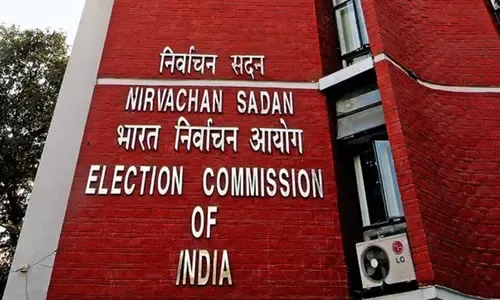
Will Such Intimidation Tactics Succeed? EC Responds to Police Complaints Against CEC and Bengal CEO
Synopsis
In a significant development, the Election Commission has firmly rejected police complaints against the Chief Election Commissioner and the Bengal CEO, labeling them as baseless intimidation tactics. This controversy arose following tragic incidents involving elderly voters, igniting discussions on electoral integrity and accountability. Stay informed about the unfolding political landscape.
Key Takeaways
Election Commission dismisses police complaints as baseless.
Allegations stem from tragic deaths of elderly voters.
Legal action will be pursued by West Bengal's CEO.
Importance of maintaining electoral integrity emphasized.
Voter mental health concerns highlighted.
Kolkata, Dec 31 (NationPress) Following police complaints against the Chief Election Commissioner and the Chief Electoral Officer (CEO) of West Bengal regarding the death of an elderly individual purportedly linked to anxiety over a Special Intensive Revision (SIR) hearing, the Election Commission on Tuesday dismissed the claims, labeling them as intimidatory and groundless.
In response to media coverage of the complaints, the CEO of West Bengal remarked on X that the accusations seemed to be a strategy to intimidate electoral officials fulfilling their statutory obligations.
“Our office has noted through various press reports that two police complaints have been lodged against the Chief Election Commissioner of India and the Chief Electoral Officer of West Bengal,” the statement indicated.
Furthermore, the poll panel asserted that “the allegations presented appear to be calculated, unverified, and a blatant effort to intimidate officers responsible for executing statutory duties related to SIR 2026.”
“Such intimidatory maneuvers aimed at coercing the electoral machinery into compliance and disrupting the process are certainly destined to fail,” the statement continued.
The CEO of West Bengal also mentioned that legal action would be pursued in response. “We will leave no stone unturned to uncover the conspiracy behind these repeated and fabricated complaints. The rule of law and truth shall prevail. The electoral machinery in the state is dedicated to operating with integrity and diligence solely in the public's interest,” the statement emphasized.
The Election Commission issued a robust response after complaints were registered by families of two elderly voters who passed away on Monday following the receipt of hearing notices as part of the ongoing SIR process.
In Purulia district, Kanai Majhi claimed that his 82-year-old father, Durjan Majhi, was profoundly distressed after receiving a hearing notice, alleging that while his name appeared on the physical 2002 West Bengal SIR rolls, it was absent from the 2002 SIR list on the Election Commission’s website. Durjan Majhi took his own life mere hours before his scheduled hearing.
Meanwhile, in Howrah district, the son of 64-year-old Jamat Ali Sheikh alleged that the Chief Election Commissioner and the state CEO had abused their authority by sending a hearing notice to his father, a legitimate voter, subjecting him to mental distress that reportedly contributed to his death.
Point of View
It's essential to recognize the gravity of these allegations against high-ranking electoral officials. While the Election Commission has categorically dismissed the claims as intimidation, the tragic loss of life related to the electoral process raises critical questions about the mental health impacts of such procedures. Upholding public trust in the electoral system is paramount, and we must ensure that these claims are investigated thoroughly and transparently.
NationPress
9 Oct 2026
Frequently Asked Questions
What are the police complaints about?
The complaints involve allegations against the Chief Election Commissioner and the Chief Electoral Officer of West Bengal, claiming their actions contributed to the distress and subsequent deaths of elderly voters.
How did the Election Commission respond?
The Election Commission rejected the complaints, describing them as baseless and an attempt to intimidate officials carrying out their statutory duties.
What is the Special Intensive Revision process?
The Special Intensive Revision (SIR) process is a procedure used to update and verify the electoral rolls, ensuring that all eligible voters are accurately represented.
What actions will be taken regarding the complaints?
The CEO of West Bengal stated that legal actions would be pursued to uncover the conspiracy behind the fabricated complaints.
What implications does this incident have for electoral processes?
This incident highlights the need for safeguarding the mental health of voters during electoral processes and ensuring that the electoral system operates with transparency and accountability.