ED seizes ₹187 crore properties in Goa, Delhi in US call centre fraud
Synopsis
The ED has frozen ₹187 crore in luxury properties tied to a call centre that impersonated IRS agents to rob US citizens, then laundered the proceeds through crypto wallets and a shell firm into Goa villas and Delhi farmhouses. The FBI-CBI tip that triggered the case underscores how India-based cyber fraud rings are now firmly in the crosshairs of both governments.
Key Takeaways
The Enforcement Directorate attached properties worth ₹187.13 crore in Goa , Delhi , and Haryana under the PMLA, 2002 .
The accused operated Digikaps — the Future of Digital , a fake technical support call centre with 36 employees that targeted US citizens .
Victims were threatened with IRS action and coerced into transferring funds to cryptocurrency wallets , which were then routed through shell firm Bliss Infraproperties LLP .
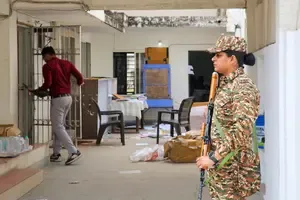
Search operations in January–February 2026 at 13 locations across Punjab, Haryana, and Delhi yielded ₹34 lakh in unaccounted cash and digital evidence.
The ED probe was triggered by a CBI FIR based on intelligence from the US FBI .
Key accused include Joney alias Joney Tyagi , Dakshay Sethi , Gaurav Verma , Raghav Satiha , Nikhil Verma , and Gautam Dhingra .
The Enforcement Directorate (ED) has attached farmhouses, villas, and other immovable properties worth ₹187.13 crore spread across Goa, Delhi, and Haryana, striking at the assets of a transnational call centre fraud network that allegedly swindled US citizens of millions of dollars. The action, announced on 1 August 2025, was carried out by the ED's Jalandhar Zonal Office under the Prevention of Money Laundering Act (PMLA), 2002.
How the Fraud Operated
According to the ED, the accused ran an illegal call centre called Digikaps — the Future of Digital, which employed 36 people including Jiger Ahmed, Yash Khurana, Inderjeet Singh Bhali, and Nikhil Sharma, operating under the supervision of Joney, Dakshay Sethi, and Gaurav Verma. Posing as technical support agents, the accused allegedly extracted sensitive personal data from victims and threatened them with statutory action by the US Internal Revenue Service (IRS).
Victims were then coerced into transferring funds into cryptocurrency accounts. The proceeds were routed through cryptocurrency wallets and subsequently funnelled into shell entities — specifically a firm identified as Bliss Infraproperties LLP — before being invested in high-value real estate in India.
The Money Trail
The ED's investigation traced the diversion of crime proceeds into real estate across Haryana, Delhi, and Goa. The accused named in this trail include Joney alias Joney Tyagi, Dakshay Sethi, Raghav Satiha, Nikhil Verma, Gaurav Verma, and Gautam Dhingra. The use of shell entities and cryptocurrency wallets to layer and integrate criminal proceeds is consistent with patterns seen in several recent transnational cyber fraud cases investigated by Indian agencies.
Earlier Search Operations
The current attachment follows search operations conducted in January and February 2026 at 13 locations across Punjab, Haryana, and Delhi. Those searches yielded the recovery of multiple digital devices, seizure of ₹34 lakh in unaccounted cash, and incriminating records linking the accused to high-value property investments in India and abroad, according to an official statement.
Background and Investigative Trigger
The ED's money laundering probe was initiated on the basis of an FIR registered by the Central Bureau of Investigation (CBI), acting on intelligence shared by the US Federal Bureau of Investigation (FBI). The case was registered under various sections of the Bharatiya Nyaya Sanhita (BNS), 2023. This cross-border cooperation between Indian and US law enforcement signals a tightening net around India-based cyber fraud operations targeting foreign nationals.
With the attachment now formalised, the ED is expected to pursue further legal proceedings under the PMLA, including a chargesheet before the designated court. Analysts note that the crypto-to-real-estate laundering route exploited in this case remains an active vulnerability in India's financial crime framework.
Point of View
Layered crypto transfers, and shell LLPs converting criminal proceeds into Goa villas. What stands out is the FBI-to-CBI handoff that set the ED in motion: foreign intelligence agencies are increasingly feeding Indian enforcement, which compresses the lag between crime and asset seizure. The real question is whether PMLA proceedings will reach the beneficial owners at the top of the supervision chain, or stop at the operational layer of employees and mid-level supervisors. Past cases suggest the latter is more common, leaving the architecture of such networks intact.
NationPress
16 Sept 2026
Frequently Asked Questions
What properties did the ED seize in the call centre fraud case?
The ED attached farmhouses, villas, and other immovable properties worth ₹187.13 crore located in Goa, Delhi, and Haryana. The attachment was made under the Prevention of Money Laundering Act (PMLA), 2002, by the ED's Jalandhar Zonal Office.
What was the Digikaps call centre fraud?
Digikaps — the Future of Digital was an illegal call centre whose 36 employees posed as technical support agents to defraud US citizens. They extracted victims' personal data, threatened them with fake IRS action, and coerced them into transferring money to cryptocurrency accounts.
How was the laundered money traced to real estate?
According to the ED, fraud proceeds were first moved into cryptocurrency wallets and then transferred to a shell entity called Bliss Infraproperties LLP, which was used to invest in high-value immovable properties across Haryana, Delhi, and Goa.
What triggered the ED's investigation?
The ED initiated its money laundering probe based on an FIR filed by the CBI, which in turn acted on intelligence shared by the US Federal Bureau of Investigation (FBI). The case was registered under provisions of the Bharatiya Nyaya Sanhita (BNS), 2023.
Who are the key accused in the case?
The accused include Joney alias Joney Tyagi, Dakshay Sethi, Raghav Satiha, Nikhil Verma, Gaurav Verma, and Gautam Dhingra, among others. Employees Jiger Ahmed, Yash Khurana, Inderjeet Singh Bhali, and Nikhil Sharma are also named in the investigation.